Best Red Dot for EDC setups have evolved dramatically over the last few years, and I’ve spent an enormous amount of range time evaluating which optics actually hold up under concealed carry conditions. A carry optic faces a different set of challenges than a competition sight or rifle dot. It has to survive sweat, lint, repeated holster friction, abrupt recoil cycles, and daily impacts while still presenting a clean, fast aiming solution under stress.
I prioritize several things when testing carry optics: deck height, emitter protection, brightness consistency, lens clarity, and how naturally the window tracks during presentation. A red dot that performs beautifully on a flat range may fail once you add concealment garments, low-light transitions, or awkward shooting positions.
For this guide, I focused on six optics that consistently perform at the highest level for concealed carry pistols. These models represent different price tiers and mounting ecosystems, but all of them are dependable enough for serious defensive use.
Top Product List: Best Red Dot for EDC
- HOLOSUN EPS CARRY
- Trijicon RMRcc
- Aimpoint ACRO P-2
- Sig Sauer Romeo-X Compact
- Vortex Defender CCW
- HOLOSUN 507K ACSS
HOLOSUN EPS CARRY
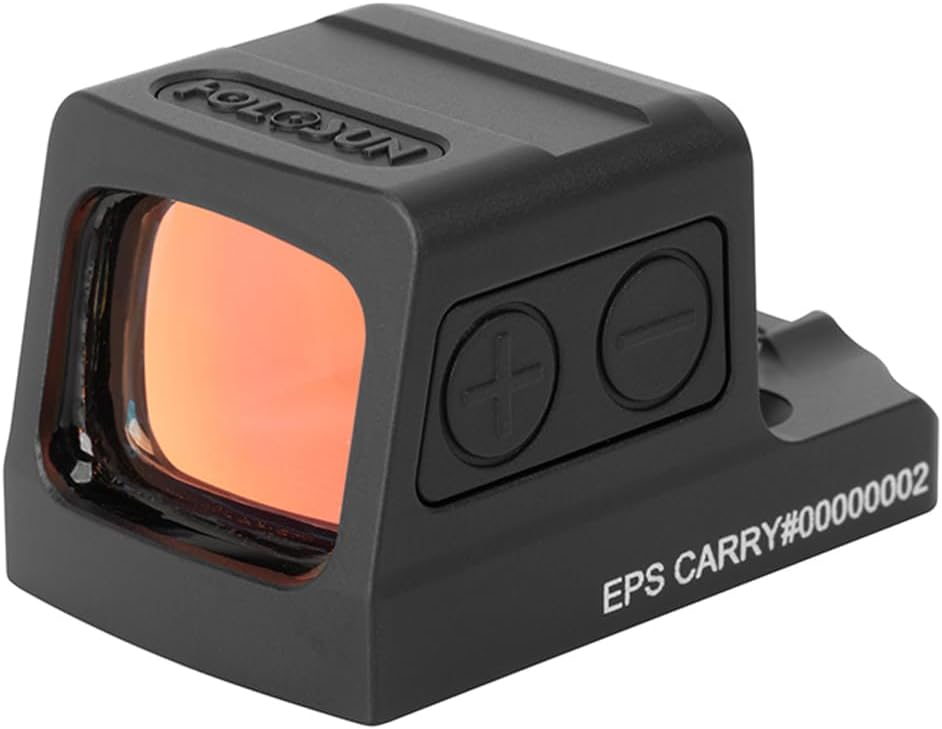
The EPS Carry is one of the most practical enclosed-emitter optics currently available for slim and compact carry pistols. Its sealed design dramatically reduces emitter blockage from lint, moisture, and carbon buildup.
Specs
- 7075 aluminum housing
- Enclosed emitter
- RMSc footprint
- 2 MOA dot or MRS variants
- Side-loading battery tray
- Solar backup system
- Shake Awake technology
Pros
- Outstanding weather resistance
- Very low deck height
- Excellent battery access
- Minimal lens distortion
- Strong brightness range
Cons
- Slight blue lens tint
- Narrower window than full-size optics
In my testing, the EPS Carry tracks exceptionally well during rapid presentations from concealment. The deck height sits low enough for effective co-witness with standard-height sights on many optics-ready pistols. Parallax shift is minimal at practical carry distances, and the enclosed emitter prevents debris from obscuring the reticle during daily carry.
The side battery tray is a major advantage because I never need to remove the optic for battery replacement. Controls remain tactile even with gloves, and the brightness adjustments provide enough granularity for both indoor and bright outdoor conditions.
Online discussions consistently praise the durability and reliability of this optic for concealed carry. Many users transitioning from open emitters appreciate how little maintenance the sealed system requires. Several long-term Glock 43X and P365 owners report excellent reliability after thousands of rounds.
Mounting is straightforward on RMSc-compatible slides. Some pistols may require thin adapter plates, but overall compatibility is excellent across modern micro-compact platforms.
╰┈➤ Explore User Feedback and Current Pricing on Amazon
Trijicon RMRcc
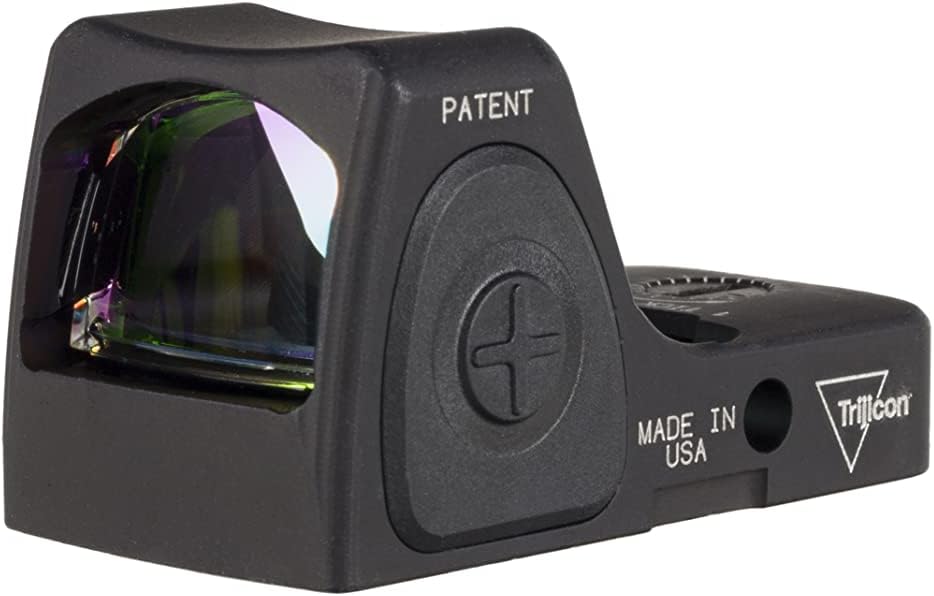
The RMRcc brings Trijicon’s proven durability philosophy into a slimmer concealed carry package. It retains the rugged construction and recoil resistance that made the standard RMR famous.
Specs
- Forged aluminum housing
- Proprietary RMRcc footprint
- Top-loading CR2032 battery
- 3.25 MOA dot
- Waterproof construction
- Adjustable brightness controls
Pros
- Exceptional durability
- Crisp dot clarity
- Excellent recoil handling
- Reliable sealing
- Long battery life
Cons
- Proprietary footprint
- Smaller viewing window
I’ve run the RMRcc on compact Glock and SIG platforms, and it consistently survives aggressive recoil impulses without losing zero. The housing design helps protect the lens from side impacts, which matters on an EDC pistol constantly moving in and out of holsters.
The glass has a mild tint but remains very usable outdoors. Button feel is firm and deliberate, even while wearing gloves. I also appreciate the top-loading battery design because it eliminates unnecessary rezeroing procedures.
Parallax remains well-controlled within realistic defensive distances. The optic window is not oversized, but presentation consistency becomes very fast with training. Co-witness options depend on the pistol platform because the RMRcc sits slightly taller than some RMSc-pattern optics.
Many concealed carriers online still consider the RMRcc one of the benchmark defensive optics due to its proven track record. Law enforcement users frequently highlight its ruggedness under hard use conditions.
Mounting requires a dedicated RMRcc cut or adapter plate, which is its main drawback. Once installed correctly, however, the system feels extremely secure and confidence-inspiring.
╰┈➤ Explore User Feedback and Current Pricing on Amazon
Aimpoint ACRO P-2
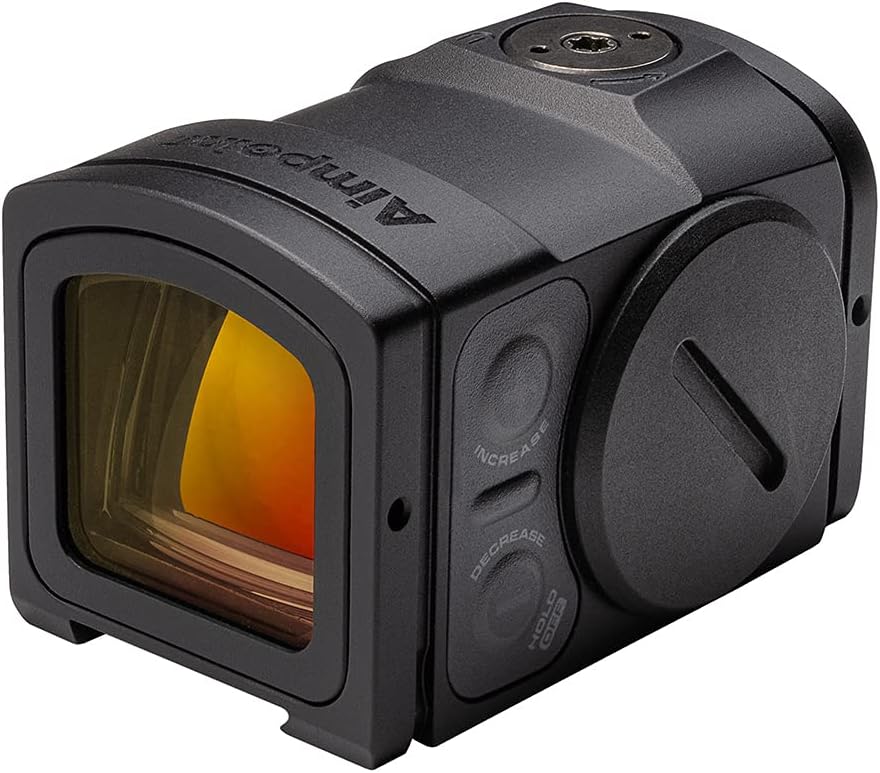
The ACRO P-2 is arguably the toughest enclosed pistol optic currently available. It prioritizes durability and reliability above all else, making it popular among duty and defensive shooters.
Specs
- Fully enclosed emitter
- 3.5 MOA dot
- ACRO mounting interface
- 50,000-hour battery life
- Deep protective housing
- Night vision compatibility
Pros
- Outstanding durability
- Extremely reliable emitter protection
- Superb battery longevity
- Excellent waterproofing
- Minimal maintenance needs
Cons
- Bulkier than micro optics
- Higher mounting height
The ACRO P-2 feels more like a miniature duty optic than a traditional slim carry sight. The enclosed housing completely shields the emitter from moisture, lint, and environmental contamination. I’ve intentionally exposed it to mud, rain, and heavy fouling without experiencing reticle interruption.
The viewing window is slightly tunnel-like compared to open-emitter designs, but presentation becomes natural with practice. Lens coatings are well controlled, and glare management remains excellent in bright daylight. The dot itself appears crisp with very little bloom.
One area where the ACRO excels is recoil stability. I noticed virtually no zero drift even during high round-count sessions on snappy compact pistols. The buttons remain tactile and easy to manipulate under stress.
Online feedback overwhelmingly centers on durability. Many shooters transitioning from open-emitter systems report increased confidence during daily carry because the emitter stays protected from obstruction.
Mounting requires an ACRO-compatible cut or adapter plate. Due to the taller housing, suppressor-height sights are usually necessary for proper co-witness capability.
╰┈➤ Explore User Feedback and Current Pricing on Amazon
Sig Sauer Romeo-X Compact
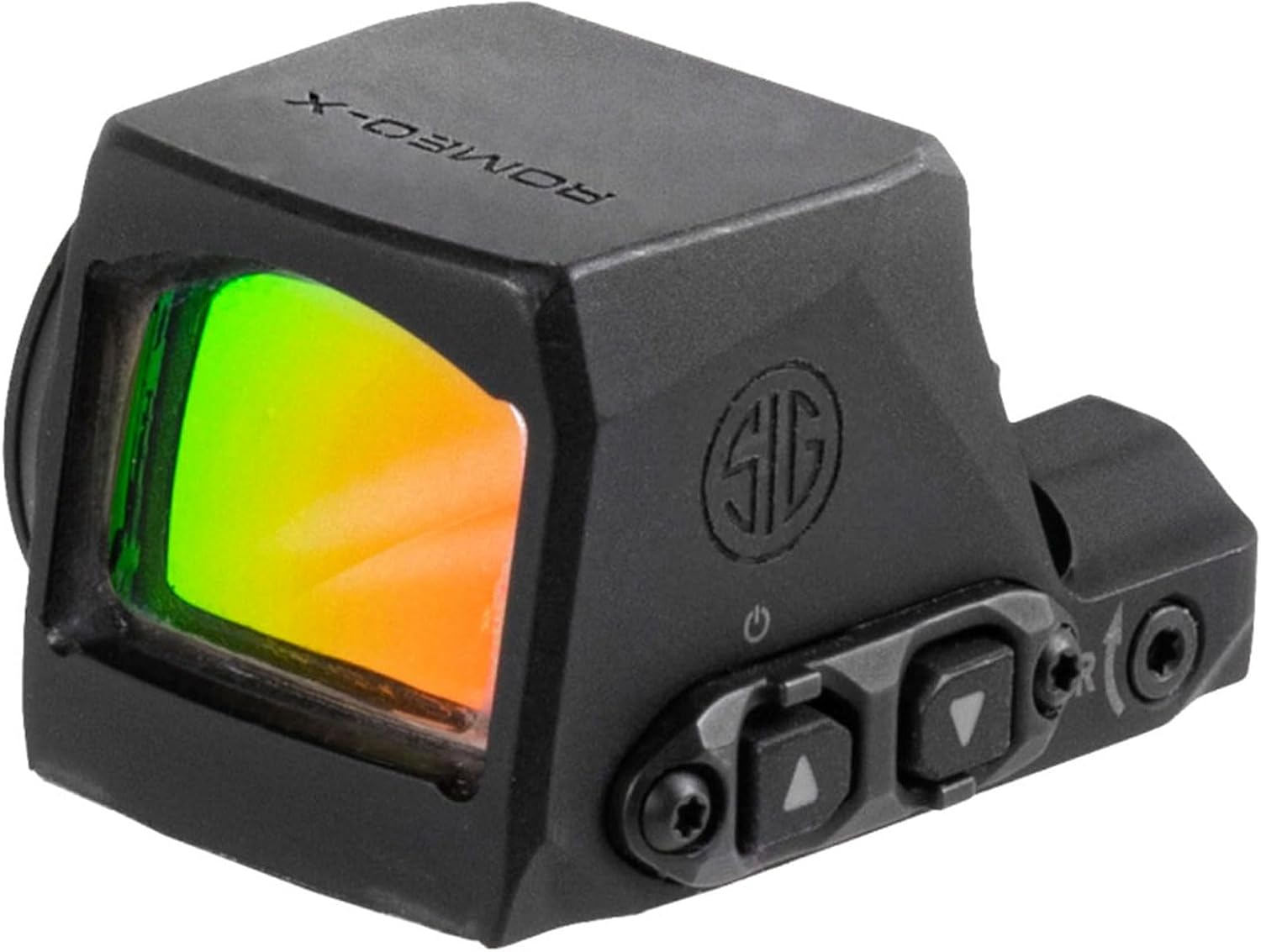
The Romeo-X Compact combines a very low deck height with excellent carry-oriented ergonomics. SIG designed it specifically for concealed carry pistols rather than adapting a larger optic.
Specs
- CNC aluminum housing
- Compact enclosed-style architecture
- Multi-reticle system
- Side battery compartment
- Low-profile controls
- RMSc-compatible footprint
Pros
- Extremely low mounting profile
- Fast sight acquisition
- Crisp reticle presentation
- Good brightness adjustment range
- Strong concealment compatibility
Cons
- Newer long-term durability history
- Slight edge distortion
During testing, the Romeo-X Compact impressed me with how naturally it aligns during presentation. The low deck height significantly improves co-witness compatibility and helps the optic feel integrated into the pistol rather than sitting on top of it.
The controls are recessed enough to avoid accidental brightness changes during carry, yet still easy to activate intentionally. Lens tint is relatively neutral compared to several competing optics, which helps maintain natural color perception outdoors.
Parallax performance is very respectable for a compact optic. I noticed minimal reticle wandering during off-axis shooting positions. The battery compartment design is also practical because maintenance never disturbs the zero.
Online users consistently praise the optic’s clean aesthetics and low-profile shape. Many P365 owners particularly appreciate the direct-mount compatibility and streamlined concealment characteristics.
Mounting is very straightforward on modern RMSc-pattern slides. On SIG factory optics-ready pistols, installation is especially clean and secure without requiring bulky adapter plates.
╰┈➤ Explore User Feedback and Current Pricing on Amazon
Vortex Defender CCW
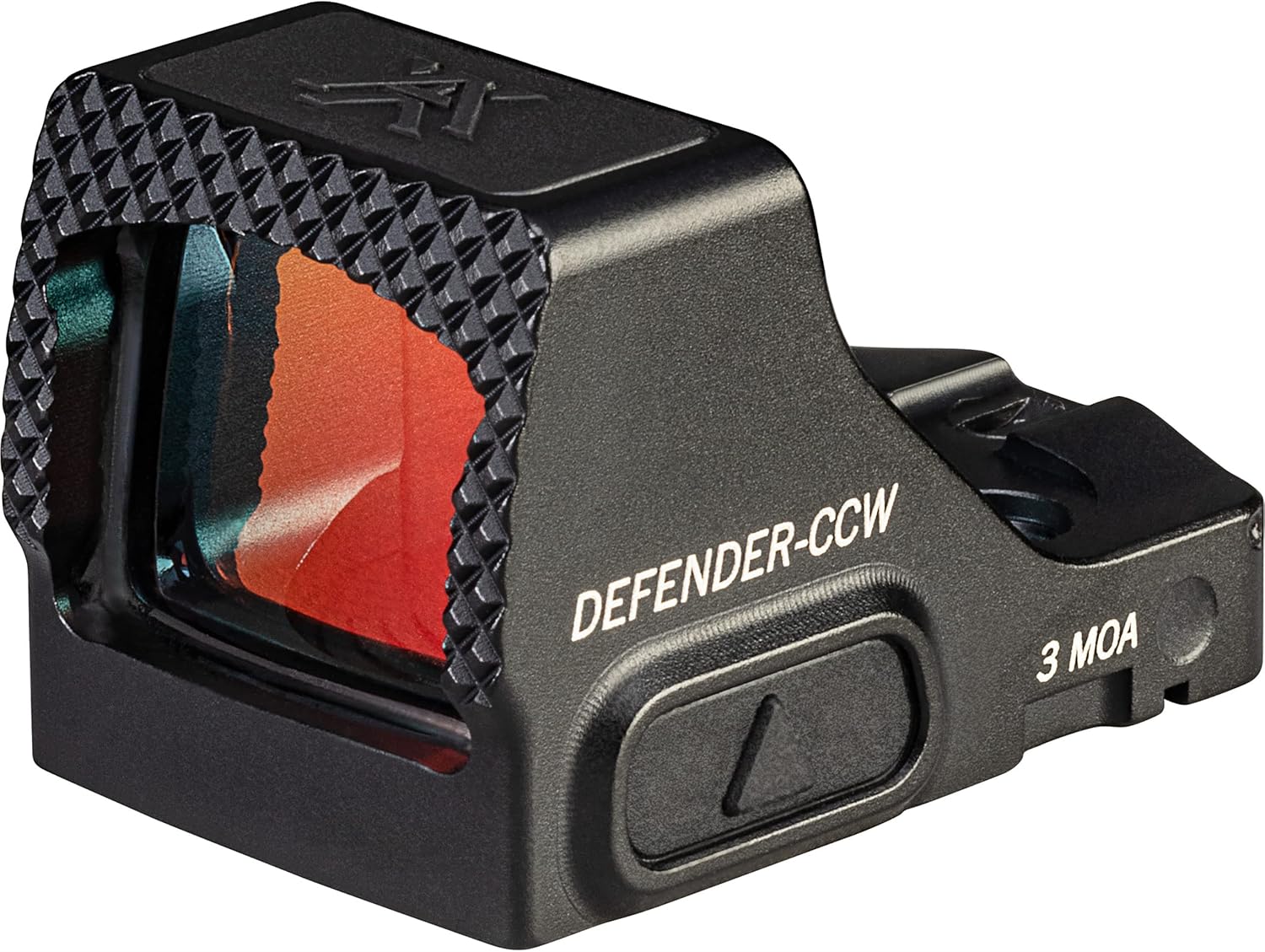
The Defender CCW delivers an impressive balance between affordability, durability, and real-world concealed carry performance. It feels purpose-built for compact defensive pistols.
Specs
- ShockShield polymer insert
- RMSc footprint
- Large aspherical lens
- Top battery access
- Motion activation
- 3 MOA and 6 MOA variants
Pros
- Excellent value
- Large viewing window
- Easy battery replacement
- Good brightness performance
- Strong warranty support
Cons
- Slightly thicker housing
- More noticeable lens tint
The first thing I noticed while shooting the Defender CCW was how generous the window feels relative to its footprint. Rapid target transitions become very intuitive, especially during close-range defensive drills.
The aspherical lens helps minimize edge distortion better than many budget-oriented carry optics. Brightness adjustments remain responsive, and the controls provide positive tactile feedback even with gloves. Battery replacement is refreshingly simple due to the top-access compartment.
Under recoil, the optic maintains zero reliably. I also experienced minimal emitter occlusion issues despite heavy range sessions. Parallax is well managed at realistic carry distances, and co-witness capability works well with many factory-height backup sights.
Online discussions frequently mention the value proposition. Many shooters see it as one of the strongest mid-priced carry optics available, especially considering Vortex’s warranty reputation.
The Defender CCW mounts directly to RMSc-pattern slides and generally avoids compatibility headaches. Its slightly thicker housing may print marginally more during deep concealment, but the tradeoff is improved durability.
╰┈➤ Explore User Feedback and Current Pricing on Amazon
HOLOSUN 507K ACSS
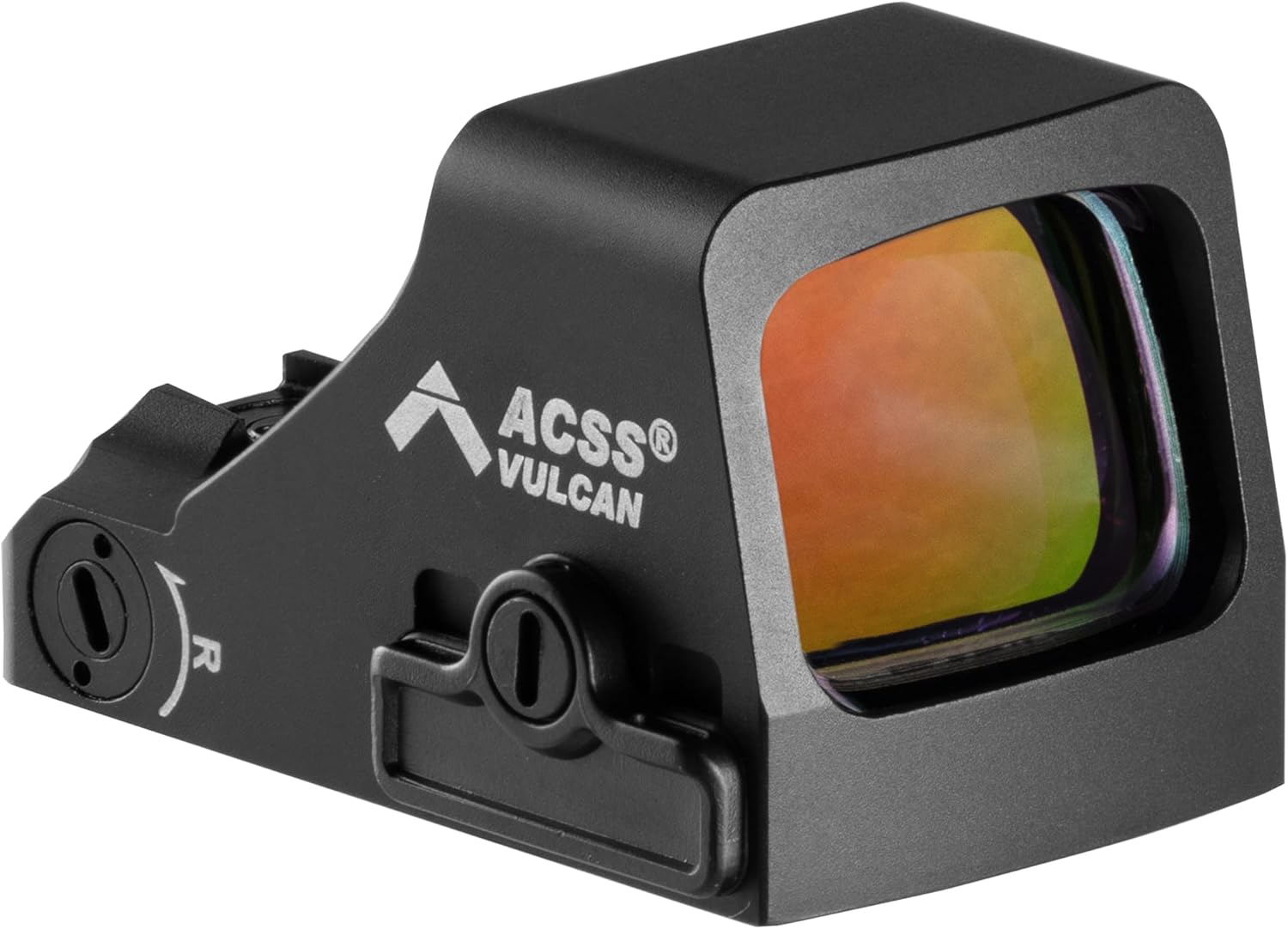
The 507K ACSS combines compact carry dimensions with one of the most innovative reticle systems currently available for defensive shooting.
Specs
- RMSc footprint
- ACSS Vulcan reticle
- Shake Awake system
- Side battery tray
- Multi-coated glass
- Aluminum housing
Pros
- Extremely fast target reacquisition
- Excellent training aid
- Compact dimensions
- Strong battery efficiency
- Good mounting compatibility
Cons
- Reticle can appear busy initially
- Moderate blue tint
The ACSS Vulcan reticle dramatically changes how shooters reacquire the dot during imperfect presentations. The large outer reference circle guides the eye back toward the center aiming point, which becomes especially useful during unconventional shooting positions.
In practical drills, I found the optic noticeably forgiving during rapid draws from concealment. The window itself is compact, but the reticle design compensates effectively. Lens clarity remains good overall, though the blue tint is more noticeable than on premium enclosed optics.
Battery access is simple thanks to the side tray, and brightness controls are easy to manipulate under stress. Recoil handling has been excellent across several micro-compact pistols. The optic also maintains a reasonably low deck height for co-witness compatibility.
Online feedback consistently highlights how much the reticle helps newer dot shooters adapt to pistol optics. Experienced shooters often appreciate the faster reacquisition capability during movement and awkward angles.
The 507K ACSS uses the RMSc footprint, making it compatible with many slim carry pistols directly or with minimal adapter requirements.
╰┈➤ Explore User Feedback and Current Pricing on Amazon
How I Tested / Evaluation Criteria
Parallax Performance
Parallax matters more on pistols than many shooters realize because defensive shooting rarely happens from perfect sight alignment. I evaluated each optic by shooting from awkward head positions and one-handed presentations at varying distances. The best optics maintained minimal reticle drift and allowed accurate hits even when the dot floated near the edge of the window.
Co-Witness and Deck Height
Deck height directly affects how naturally an optic integrates with backup iron sights. Lower-mounted optics generally feel faster during presentation and improve concealment compatibility. I tested each model with standard-height and suppressor-height sights to determine practical co-witness usability.
Durability and Recoil Resistance
Carry optics endure constant abuse from holster wear, sweat, impacts, and repeated recoil cycles. I evaluated housing rigidity, lens protection, waterproof sealing, and zero retention during extended shooting sessions. Optics with enclosed emitters also received additional environmental testing.
Battery System
Battery access and runtime both matter on an EDC pistol. I strongly prefer optics that allow battery replacement without removing the sight because it preserves zero. Motion activation systems and efficient brightness management also improve long-term reliability.
Brightness Range
A carry optic must remain usable in both dim indoor lighting and harsh sunlight. I tested every model in bright daylight, low-light indoor conditions, and transitional environments. The best optics maintained crisp reticle visibility without excessive bloom.
Glass Quality
Lens clarity significantly affects target acquisition speed. I looked for distortion, edge warping, excessive tint, and glare management. Cleaner glass generally reduces eye fatigue and improves tracking during rapid shooting.
Controls and Ergonomics
Button tactility becomes important under stress or while wearing gloves. I evaluated how easy each optic was to adjust without accidental input during concealed carry. Recessed but responsive controls performed best overall.
Mounting Ecosystem
Footprint compatibility matters because mounting plates introduce additional complexity and height. I favored optics with strong direct-mount support across modern concealed carry pistols.
How to Choose the Right Red Dot for This Gun
Choosing the correct carry optic starts with understanding your pistol’s mounting footprint and your intended role. A slim micro-compact like the Glock 43X or SIG P365 benefits from compact optics with low deck heights and minimal overhang. Larger compact pistols can accommodate enclosed duty-style optics more comfortably.
Emitter style is one of the biggest decisions. Open emitters are generally lighter and offer slightly larger windows relative to their size, but they can become obstructed by lint, moisture, or debris. Enclosed emitters solve this issue entirely, though they typically add bulk and weight. For daily concealed carry, I increasingly favor enclosed systems because reliability under adverse conditions matters more than shaving a fraction of an ounce.
Reticle size also deserves careful consideration. Smaller 2 MOA dots provide better precision at distance, while larger dots often appear faster during rapid defensive shooting. Multi-reticle systems can offer flexibility, but overly complex reticles sometimes become distracting under stress.
Battery access design is another critical factor. Bottom-mounted batteries force optic removal during replacement, which can potentially shift zero. Side or top-loading systems are far more practical for a defensive pistol that needs consistent reliability.
Window size influences tracking speed. Larger windows are easier to reacquire during recoil, but they also increase bulk. For concealed carry, I prefer balancing concealment with practical usability rather than chasing the absolute largest viewing area.
Finally, mounting compatibility should never be overlooked. Direct mounting almost always provides the strongest and lowest-profile setup. Adapter plates can work very well, but they introduce additional screws, tolerances, and height considerations.
FAQs
Is an enclosed emitter better for concealed carry?
In most cases, yes. Enclosed emitters prevent lint, moisture, and debris from blocking the emitter window. They generally require less maintenance during daily carry.
What MOA dot size works best for EDC?
I usually recommend 3 MOA to 6 MOA for defensive pistols. These sizes balance rapid acquisition with practical accuracy.
Do I need suppressor-height sights with a carry optic?
Not always. Some low-profile optics co-witness with standard-height sights, but taller optics typically require suppressor-height irons.
Are pistol red dots difficult to learn?
There is a learning curve, especially during presentation. Most shooters adapt quickly with consistent dry-fire practice and proper grip mechanics.
How often should I replace the battery?
For serious defensive use, I recommend annual replacement regardless of advertised battery life. Preventive maintenance is cheap insurance.
Conclusion
After extensive testing, I believe the modern market finally offers truly dependable solutions for concealed carry optics. The ideal Best Red Dot for EDC setup depends on your pistol size, mounting footprint, and preference for open versus enclosed emitters, but reliability should always remain the top priority. The optics in this guide have demonstrated strong durability, excellent tracking characteristics, and dependable performance under realistic defensive conditions.
Sources referenced include manufacturer technical specifications from Holosun, Trijicon, Aimpoint, SIG Sauer, and Vortex, along with long-term user feedback from Reddit firearm communities, pistol-forum discussions, Sage Dynamics testing, and mounting compatibility references from optics-ready pistol manufacturers.