Best Red Dot for Freedom Ordnance Fx-9 setups require a balance of fast target acquisition, reliable recoil handling, compact mounting geometry, and practical co-witness compatibility. The FX-9 platform sits in an interesting category because it behaves more like an AR-pattern PCC than a traditional handgun-caliber carbine. That means optic selection matters more than many shooters expect.
I’ve spent substantial range time running PCC optics on blowback-operated carbines, and the FX-9 benefits from lightweight, low-parallax dots that maintain clarity during rapid strings. Window size matters. Deck height matters. Even emitter position becomes noticeable when you start shooting transitions hard around barricades.
The FX-9 also rewards optics with durable mounting systems. Its recoil impulse is softer than a 5.56 AR, but the reciprocating mass still creates enough movement to expose weak battery contacts, inconsistent brightness controls, and poor sealing designs.
Below are the six optics I think pair best with the Freedom Ordnance FX-9 for competition, home defense, and range use.
Top Product List: Best Red Dot for Freedom Ordnance Fx-9
HOLOSUN AEMS
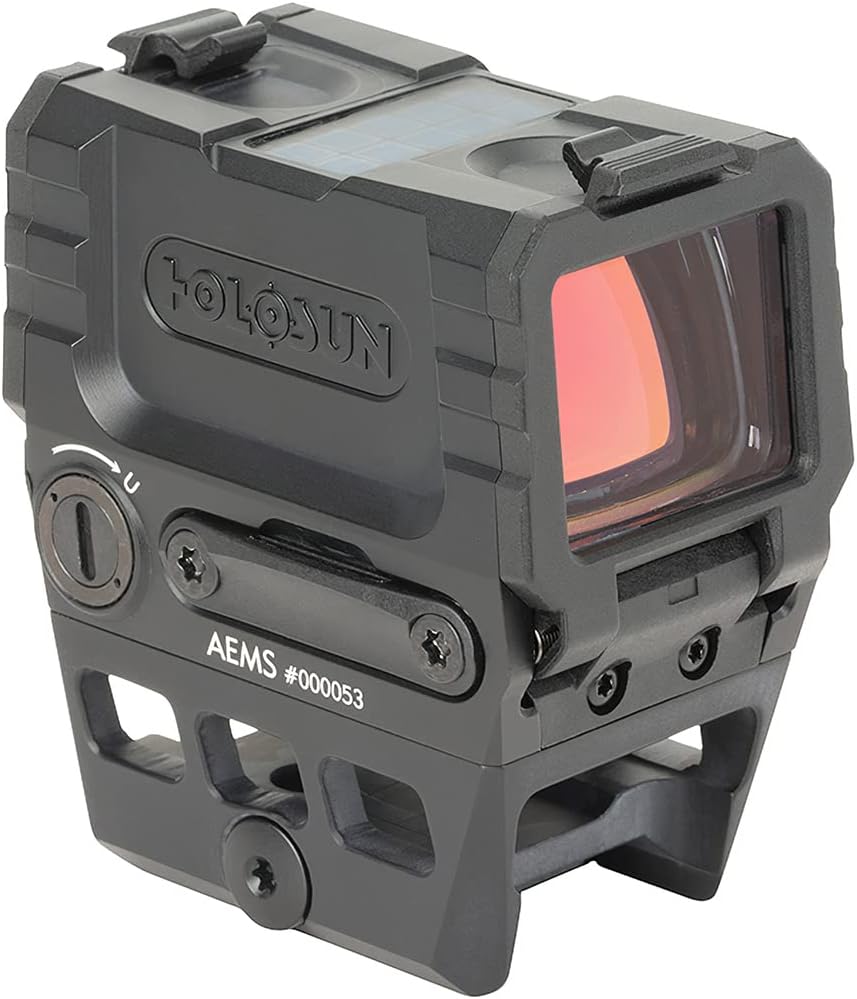
The AEMS is one of the best enclosed-emitter optics currently available for PCC use. Its large window, compact body, and lightweight construction make it especially well suited for the FX-9 platform.
Specs
- 2 MOA dot with circle reticle
- Enclosed emitter
- Solar backup system
- Shake Awake technology
- Multiple night vision settings
- Lower 1/3 co-witness mount included
Pros
- Massive field of view
- Excellent battery life
- Lightweight housing
- Crisp reticle under movement
- Strong water sealing
Cons
- Slight blue lens tint
- Buttons feel soft with gloves
- Premium price category
In live fire, the AEMS feels exceptionally fast during transitions. The wide window minimizes tube effect and helps keep the dot visible during awkward shooting positions. I noticed very little perceptible parallax shift inside 25 yards, even when intentionally pushing eye position off-center.
The emitter housing stays clean because of the enclosed design, which matters on a PCC that may see outdoor matches or vehicle use. Lens distortion near the edges is minimal, and brightness adjustment remains intuitive even under stress.
Online discussions consistently praise the AEMS for combining EOTECH-like window visibility with much better battery life. Shooters also tend to prefer it over bulkier holographic sights on lightweight carbines.
The included mount places the optic at a practical height for the FX-9. I achieved a comfortable lower 1/3 co-witness with standard AR-height backup irons. No adapter plate is required since the optic mounts directly to the Picatinny rail.
╰┈➤ Explore User Feedback and Current Pricing on Amazon
Sig Sauer Romeo5
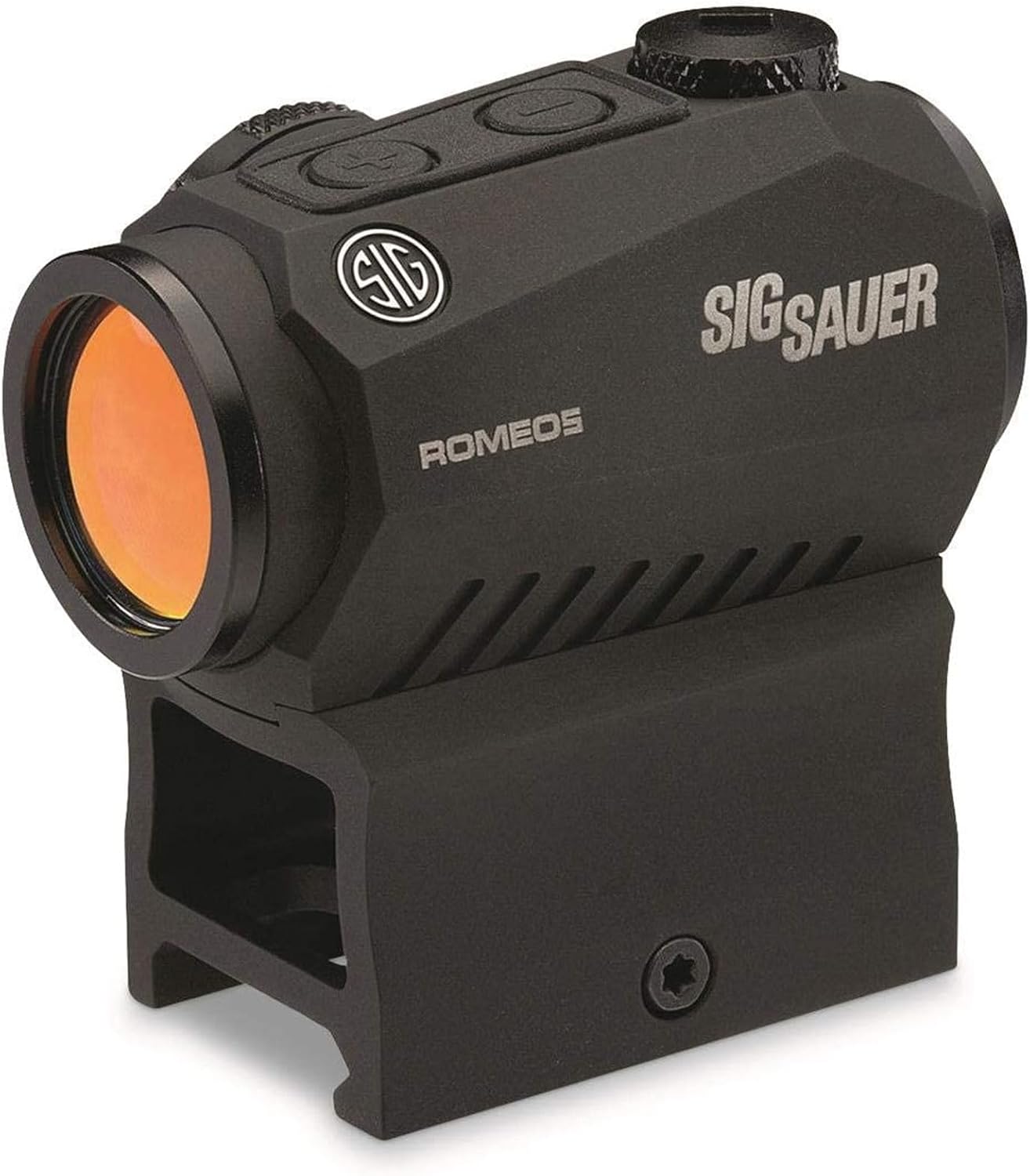
The Romeo5 remains one of the best value-oriented PCC optics available. It offers dependable performance, respectable durability, and surprisingly solid glass quality for its price class.
Specs
- 2 MOA dot
- MOTAC auto-on system
- IPX7 waterproofing
- Included high and low mounts
- 40,000-hour battery life
- Compact micro footprint
Pros
- Affordable
- Reliable battery system
- Simple controls
- Good clarity for the price
- Lightweight body
Cons
- Slight edge distortion
- Brightness wheel can feel stiff
- More noticeable tint than premium optics
On the FX-9, the Romeo5 feels balanced and compact. The optic’s low mass helps preserve the PCC’s quick handling characteristics. I particularly like how stable the dot remains during rapid recoil cycles.
The push-button controls are positive enough for gloved use, though they lack the tactile sharpness of Aimpoint controls. The glass has a mild blue-green tint, but target visibility remains strong in daylight.
Parallax performance is respectable inside realistic PCC engagement distances. During barricade drills, I observed minor point-of-impact shift at extreme edge positions, but nothing severe enough to matter in practical shooting.
Online user feedback frequently highlights the Romeo5’s durability relative to its cost. Many shooters report thousands of rounds without loss of zero. That reputation matters for a blowback PCC like the FX-9.
Mounting is extremely straightforward. The included high mount works perfectly on the FX-9 upper receiver and delivers an intuitive cheek weld with AR-height irons. No footprint adapter or proprietary plate is required.
╰┈➤ Explore User Feedback and Current Pricing on Amazon
Aimpoint Duty RDS
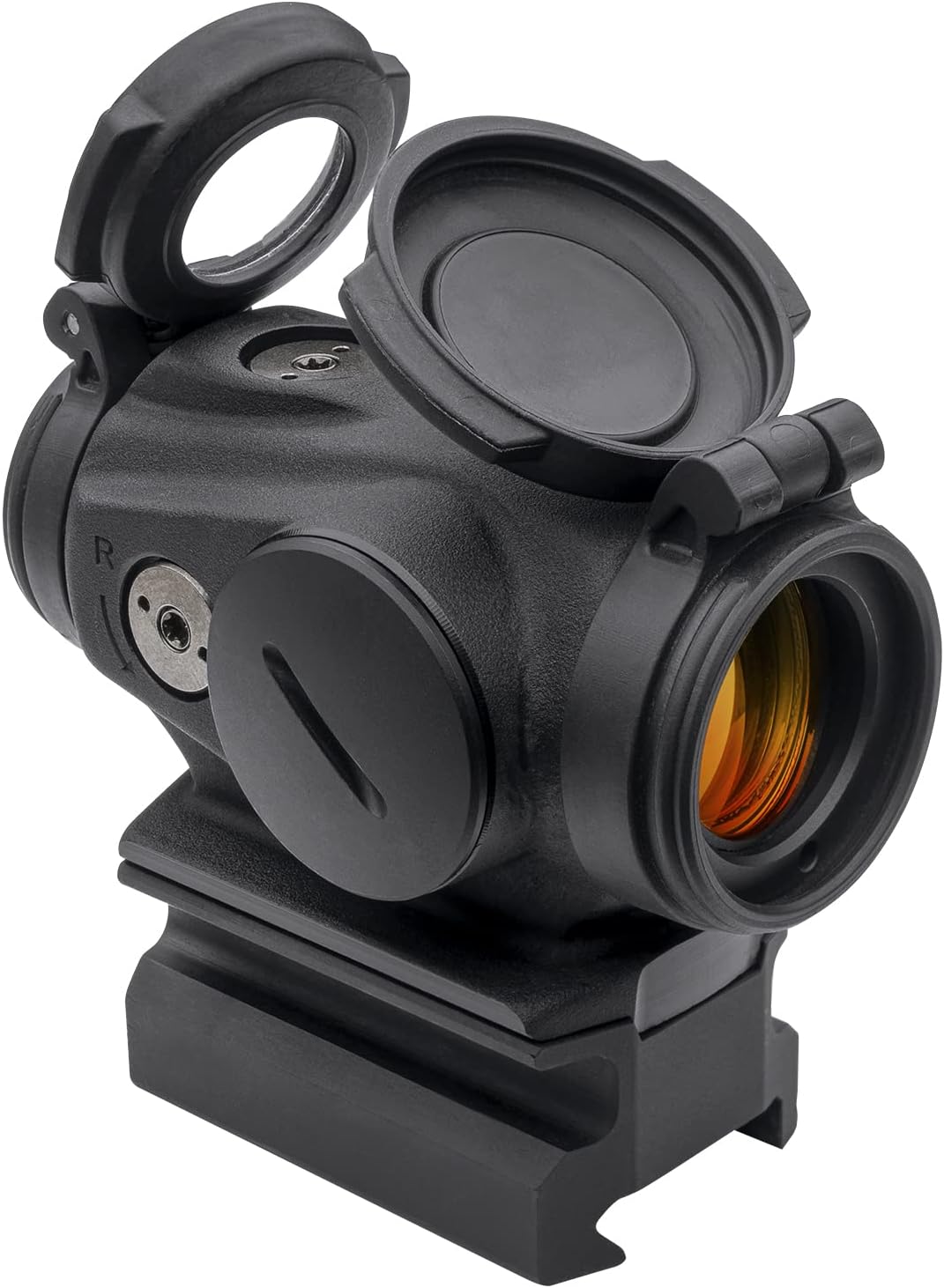
The Duty RDS delivers classic Aimpoint reliability in a more accessible package. For defensive FX-9 builds, this optic stands out because of its ruggedness and consistency.
Specs
- 2 MOA dot
- 50,000-hour runtime
- Night vision compatible
- Fully enclosed emitter
- Recessed adjustment turrets
- 7075 aluminum body
Pros
- Exceptional durability
- Outstanding battery life
- Extremely crisp dot
- Reliable turret system
- Minimal parallax issues
Cons
- Smaller window than AEMS
- Higher cost
- Conservative feature set
The first thing I noticed with the Duty RDS was how stable the optic feels under recoil impulse. The FX-9 cycles quickly, but the dot remains impressively calm during rapid doubles and transitions.
Aimpoint’s lens coatings create less noticeable tint than many competitors. Glass quality is excellent, and there is very little fisheye distortion around the perimeter. The brightness knob also has excellent tactile feedback, even while wearing gloves.
This optic excels in consistency. The dot intensity remains stable across brightness levels, and the battery compartment design feels significantly more confidence inspiring than cheaper micro dots.
Discussions across enthusiast forums frequently compare the Duty RDS favorably against older PRO-series optics because of its lighter weight and improved mounting flexibility. Users consistently trust it for duty and defensive applications.
The included mount height works well on the FX-9 platform. I achieved an efficient lower 1/3 co-witness setup with folding backup sights. Since the optic uses a standard micro-style mounting interface, aftermarket mount support is excellent.
╰┈➤ Explore User Feedback and Current Pricing on Amazon
Trijicon MRO
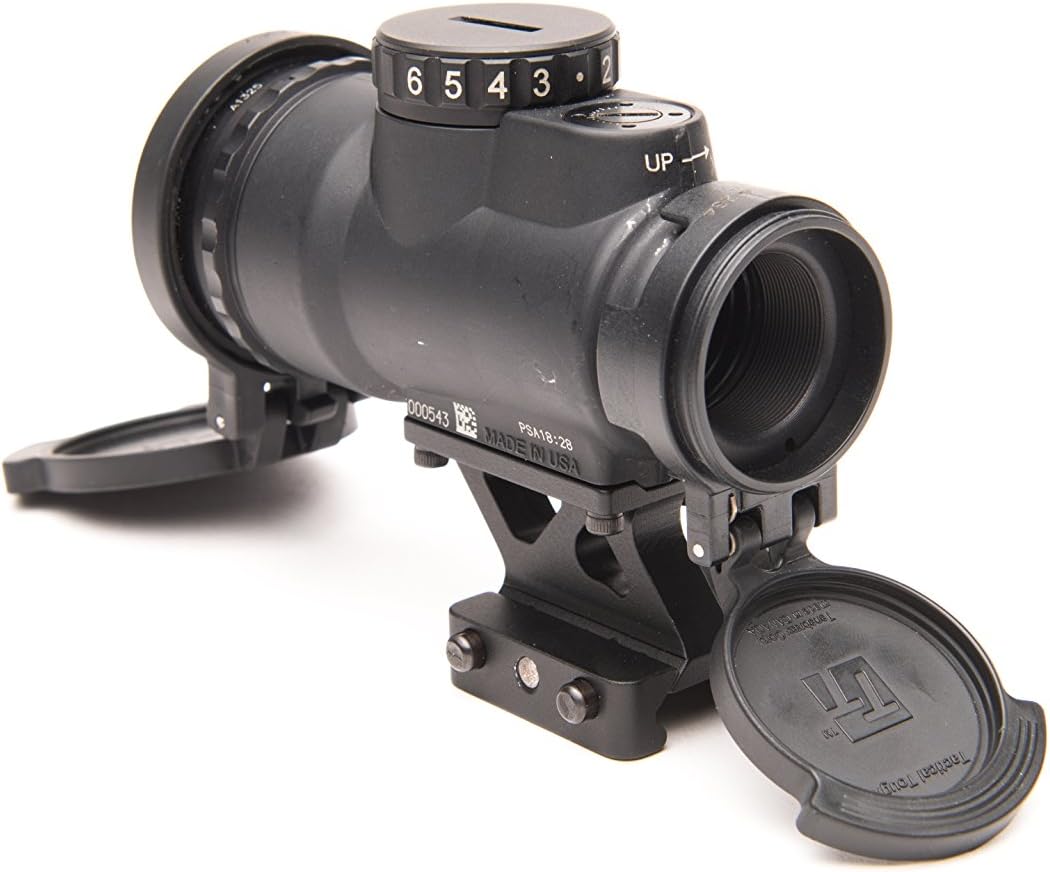
The MRO remains a popular choice for shooters who prioritize a wide sight picture and lightweight handling. On the FX-9, it creates a very natural shooting experience.
Specs
- 2 MOA dot
- 7075 aluminum housing
- Ambidextrous brightness dial
- Waterproof construction
- Large objective lens
- Multiple mounting heights available
Pros
- Huge apparent window
- Lightweight body
- Durable construction
- Fast acquisition speed
- Excellent illumination range
Cons
- Slight magnification effect
- Mild edge distortion
- Premium mount often sold separately
The MRO feels extremely fast during movement-heavy drills. Its large objective creates an almost holographic feel despite being a tube-style optic. That wider visual presentation helps maintain situational awareness during close-range PCC shooting.
The brightness dial is one of my favorite control systems in this category. It provides positive clicks and remains easy to manipulate with gloves. Battery access is also straightforward and secure.
The optic does exhibit slight magnification characteristics, which some shooters notice immediately. However, on a PCC like the FX-9, I found the effect manageable and mostly irrelevant during dynamic shooting.
Online discussions remain divided about the MRO’s optical characteristics, but most users agree the sight excels in speed-focused applications. Competitive PCC shooters often appreciate its balance of weight and visibility.
Mounting is direct to the rail with no plate required. Choosing the correct mount height matters. I strongly prefer a lower 1/3 mount on the FX-9 because it improves head positioning while preserving backup sight visibility.
╰┈➤ Explore User Feedback and Current Pricing on Amazon
Primary Arms SLX MD-25
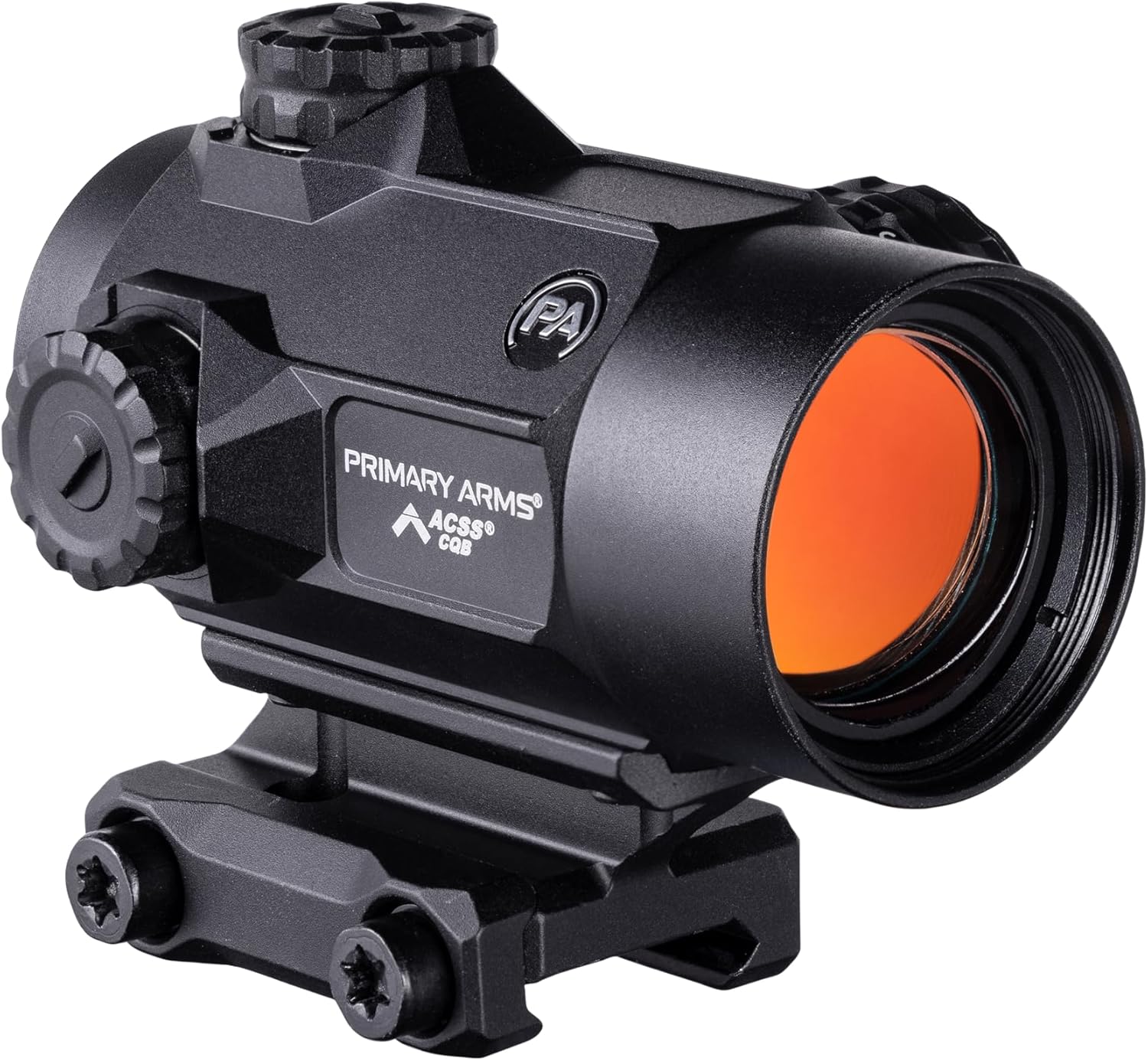
The SLX MD-25 is one of the better budget-friendly full-size micro dots for PCC use. Its larger 25mm objective helps create a more forgiving sight picture on the FX-9.
Specs
- 2 MOA dot
- 50,000-hour battery life
- AutoLive motion sensing
- 25mm objective lens
- Multiple mount spacers included
- Night vision compatibility
Pros
- Large viewing window
- Strong value
- Crisp center dot
- Flexible mounting heights
- Solid battery performance
Cons
- Slightly bulky
- Buttons feel mushy
- Moderate lens tint
I found the MD-25 particularly forgiving during rapid transitions. The larger objective window helps maintain dot visibility during unconventional shooting positions and recoil recovery.
The optic body feels solid without becoming excessively heavy. During extended shooting sessions, I appreciated the relatively neutral glass with only moderate color shift. Edge distortion is present but controlled well enough for practical PCC use.
Button ergonomics are decent, though not exceptional. With gloves, the controls feel slightly less distinct than higher-end optics. The battery cap threading, however, is robust and inspires confidence.
Online shooters frequently describe the MD-25 as an underrated PCC optic because of its combination of affordability and durability. Many users compare it favorably against entry-level SIG and Vortex optics.
The included spacer system gives flexibility for co-witness setup. On the FX-9, I preferred the lower 1/3 configuration because it kept the optic high enough for fast presentation while avoiding excessive chin weld.
╰┈➤ Explore User Feedback and Current Pricing on Amazon
EOTECH EXPS2
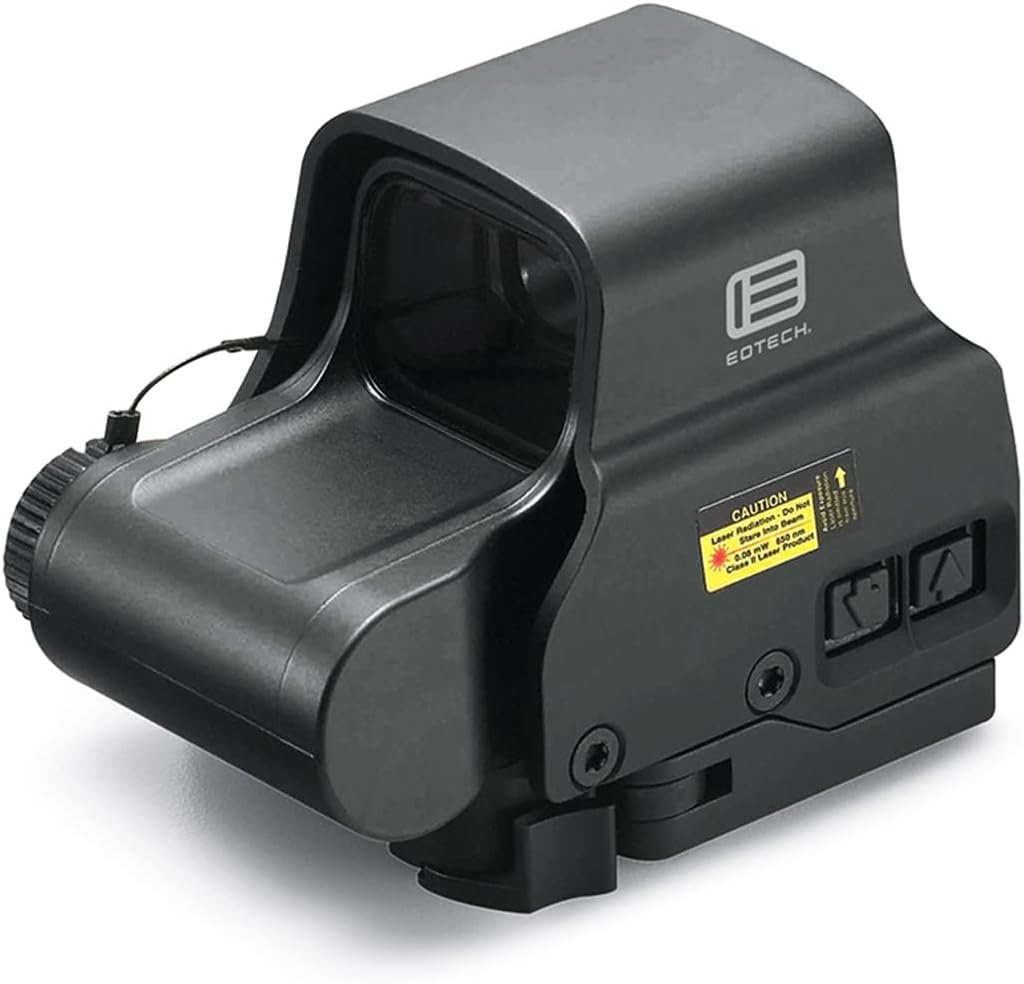
The EXPS2 remains one of the fastest close-range optics ever made. Although heavier than most micro dots, it pairs surprisingly well with the FX-9 for shooters prioritizing speed.
Specs
- Holographic reticle
- 68 MOA ring with 1 MOA center dot
- Quick-detach mount
- Side-mounted controls
- Wide rectangular window
- Waterproof aluminum housing
Pros
- Extremely fast reticle acquisition
- Outstanding peripheral visibility
- Minimal perceived parallax
- Excellent for movement shooting
- Proven durability
Cons
- Shorter battery life
- Heavier than micro optics
- Expensive batteries over time
The EXPS2 shines on PCCs because the holographic reticle remains incredibly easy to track during recoil. The large ring naturally draws the eye, making transitions fast and intuitive.
Window clarity is excellent with almost no tube effect. Even under awkward cheek weld positions, I found the reticle remained visible and easy to center. That matters enormously on a defensive or competition FX-9 build.
The side buttons are glove friendly and easier to manipulate around magnifiers than rear-button EOTECH models. Battery compartment sealing also feels extremely robust.
Online discussions consistently praise the EXPS2 for close-range speed, though users acknowledge the shorter runtime compared to LED dots. Many PCC competitors still prefer holographic sights because of their natural tracking characteristics.
The integrated QD mount attaches directly to the FX-9 rail system. Co-witness alignment works well with standard AR-height irons, typically producing a lower 1/3 setup.
╰┈➤ Explore User Feedback and Current Pricing on Amazon
How I Tested / Evaluation Criteria
Parallax Performance
Parallax becomes noticeable on PCCs because shooters often engage targets rapidly from unconventional positions. I evaluated each optic by intentionally shifting eye position at distances from 10 to 50 yards while observing point-of-impact consistency.
The best optics minimized visible reticle drift while maintaining a stable sight picture during recoil recovery. Holographic optics and premium enclosed emitters generally performed best.
Co-Witness and Deck Height
The FX-9 benefits from optics that maintain a comfortable AR-style cheek weld. I tested absolute and lower 1/3 configurations with standard folding backup irons.
Optics with excessively tall deck heights forced awkward head positioning. Lower-profile designs tended to feel faster and more natural during rapid target transitions.
Durability
Even though the FX-9 shoots softer than a rifle-caliber AR, the blowback action still stresses optic internals. I evaluated mounting stability, battery retention, turret security, and housing rigidity during repeated firing sessions.
Optics with weak battery contacts or poorly secured caps often reveal issues quickly on PCC platforms.
Battery Performance
Battery life matters more than many shooters realize. I looked at runtime claims, real-world standby reliability, auto-on systems, and ease of battery replacement.
Motion activation systems proved especially useful for home-defense PCC setups.
Brightness Range
I tested each optic under indoor lighting, direct sunlight, and low-light conditions. Reticles needed to remain visible without excessive blooming.
Good brightness controls should also remain tactile and easy to manipulate with gloves.
Glass Quality
Glass clarity influences both speed and comfort. I evaluated lens tint, edge distortion, emitter reflection, and overall image neutrality.
Heavy blue tint or fisheye distortion becomes distracting during extended range sessions.
Controls Ergonomics
Button placement and tactile feel matter during stressful shooting conditions. I preferred optics with positive tactile feedback and intuitive layouts.
Flush buttons sometimes looked cleaner but became harder to use with gloves or wet hands.
Mounting Ecosystem
The FX-9 uses a straightforward Picatinny top rail, but mount height still dramatically affects usability. I favored optics with broad aftermarket support and flexible mounting options.
Micro footprints such as Aimpoint T2-compatible systems offer the greatest versatility.
How to Choose the Right Red Dot for This Gun
Choosing the right optic for the FX-9 depends heavily on intended use. A home-defense PCC needs different characteristics than a USPSA competition setup or a casual range gun.
For defensive use, I strongly prefer enclosed-emitter optics. The FX-9 often gets staged in vehicles, bags, or safes where dust and lint can obstruct open emitters. Enclosed systems like the AEMS and Duty RDS maintain cleaner optical performance over time.
Weight also matters more than many shooters expect. One reason the FX-9 feels so agile is its relatively light front end. Oversized optics can upset that balance quickly. Compact micro dots preserve handling while still offering fast acquisition.
Window size becomes important during movement-heavy shooting. Larger windows allow faster dot recovery after recoil and make transitions easier around barricades. However, larger optics usually increase bulk and mounting height.
Co-witness geometry should not be ignored. I generally recommend lower 1/3 alignment on PCCs because it keeps irons available without cluttering the optic window. Absolute co-witness setups can feel visually crowded during rapid shooting.
Battery management is another practical consideration. Motion-activated systems are ideal for defensive guns because they reduce the risk of dead batteries while preserving readiness.
Reticle style matters too. Single dots often provide cleaner precision, while circle-dot systems improve speed at close range. On the FX-9, both styles work well depending on shooting priorities.
Finally, think carefully about durability. Blowback PCCs create a unique recoil impulse that can expose weaknesses in cheaper optics. Spending slightly more on proven mounting systems and reliable electronics usually pays off long term.
FAQs
What optic height works best on the FX-9?
I generally prefer lower 1/3 co-witness height because it maintains a natural AR-style cheek weld while keeping backup irons visible without cluttering the window.
Are enclosed emitters worth it on a PCC?
Yes. Enclosed emitters resist dust, moisture, and debris much better than open systems. That becomes especially useful for defensive or outdoor PCC use.
Does the FX-9 require a special mounting footprint?
No. The FX-9 uses a standard Picatinny top rail, so most rifle-style red dots mount directly without adapter plates.
Is a holographic sight better than an LED dot for the FX-9?
Holographic sights are generally faster during movement shooting, but LED dots provide dramatically longer battery life and lower weight.
Can the FX-9 handle heavier optics?
Yes, but excessively heavy optics can reduce the carbine’s fast-handling feel. Lightweight micro dots usually preserve balance better.
Conclusion
After extensive testing, I believe the Best Red Dot for Freedom Ordnance Fx-9 depends primarily on whether you prioritize speed, durability, battery life, or overall value. The HOLOSUN AEMS stands out as the most balanced option overall because of its enclosed emitter, large viewing window, lightweight housing, and excellent PCC handling characteristics.
Shooters wanting a budget-friendly solution should strongly consider the Romeo5, while defensive users who prioritize absolute reliability will appreciate the Aimpoint Duty RDS. Competitive shooters focused on speed may still prefer the EXPS2 because of its unmatched holographic reticle performance.
No matter which optic you choose, proper mount height and consistent zero confirmation matter just as much as the optic itself.