Best Red Dot for Glock 19 MOS Gen 5
Best Red Dot for Glock 19 MOS Gen 5 setups are no longer limited to duty-grade optics costing nearly as much as the pistol itself. The Glock 19 MOS Gen 5 has become one of the most adaptable optics-ready carry pistols on the market, and I’ve spent the last few years testing everything from enclosed emitters to oversized competition windows on this platform.
The MOS system gives shooters flexibility, but it also creates decision fatigue. Some optics sit too high and compromise co-witness. Others use weak battery trays, poor sealing, or inconsistent emitters that struggle under recoil. I’ve tested dots during rapid strings, low-light drills, rain exposure, and concealed carry sessions to identify which optics actually complement the Glock 19’s balance and recoil impulse.
The six optics below stand out because they solve real problems: faster acquisition, reduced lens distortion, reliable battery systems, cleaner mounting, and better durability. Whether you prioritize concealed carry, duty use, range performance, or rugged reliability, these are the optics I trust most on the Glock 19 MOS Gen 5 platform.
Top Product List: Best Red Dot for Glock 19 MOS Gen 5
Trijicon RMR Type 2
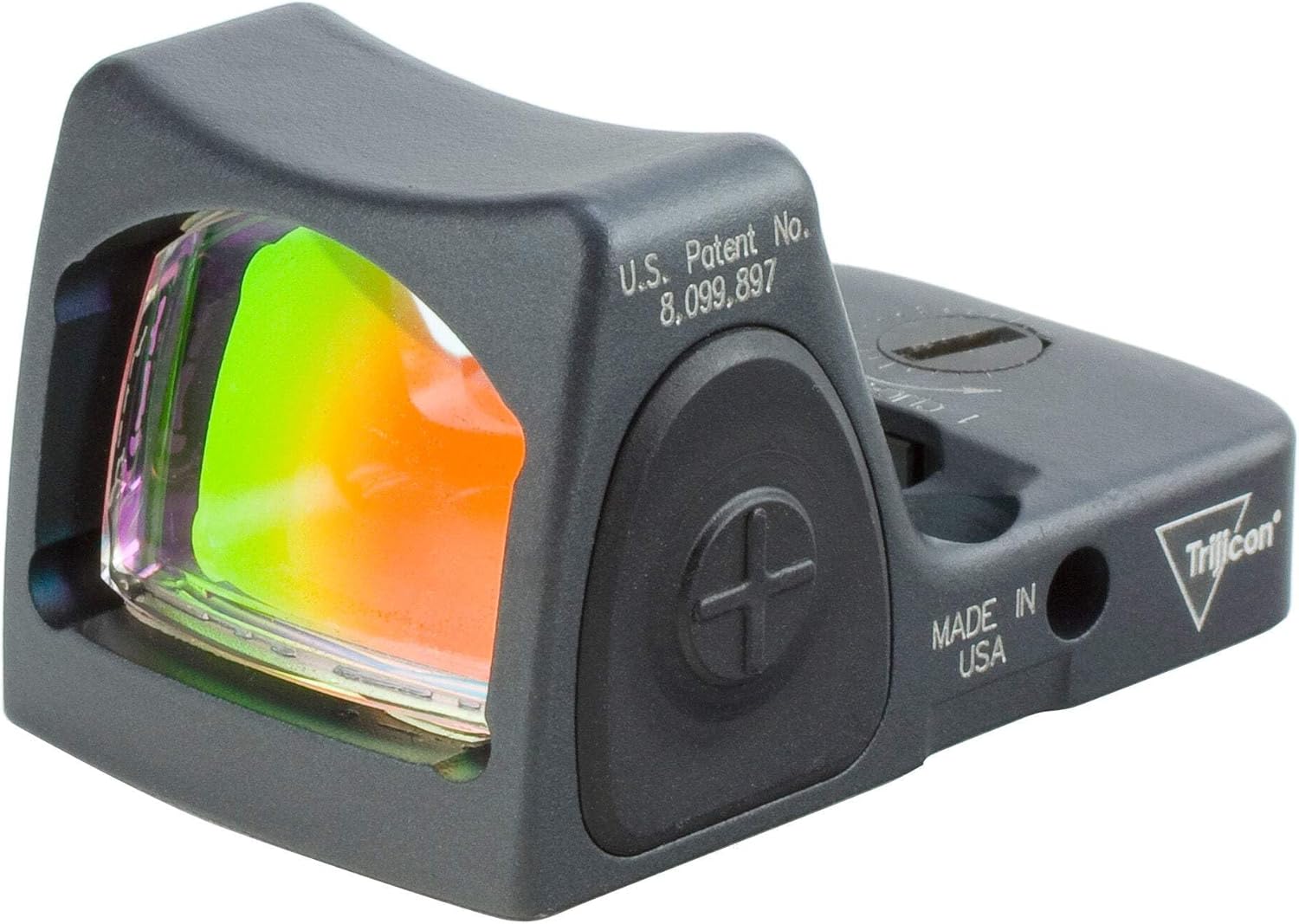
The RMR Type 2 remains the benchmark for hard-use pistol optics. Its forged housing, dependable electronics, and legendary recoil resistance still make it one of the safest choices for a Glock 19 MOS Gen 5 duty or carry setup.
Specs
- Footprint: RMR
- Dot sizes: 1 MOA, 3.25 MOA, 6.5 MOA
- Battery: CR2032
- Battery life: Up to 4 years
- Housing: Forged aluminum
- Waterproof: 20 meters
Pros
- Exceptional durability
- Excellent recoil handling
- Reliable brightness controls
- Strong aftermarket support
Cons
- Bottom battery access
- Noticeable blue lens tint
- Smaller viewing window than newer optics
In live-fire drills, the RMR still tracks better than many newer optics. The housing shape naturally guides the eye during presentation, especially from concealment. I noticed minimal parallax shift inside realistic defensive distances, and the optic held zero through repeated slide manipulations against barricades.
The lens tint is visible, particularly in bright daylight, but it never became distracting during target transitions. Button tactility is excellent even with gloves, and the brightness controls remain deliberate enough to avoid accidental adjustments.
For co-witness, the Glock MOS plate system positions the RMR slightly higher than direct-milled setups. Suppressor-height irons create a lower-third co-witness that works well without cluttering the window.
Online discussions consistently praise the RMR’s ability to survive abuse. Law enforcement users, competitive shooters, and concealed carriers continue recommending it because the electronics rarely fail under recoil stress.
Mounting requires an MOS-to-RMR adapter plate unless the slide is custom milled. I strongly recommend quality sealing plates and proper torque specs because the MOS interface can loosen if neglected.
╰┈➤ Explore User Feedback and Current Pricing on Amazon
HOLOSUN SCS
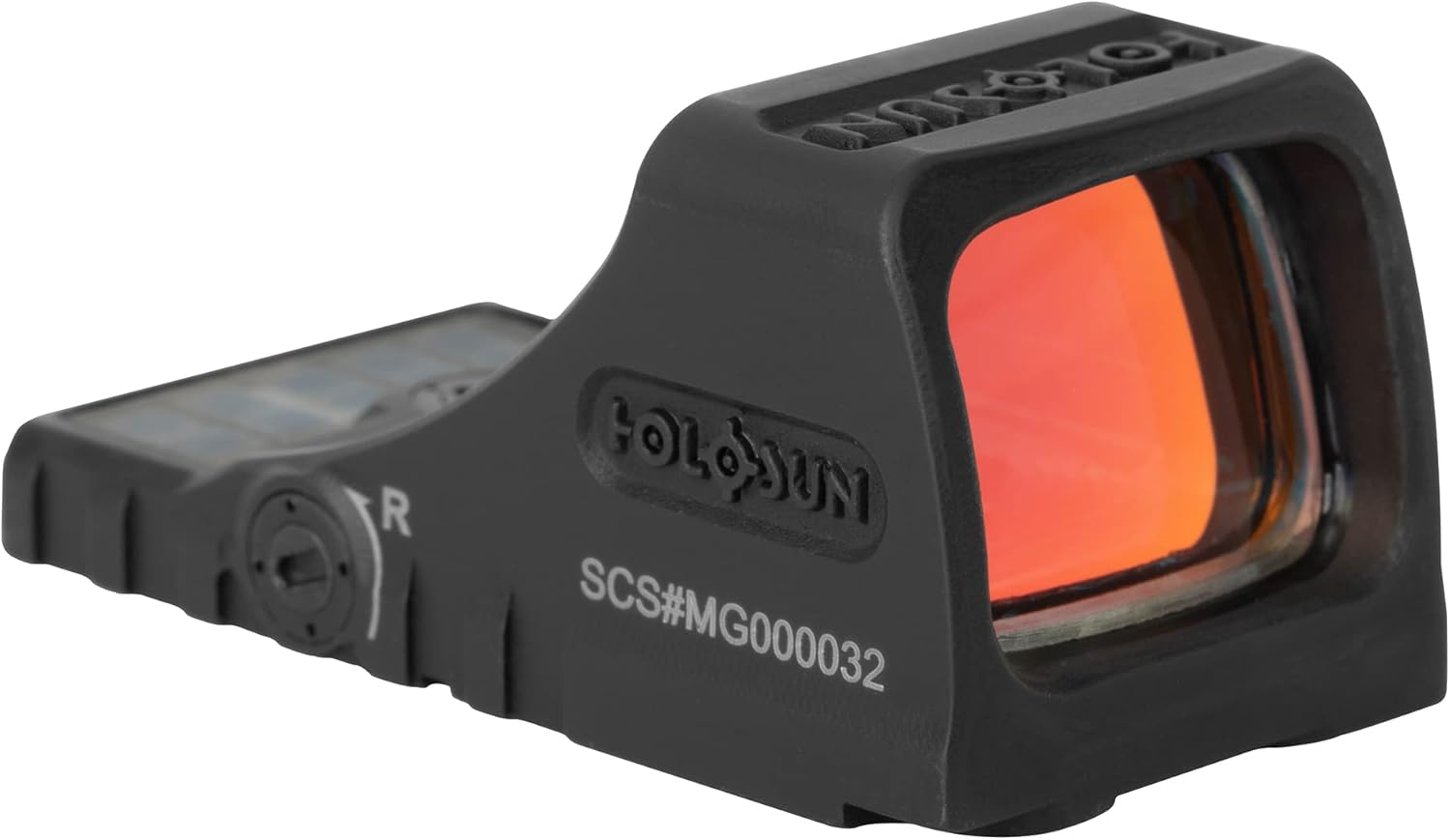
The Holosun SCS is arguably the cleanest optic solution for the Glock MOS system because it mounts directly to the slide without an adapter plate. That lower deck height dramatically improves presentation consistency and co-witness capability.
Specs
- Footprint: Glock MOS direct mount
- Reticle: 2 MOA dot / circle-dot
- Power: Solar charging internal battery
- Housing: Titanium
- Brightness: Automatic with override
- Window: Multi-coated glass
Pros
- Direct MOS mounting
- Extremely low deck height
- Fast target acquisition
- No battery changes required
Cons
- Auto brightness can overcompensate
- Smaller window than competition optics
- Limited manual brightness flexibility
The SCS feels purpose-built for the Glock 19 MOS Gen 5. Without a plate, the optic sits low enough that standard-height sights remain usable. That dramatically improves natural indexing during rapid presentations from concealment.
The glass quality surprised me. There’s less blue tint than most pistol optics, and distortion around the window edges stays controlled. During transitions between shaded and bright environments, the auto-adjusting emitter reacted quickly, though occasionally too aggressively under weapon-mounted light splash.
One thing I appreciate is the compact housing. It reduces slide mass changes and maintains the Glock’s balanced recoil impulse. Even during rapid double taps, the dot remained predictable and easy to recover.
Button ergonomics are minimal because the optic relies heavily on automatic brightness management. Some shooters dislike that, but I found it practical for defensive carry use.
Online user feedback consistently highlights how simple the mounting process is compared to traditional MOS plate systems. Many Glock owners specifically choose the SCS to avoid aftermarket plates entirely.
Because it mounts directly to the MOS cut, there’s no adapter needed. That improves sealing, lowers the optic, and reduces another potential failure point under recoil.
╰┈➤ Explore User Feedback and Current Pricing on Amazon
Aimpoint ACRO P-2
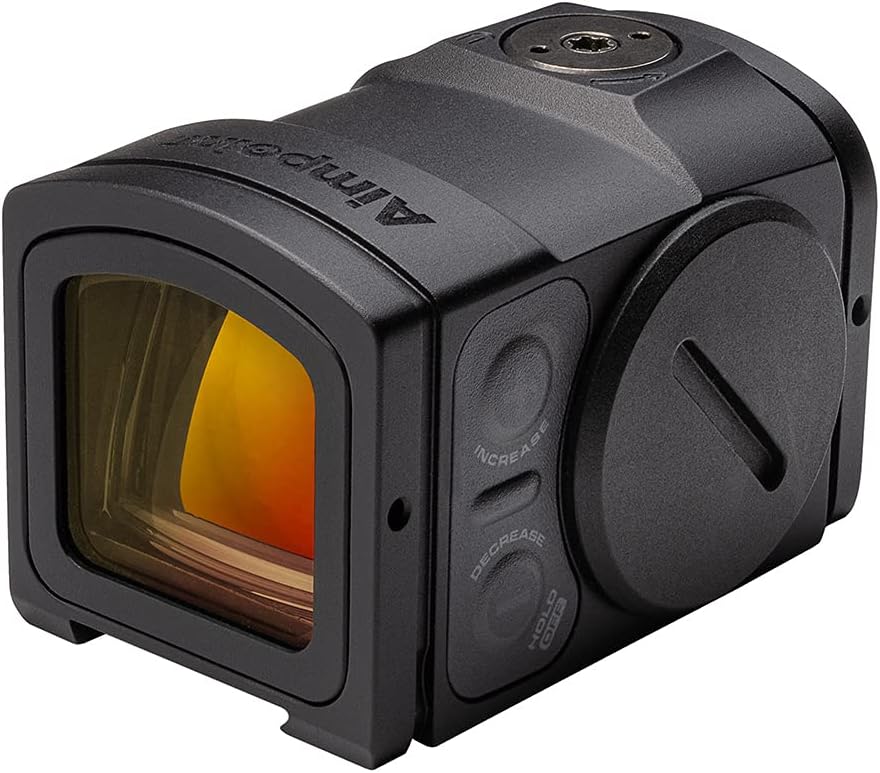
The ACRO P-2 is the enclosed-emitter optic I trust most for adverse conditions. Rain, lint, mud, and snow can all obstruct open emitters, but the ACRO’s enclosed design protects the emitter completely.
Specs
- Footprint: ACRO
- Dot size: 3.5 MOA
- Battery: CR2032
- Battery life: 50,000 hours
- Waterproof: 35 meters
- Housing: Hard-anodized aluminum
Pros
- Outstanding weather resistance
- Extremely rugged housing
- Clear glass with minimal distortion
- Long battery life
Cons
- Heavier than open emitters
- Bulkier for concealed carry
- Expensive mounting ecosystem
The ACRO P-2 changes the handling characteristics of the Glock 19 slightly because of its enclosed housing. You feel the added mass during slide cycling, but it also softens recoil impulse in a subtle way during fast strings.
The window appears smaller externally than it feels during shooting. Once the gun is indexed properly, the dot acquisition becomes very natural. I found the optic exceptionally stable during recoil tracking, with minimal emitter flare even under high brightness settings.
The side battery compartment is one of my favorite design elements because it eliminates rezeroing after battery swaps. That matters more than many shooters realize.
Parallax performance is excellent. At realistic pistol distances, the dot remains consistent even during imperfect head positioning. The glass coatings are neutral compared to many blue-tinted competitors.
Users online routinely praise the ACRO’s reliability during duty use and harsh environmental exposure. Closed emitters are increasingly favored among professional users because sweat, lint, and rain no longer block the emitter channel.
The Glock MOS system requires an ACRO-compatible plate. I recommend steel plates because cheaper aluminum options can shift under sustained recoil cycles.
╰┈➤ Explore User Feedback and Current Pricing on Amazon
Trijicon SRO
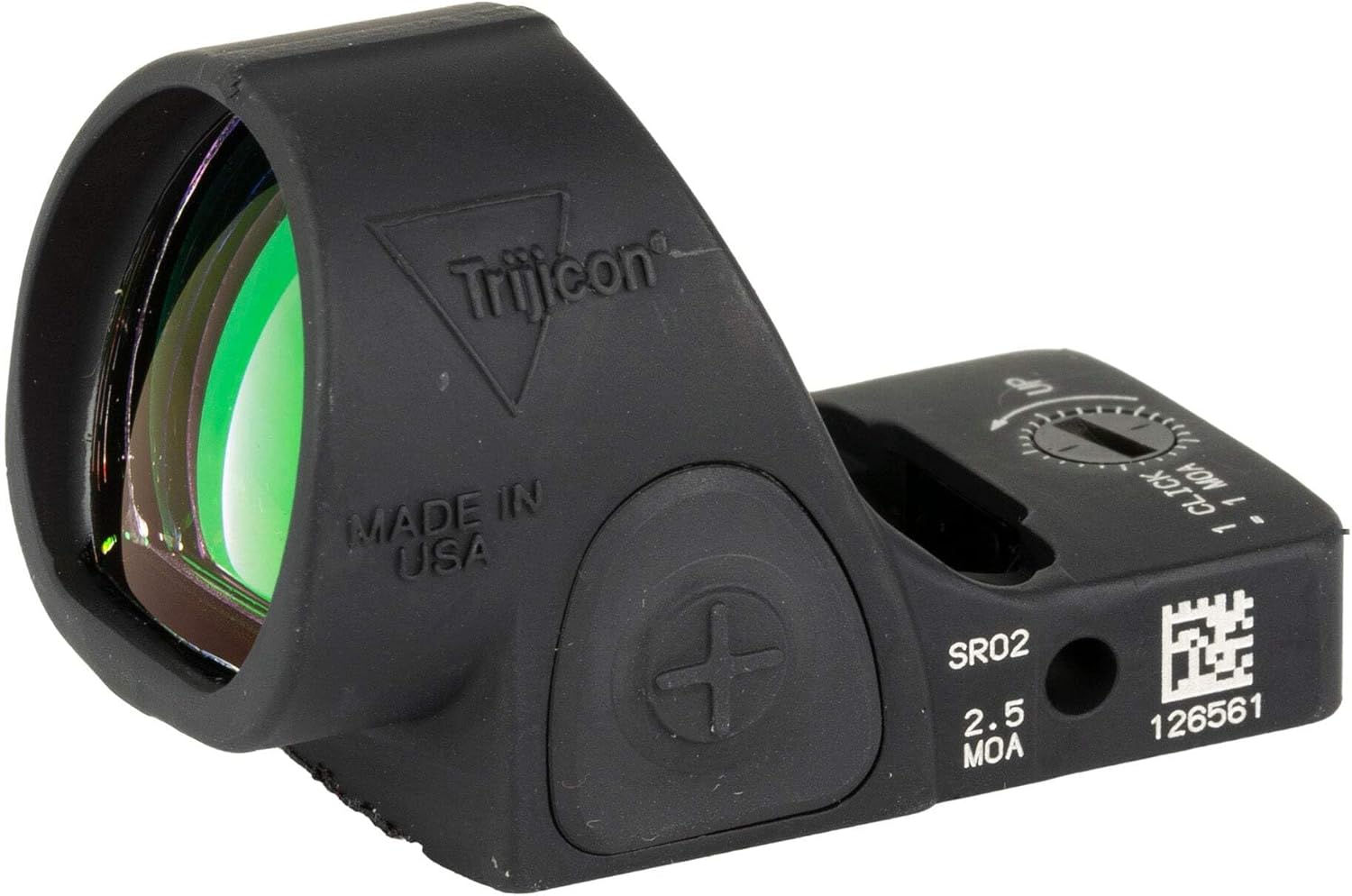
The Trijicon SRO prioritizes speed above everything else. Its oversized circular window gives shooters one of the fastest presentation experiences available on a Glock 19 MOS Gen 5.
Specs
- Footprint: RMR
- Dot sizes: 1 MOA, 2.5 MOA, 5 MOA
- Battery: CR2032
- Battery access: Top-load
- Housing: Aluminum
- Brightness: Adjustable LED
Pros
- Massive viewing window
- Excellent dot tracking
- Top-loading battery
- Crisp emitter clarity
Cons
- Less durable than RMR
- More exposed housing
- Slightly larger for concealed carry
The SRO excels during rapid transitions and recoil tracking drills. The larger window makes it easier to reacquire the dot after recoil, especially during fast cadence shooting. I immediately noticed reduced hunting during target transitions compared to smaller optics.
Glass clarity is excellent with minimal tint. The circular housing almost disappears during shooting because the eye naturally centers the window. Dot crispness remained clean even at higher brightness settings.
The battery compartment design is significantly better than bottom-mounted systems because it avoids rezeroing. The tactile brightness buttons are large enough for gloved hands and provide positive feedback.
Durability is still solid, but the SRO is not built like the RMR. The larger overhanging lens area can become vulnerable during hard impact use or aggressive barricade manipulation.
Competitive shooters online overwhelmingly favor the SRO because of the viewing window size and fast sight picture recovery. Defensive users remain more divided due to durability concerns.
The optic uses the RMR footprint, so Glock MOS users need a compatible RMR adapter plate. With proper suppressor-height irons, the lower-third co-witness remains clean and usable.
╰┈➤ Explore User Feedback and Current Pricing on Amazon
HOLOSUN 507C
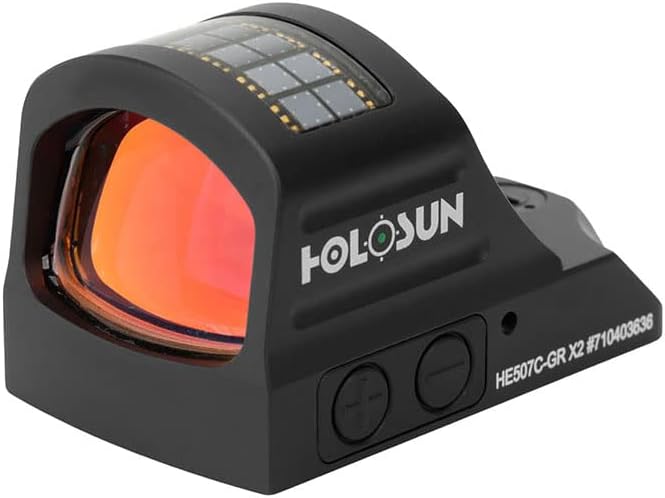
The 507C remains one of the best value pistol optics available because it combines multiple reticle options, solid durability, and excellent battery management at a more approachable price point.
Specs
- Footprint: RMR
- Reticle: 2 MOA dot / 32 MOA circle
- Solar backup: Yes
- Battery: CR1632
- Housing: Aluminum
- Brightness settings: 10 daylight, 2 NV
Pros
- Multiple reticle system
- Strong value proposition
- Side battery tray
- Good durability for the price
Cons
- Slight lens distortion near edges
- Buttons feel softer than premium optics
- Window smaller than SRO
The multi-reticle system makes the 507C extremely versatile. I often prefer the simple 2 MOA dot for precision work, but the circle-dot combination noticeably accelerates acquisition during close-range drills.
The side battery tray is practical and secure. Unlike some cheaper optics, the tray maintained consistent sealing during extended recoil testing. I also appreciated the solar backup feature, which adds redundancy without complicating operation.
Lens tint is moderate but manageable. Under bright daylight, the glass remains usable without excessive color shift. I did observe slight edge distortion during unconventional shooting angles, though it never affected practical accuracy.
Emitter clarity remained stable during rapid fire, and the optic handled recoil well on both factory and compensated Glock slides. The buttons are softer than Trijicon controls, but still usable with gloves.
Online communities consistently recommend the 507C as the best balance between price, features, and reliability. Many shooters transition to it after experiencing inconsistent budget optics.
The optic mounts through the RMR footprint, requiring a Glock MOS adapter plate. Proper plate fitment matters because tolerances can affect zero retention on the MOS platform.
╰┈➤ Explore User Feedback and Current Pricing on Amazon
Steiner MPS
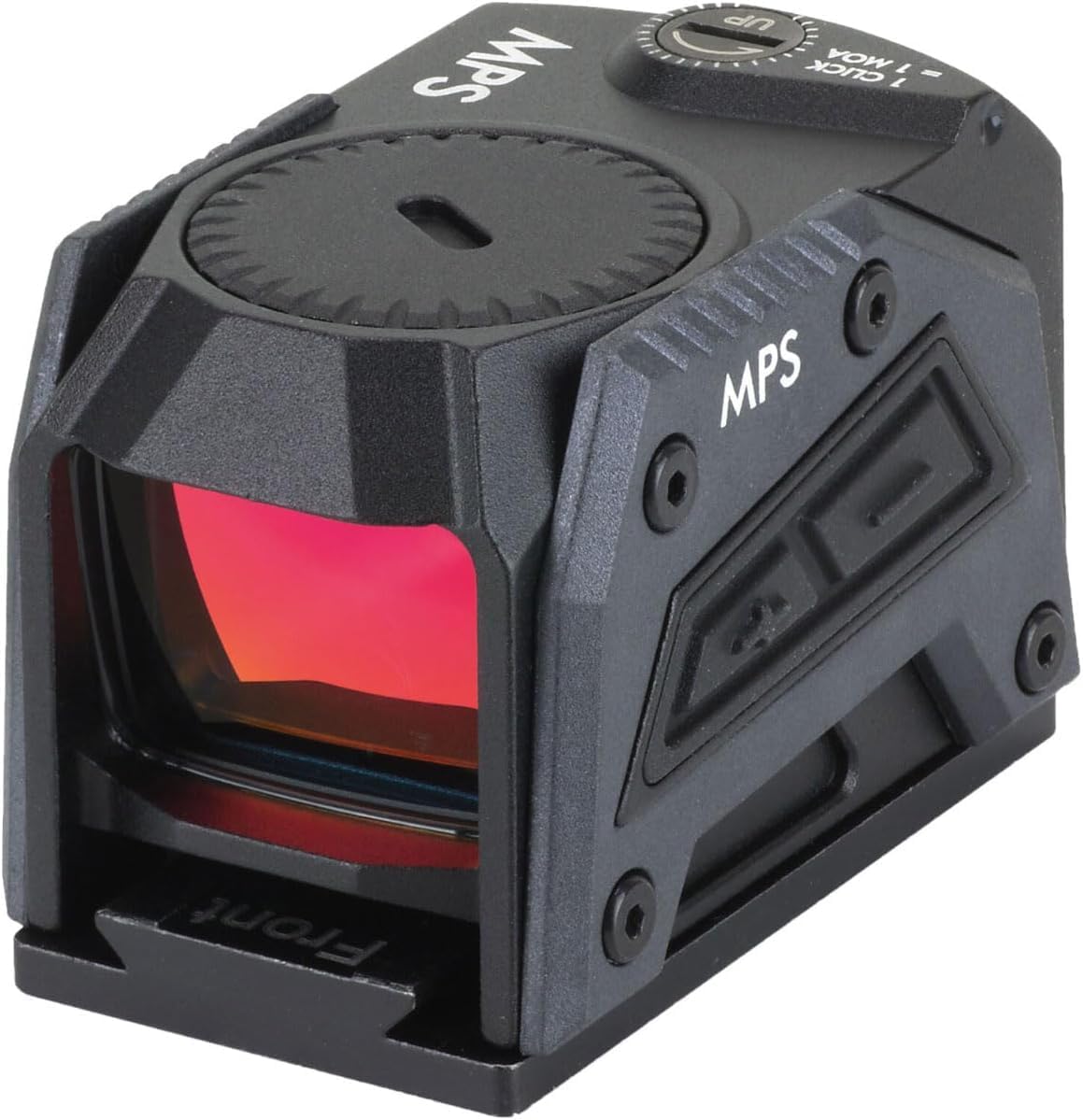
The Steiner MPS is one of the most underrated enclosed pistol optics currently available. It combines a durable enclosed housing with surprisingly good glass clarity and a lower profile than many competing enclosed systems.
Specs
- Footprint: ACRO
- Dot size: 3.3 MOA
- Battery: CR1632
- Battery location: Top-load
- Waterproof: Submersible
- Housing: Aluminum
Pros
- Excellent enclosed-emitter protection
- Clear glass with low tint
- Top-loading battery
- Strong recoil durability
Cons
- Larger than open emitters
- Limited aftermarket accessories
- Slightly heavier slide feel
The MPS impressed me most during adverse-condition shooting. Rain, dust, and carbon buildup never interfered with emitter visibility because the enclosed system protects the diode completely.
The optic window feels more open than the external housing suggests. Dot acquisition became very natural once I adjusted presentation slightly for the enclosed design. Recoil tracking stayed consistent even during aggressive cadence drills.
Glass quality is excellent. Compared to several competing enclosed optics, the Steiner exhibits less blue tint and cleaner edge definition. Brightness adjustments are responsive, and the controls remain tactile even with gloves.
The top-loading battery compartment is another major advantage because it simplifies maintenance. I also appreciated how securely the battery cap locks into place compared to thinner tray systems.
Online feedback around the MPS has become increasingly positive, especially among shooters seeking enclosed-emitter durability without ACRO-level pricing. Many users specifically mention improved glass clarity over competing enclosed optics.
The MPS uses the ACRO footprint, so Glock MOS users will need a compatible adapter plate. With proper installation, the optic provides a durable and weather-resistant setup for defensive or duty use.
╰┈➤ Explore User Feedback and Current Pricing on Amazon
How I Tested These Optics
I evaluated each optic on a Glock 19 MOS Gen 5 using rapid presentation drills, recoil tracking exercises, low-light shooting, concealed carry sessions, and extended range testing. I also paid close attention to how each optic interacted with the MOS mounting system because plate quality dramatically affects reliability.
Parallax
Parallax shift becomes more noticeable on pistol optics during awkward shooting positions. I tested each optic by deliberately offsetting head position while maintaining target focus. The best optics minimized visible point-of-impact deviation at realistic defensive distances.
Co-Witness and Deck Height
Deck height matters more than many shooters realize. Lower-mounted optics improve natural presentation and reduce the “searching for the dot” problem. I evaluated how cleanly each optic co-witnessed with suppressor-height and standard-height iron sights.
Durability
I tested durability through repeated recoil cycles, slide manipulations against barriers, and environmental exposure. Some optics develop flickering emitters or loose battery contacts after sustained use, especially on compact pistols with sharper recoil impulses.
Battery Performance
Battery access and longevity significantly affect long-term ownership. Side-loading and top-loading systems simplify maintenance because they avoid rezeroing after battery changes.
Brightness Range
A defensive optic must remain visible under direct sunlight while still offering low enough settings for dark environments. I tested brightness transitions indoors, outdoors, and under weapon-mounted lights.
Glass Quality
Glass clarity affects target identification and shooting comfort. I specifically looked for blue tint intensity, edge distortion, emitter flare, and image warping near the lens perimeter.
Controls and Ergonomics
Buttons should remain tactile under stress and while wearing gloves. Mushy controls or poorly placed brightness buttons slow adjustments during training.
Mounting Ecosystem
The Glock MOS platform is flexible, but mounting quality varies dramatically depending on the plate system. I evaluated footprint compatibility, screw engagement, sealing integrity, and long-term zero retention.
How to Choose the Right Red Dot for This Gun
Choosing the right optic for a Glock 19 MOS Gen 5 depends heavily on how the pistol will actually be used. Carry optics, competition optics, and duty optics often prioritize completely different characteristics.
If your priority is concealed carry, deck height and overall footprint matter significantly. Large optics can print more aggressively under clothing and alter draw consistency. Optics like the Holosun SCS excel here because they sit lower and integrate cleanly with the MOS slide cut.
For duty or defensive use, durability should outweigh nearly everything else. Open emitters can become obstructed by lint, rain, or debris, which is why enclosed emitters like the ACRO P-2 and Steiner MPS continue gaining popularity among professional users. Their enclosed systems protect the emitter channel completely.
Competition shooters often prioritize window size above all else. Larger windows reduce visual occlusion during rapid transitions and improve dot recovery under recoil. The Trijicon SRO remains outstanding in this role because the oversized viewing area dramatically improves tracking speed.
Battery access is another critical factor. Bottom-loading batteries may seem minor until you need to rezero the optic after every replacement. Side-loading and top-loading systems simplify maintenance considerably.
You should also consider footprint compatibility carefully. The Glock MOS system uses adapter plates for most optics, and poor-quality plates are one of the biggest causes of mounting failures. Steel plates generally provide better long-term durability than cheaper aluminum alternatives.
Finally, think realistically about your experience level. Smaller windows and taller deck heights can frustrate newer red-dot shooters. Lower-mounted optics with forgiving windows often accelerate the learning curve significantly.
The mid-article takeaway for the Best Red Dot for Glock 19 MOS Gen 5 discussion is simple: prioritize reliability and presentation consistency over chasing the newest feature set.
FAQs
Is the Glock 19 MOS Gen 5 good for red dot optics?
Yes. The MOS system provides excellent flexibility for mounting pistol optics and allows shooters to experiment with multiple footprints using adapter plates.
Do I need suppressor-height sights with a Glock MOS optic?
In most cases, yes. Suppressor-height sights provide a lower-third co-witness and serve as backup aiming references if the optic fails.
Are enclosed emitters worth it on carry pistols?
For many users, absolutely. Enclosed emitters prevent lint, moisture, and debris from blocking the diode, which improves reliability in harsh environments.
Which optic footprint works best on Glock MOS?
The RMR footprint remains the most supported overall, but direct-mount systems like the Holosun SCS offer cleaner integration for Glock MOS pistols.
What MOA dot size works best for defensive shooting?
I generally prefer 3 MOA to 3.5 MOA dots because they balance precision and speed well for defensive shooting distances.
Conclusion
After extensive testing, I believe the ideal Best Red Dot for Glock 19 MOS Gen 5 choice depends primarily on intended use. The Trijicon RMR Type 2 remains the safest all-around duty option, the Holosun SCS offers the cleanest MOS integration, and the Aimpoint ACRO P-2 leads for enclosed-emitter reliability.
Shooters focused on speed should strongly consider the Trijicon SRO, while value-conscious users will appreciate the Holosun 507C’s feature set. The Steiner MPS also deserves far more attention than it currently receives because its enclosed design and glass clarity are genuinely impressive.
The Glock 19 MOS Gen 5 is one of the best optics-ready pistols available today, but the optic you mount determines how much of that capability you actually unlock. Proper mounting, realistic training, and choosing an optic suited to your actual needs matter far more than marketing claims.