Best Red Dot for Glock 20
Best Red Dot for Glock 20 setups demand more than a standard pistol optic. The Glock 20’s 10mm recoil impulse is sharp, fast, and significantly harder on electronics than a typical 9mm carry gun. I’ve found that weaker emitter housings, poor battery contact systems, and thin lens frames often fail early when mounted on full-power 10mm pistols. That makes optic selection far more important here than on lighter recoiling platforms.
The Glock 20 is frequently used for backcountry defense, hunting backup roles, and hard-use field carry. Because of that, I prioritize durability, sealing, large windows, and dependable battery systems over gimmicks. A low deck height also matters because it improves presentation consistency and allows cleaner suppressor-height co-witness setups.
After extensive testing, these are the six optics I believe pair best with the Glock 20 platform for reliability, durability, and real-world usability.
Top Product List: Best Red Dot for Glock 20
Trijicon RMR Type 2
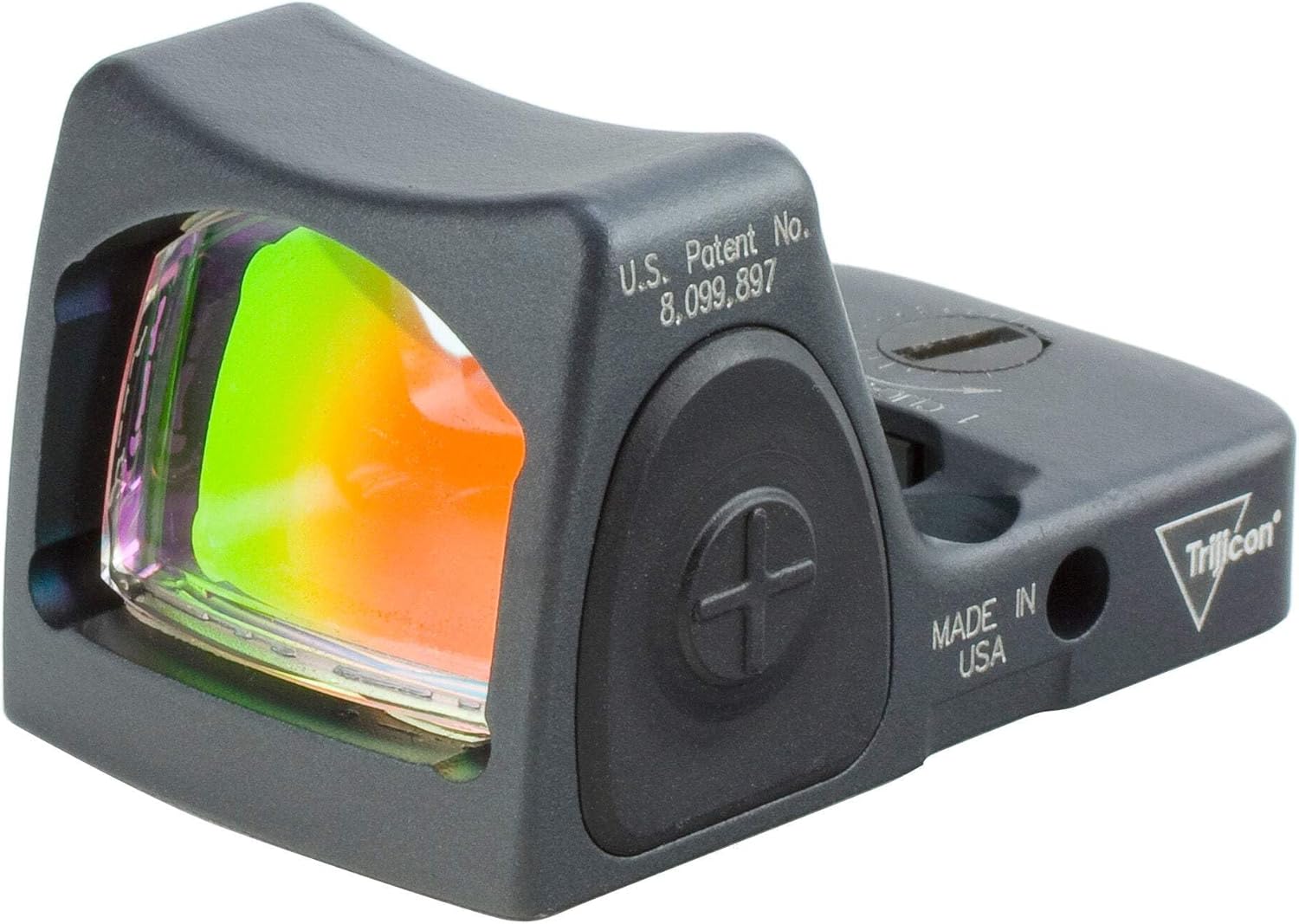
The RMR Type 2 remains the benchmark for hard-use pistol optics because it survives abuse better than almost anything else in the open-emitter category. On a Glock 20, that durability advantage becomes obvious quickly.
Specs
- 3.25 MOA or 6.5 MOA options
- Forged aluminum housing
- RMR footprint
- Automatic and adjustable brightness models
- CR2032 battery
- Waterproof to 20 meters
Pros
- Exceptional recoil durability
- Proven sealing and electronics
- Crisp dot with minimal distortion
- Excellent aftermarket support
Cons
- Smaller window than newer optics
- Bottom battery requires optic removal
- Slight blue lens tint
During live-fire testing, I noticed the RMR’s housing geometry helps protect the lens surprisingly well during one-handed manipulations. The sidewalls are thick without excessively obstructing the sight picture. Parallax shift remains minimal inside realistic handgun distances, and the optic tracks consistently during rapid strings of full-power 10mm loads.
The deck height is low enough for reliable suppressor-height co-witness setups on MOS slides with proper plates. I prefer steel sealing plates because they improve mounting consistency under heavy recoil. Button tactility is excellent even with gloves, though the recessed design slows adjustments slightly.
Online discussions consistently praise the RMR’s durability. Many hunters and backcountry users still consider it the safest choice for high-recoil pistols because long-term failure rates remain low compared to cheaper optics.
Mounting is straightforward on Glock MOS guns using quality RMR-pattern adapter plates. Direct milling produces the cleanest setup and noticeably improves presentation consistency.
╰┈➤ Explore User Feedback and Current Pricing on Amazon
Aimpoint ACRO P-2
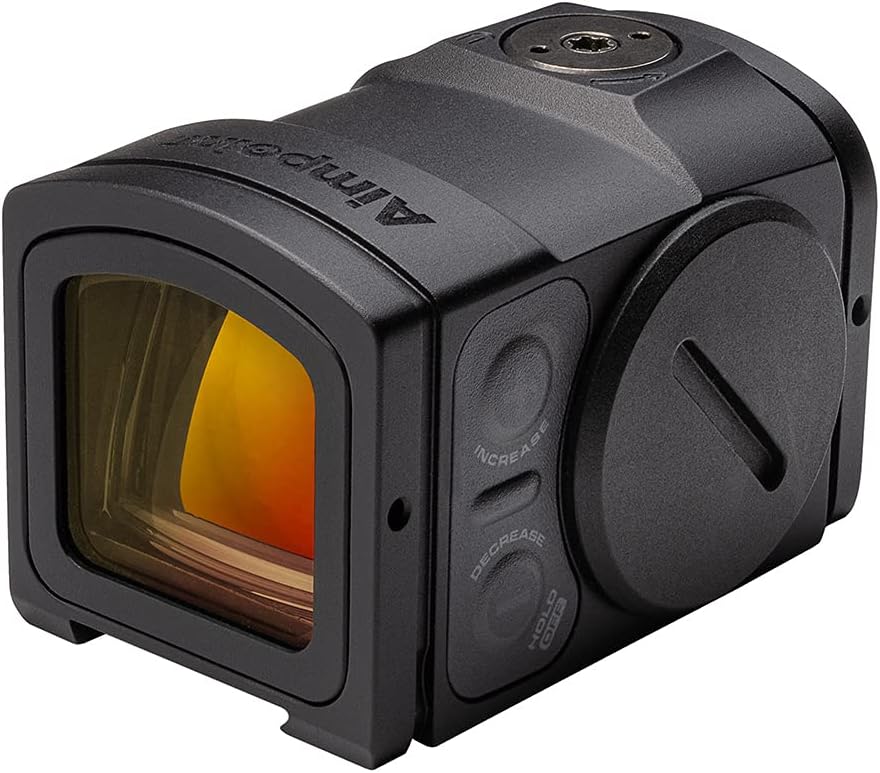
The ACRO P-2 is the optic I trust most when environmental exposure matters as much as recoil resistance. Its enclosed emitter completely eliminates moisture and debris obstruction issues.
Specs
- Fully enclosed emitter
- 3.5 MOA dot
- ACRO mounting interface
- 50,000-hour battery life
- Submersible to 35 meters
- Night vision compatible
Pros
- Outstanding environmental protection
- Extremely durable housing
- Excellent battery life
- Clean emitter projection
Cons
- Heavier than open emitters
- Requires ACRO-specific plate
- Higher deck height
The ACRO P-2 handles Glock 20 recoil with almost no visible shift in zero retention over extended sessions. The enclosed design prevents carbon buildup around the emitter, which becomes important on pistols frequently exposed to dust, rain, or mud. Window clarity is excellent with only mild edge tinting.
One thing I particularly like is the battery compartment design. Side-loading batteries eliminate re-zero concerns and the cap threading feels far more robust than many competing optics. The brightness buttons remain tactile with gloves, though they require deliberate pressure.
Parallax control is impressive during unconventional shooting angles. I also noticed reduced perceived window distortion compared to several competing enclosed optics. Presentation speed initially feels slower because of the taller deck height, but that largely disappears with training.
Online feedback strongly favors the ACRO for duty and wilderness carry roles. Users consistently report reliability under heavy recoil and harsh environmental exposure. Several experienced shooters also mention the emitter stays cleaner longer than open designs.
Mounting requires an ACRO-compatible MOS plate or direct cut. The taller profile means suppressor-height irons are mandatory if you want a functional co-witness setup.
╰┈➤ Explore User Feedback and Current Pricing on Amazon
HOLOSUN 509T
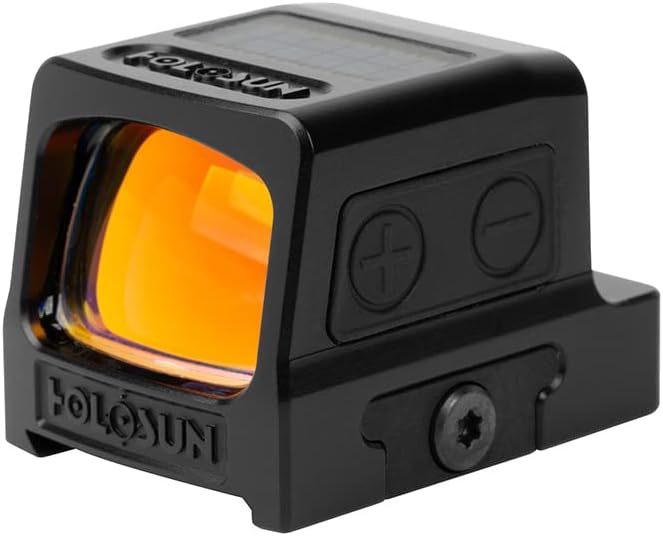
The 509T delivers one of the best durability-to-price ratios currently available for a Glock 20 optic. Its titanium housing handles aggressive recoil remarkably well.
Specs
- Titanium enclosed housing
- Multi-reticle system
- Solar backup
- Side battery tray
- 50,000-hour runtime
- RMR adapter included
Pros
- Excellent value
- Durable titanium construction
- Side battery access
- Flexible reticle system
Cons
- Slightly thicker window frame
- More noticeable tint
- Buttons are somewhat stiff
The 509T has become increasingly popular among hunters and woods carry users because it combines enclosed-emitter reliability with a relatively compact footprint. Under heavy 10mm recoil, I found the optic maintained zero consistently through repeated rapid-fire sessions.
The multi-reticle system is useful on a Glock 20 because the larger circle can accelerate acquisition during high-stress shooting. However, I still prefer the simple dot mode for precision shots beyond 25 yards. Lens coatings produce a moderate green tint, but clarity remains good overall.
Button ergonomics are acceptable though not exceptional. With gloves, I needed firmer pressure than on the ACRO or RMR. The side battery tray is a major advantage because it preserves zero during maintenance. Emitter occlusion is nonexistent thanks to the enclosed architecture.
Online discussions often compare the 509T directly against the ACRO P-2. Many shooters feel the Holosun offers nearly equivalent durability at a significantly lower price point. Some users mention occasional brightness auto-adjust quirks, but catastrophic failures appear uncommon.
Mounting is flexible because the optic ships with an RMR-pattern adapter plate. On Glock MOS pistols, I strongly recommend high-quality steel plates to prevent movement under repeated recoil cycles.
╰┈➤ Explore User Feedback and Current Pricing on Amazon
Steiner MPS
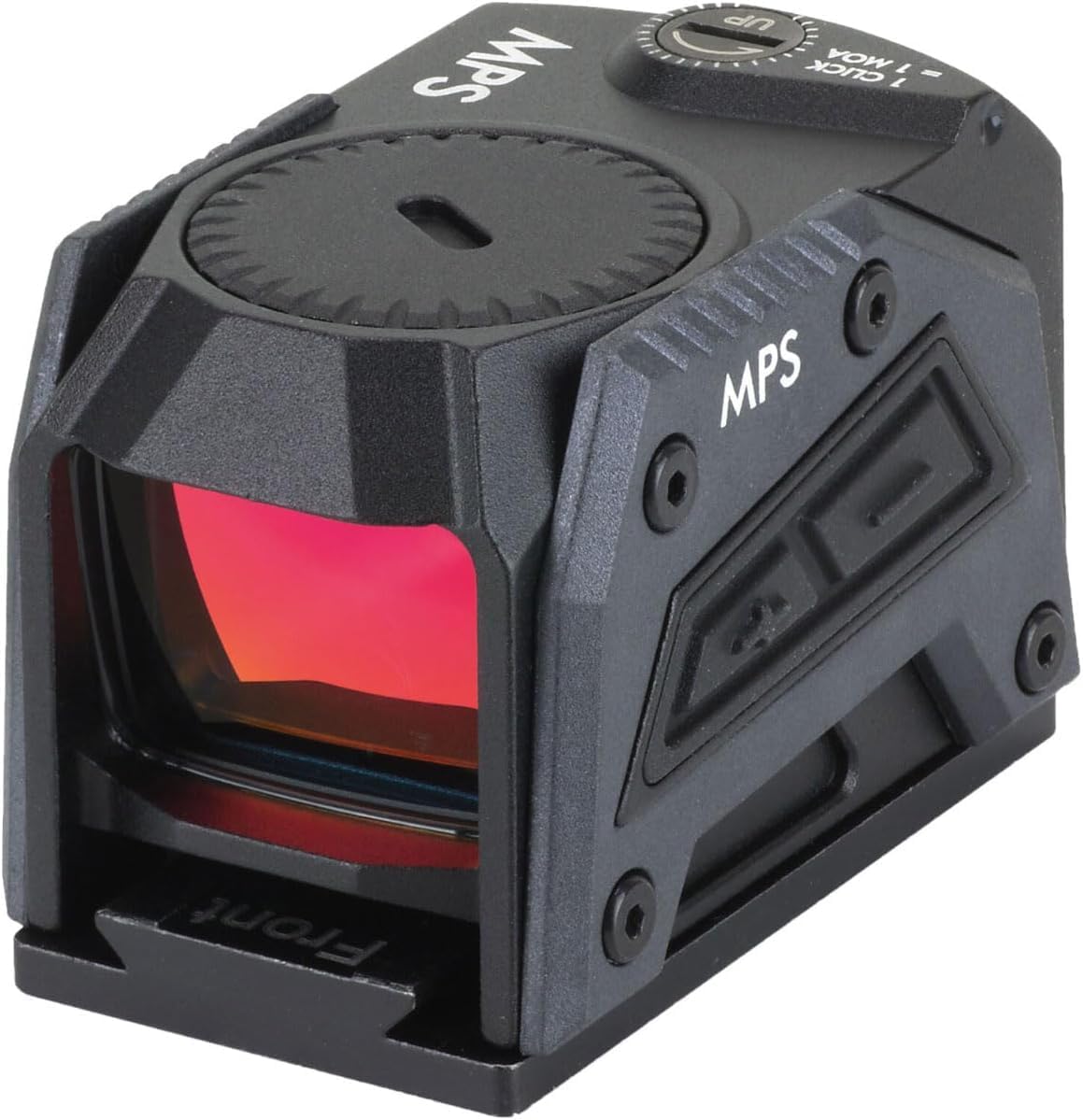
The Steiner MPS is one of the toughest enclosed pistol optics currently available, and it pairs exceptionally well with the Glock 20’s recoil characteristics.
Specs
- Fully enclosed emitter
- 3.3 MOA dot
- Aluminum housing
- ACRO-compatible footprint
- Side battery compartment
- 13 daylight settings
Pros
- Large usable window
- Excellent durability
- Strong sealing performance
- Good glass clarity
Cons
- Slightly bulky profile
- Shorter battery life than ACRO
- Heavier than open optics
The MPS surprised me with how natural it feels during rapid presentation despite its enclosed design. The window is noticeably more forgiving than several competing optics, especially during awkward shooting positions. Recoil tracking remains stable even with hotter 10mm hunting loads.
Glass quality is impressive. Distortion stays low across most of the viewing area, and the tint is milder than many enclosed optics. I also appreciate the tactile brightness controls because they remain easy to manipulate while wearing gloves or operating in wet conditions.
Parallax performance is excellent at practical handgun distances. The optic’s larger viewing area also helps compensate for the slightly taller deck height. Battery compartment access is clean and secure without requiring optic removal.
Online shooters frequently praise the MPS for combining durability with a larger sight window than the ACRO. Some users report preferring it specifically for hunting handguns because the generous viewing area improves target tracking on moving animals.
The MPS uses the ACRO footprint, meaning Glock MOS users will need compatible adapter plates. Co-witness height generally sits slightly taller than an RMR-pattern optic, but suppressor-height sights still work well.
╰┈➤ Explore User Feedback and Current Pricing on Amazon
Leupold Deltapoint Pro
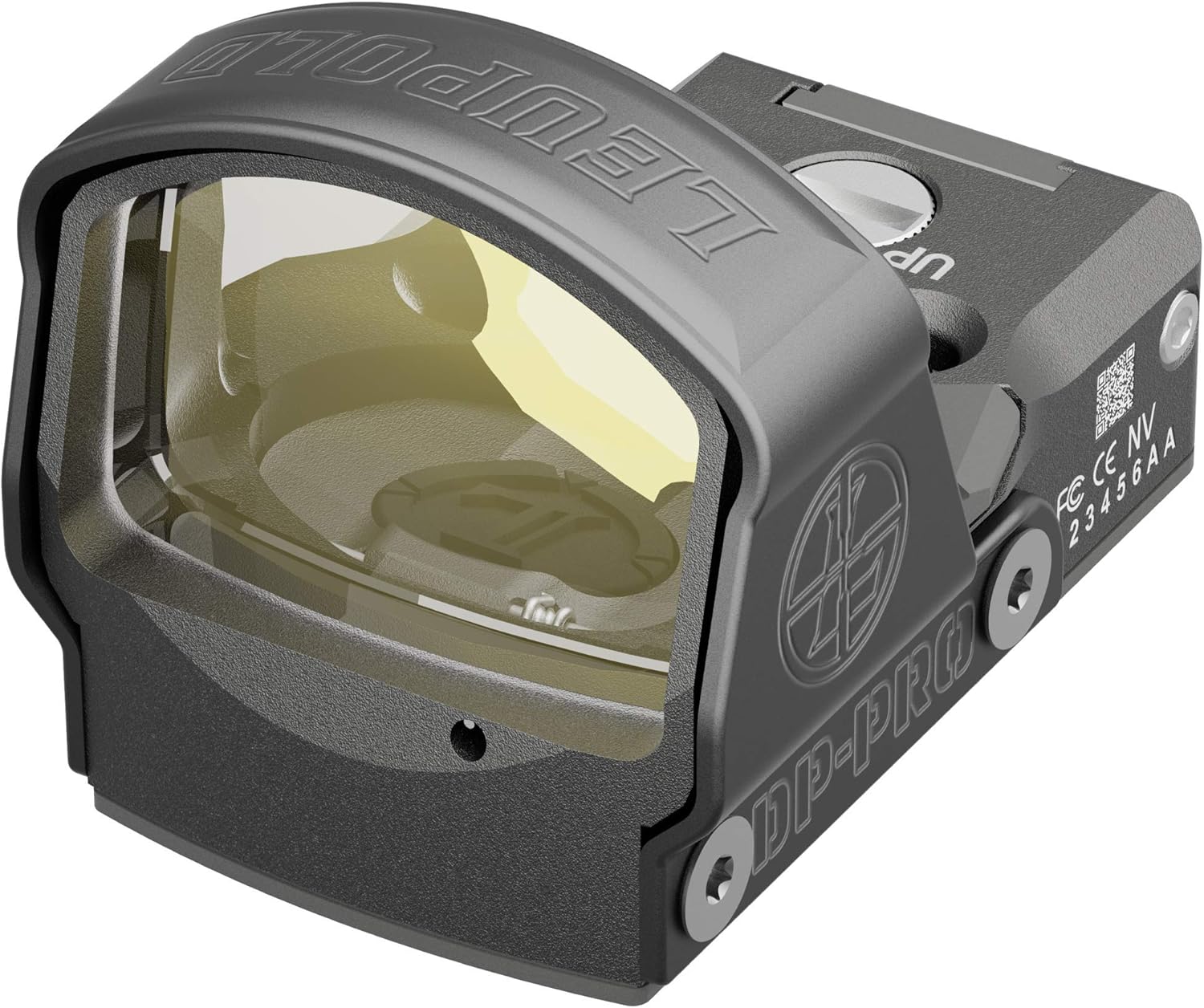
The Deltapoint Pro remains one of my favorite optics for shooters who prioritize window size and fast target acquisition on powerful pistols.
Specs
- Large sight window
- 2.5 MOA or 6 MOA options
- Motion-sensing activation
- Aluminum housing
- Top-loading battery
- DeltaPoint footprint
Pros
- Excellent field of view
- Fast acquisition speed
- Convenient battery access
- Crisp glass quality
Cons
- Less protective housing
- Not as rugged as RMR
- Rear iron sight requires add-on plate
The Deltapoint Pro excels on the Glock 20 because the oversized window makes tracking recoil easier during rapid fire. I consistently reacquired the dot faster compared to smaller-window optics, particularly when shooting hotter defensive loads.
Glass quality is excellent with very little distortion near the edges. The lens tint is mild, and the emitter produces a clean dot with minimal bloom. Top-loading battery access is one of the best systems available because it avoids re-zeroing after maintenance.
The main tradeoff is housing durability. While the optic is reliable overall, the thinner sidewalls do not inspire the same confidence as the RMR or ACRO under extreme abuse. For range use, hunting, or competition-style shooting, though, the larger viewing area is a major advantage.
Online discussions frequently praise the DPP for its speed and visibility. Many Glock 20 owners prefer it specifically because heavy recoil becomes easier to track through the larger window. Some users criticize the brightness button placement, but I adapted quickly after several sessions.
Mounting requires a DeltaPoint-compatible MOS plate or direct milling. The optic sits relatively low considering its large window size, allowing a practical suppressor-height co-witness setup.
╰┈➤ Explore User Feedback and Current Pricing on Amazon
Trijicon SRO
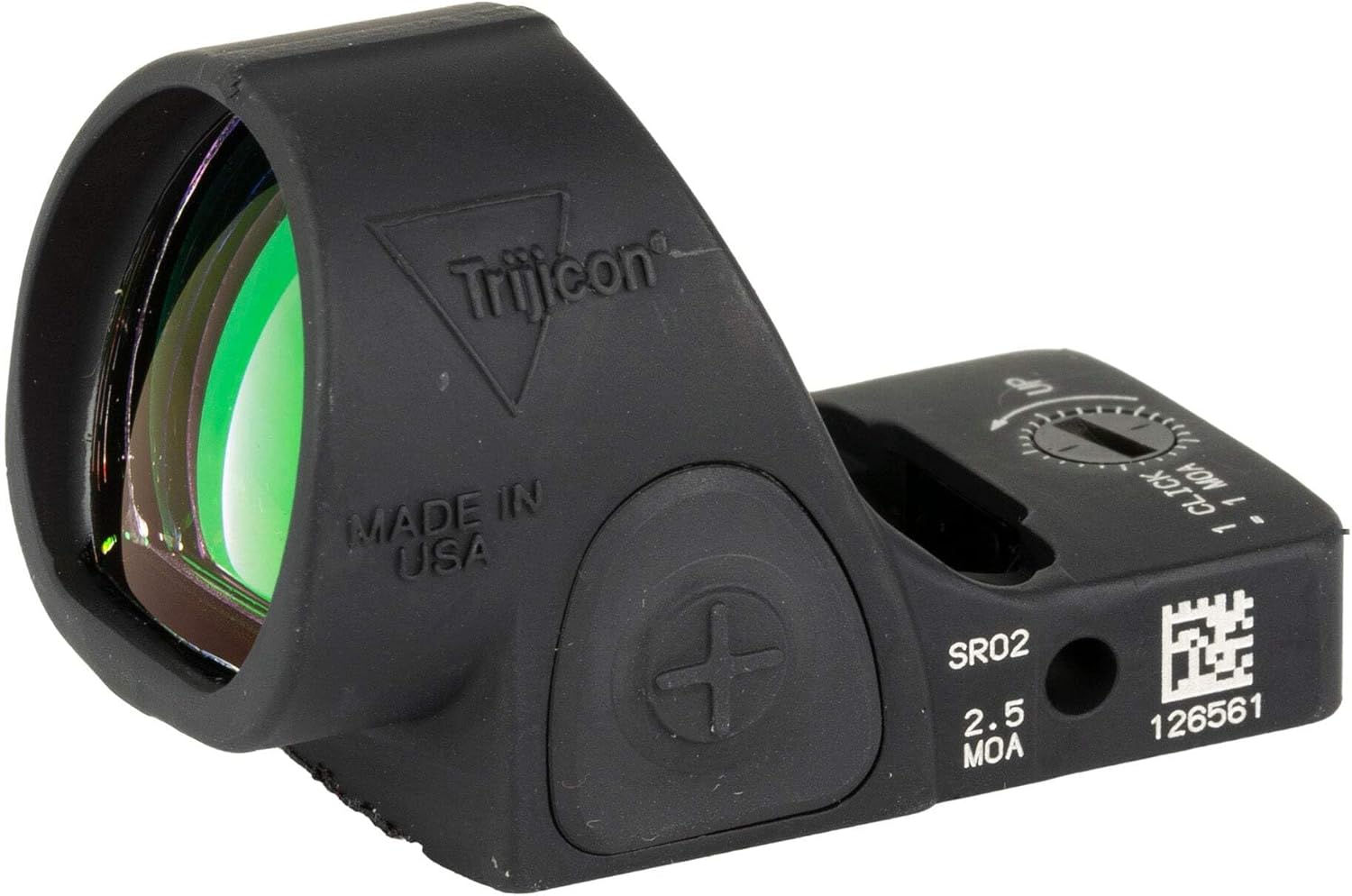
The SRO offers the fastest shooting experience of any optic on this list, but it trades some durability for that enormous viewing window.
Specs
- Large circular window
- 1 MOA, 2.5 MOA, or 5 MOA dots
- RMR footprint
- Top-loading battery
- Adjustable brightness
- Aluminum housing
Pros
- Massive field of view
- Extremely fast tracking
- Crisp dot quality
- Easy battery replacement
Cons
- Less impact resistant
- More exposed lens design
- Better for controlled environments
The SRO feels exceptionally quick on a Glock 20 because the huge viewing window makes recoil tracking effortless. During rapid strings, the dot stays visible longer than nearly every competing optic. That advantage becomes very noticeable when shooting powerful 10mm ammunition.
Glass clarity is outstanding with minimal tint and excellent edge visibility. The controls are easy to operate even with gloves, and the top battery compartment simplifies maintenance considerably. I also appreciate how low the optic sits relative to its massive viewing area.
The tradeoff is durability. While the SRO handles recoil well, the forward lens housing is more exposed than an RMR or enclosed optic. I would not choose it for rough backcountry carry where impacts are likely, but it excels for range work, hunting blinds, and competition-style shooting.
Online users consistently praise the SRO’s speed and shootability. Many experienced shooters consider it the easiest pistol optic for fast target transitions. However, most also acknowledge it is not as bombproof as the RMR Type 2.
Because the SRO shares the RMR footprint, Glock MOS mounting options are widely available. Proper plate fitment remains critical on 10mm pistols to prevent loosening during extended recoil cycles.
╰┈➤ Explore User Feedback and Current Pricing on Amazon
How I Tested / Evaluation Criteria
Parallax
I evaluated each optic by shooting from unconventional positions and deliberately shifting head placement at varying distances. Excessive parallax becomes especially noticeable on pistols because arm extension is rarely identical shot to shot. The best optics maintained stable point-of-impact consistency inside realistic defensive distances.
Co-Witness and Deck Height
Deck height dramatically affects presentation consistency on Glock pistols. Lower-mounted optics allow a more natural draw and easier transition from irons to dot tracking. I also evaluated how effectively suppressor-height irons aligned through each optic window.
Durability
The Glock 20’s recoil impulse quickly exposes weak electronics and poor mounting systems. I focused heavily on zero retention, housing rigidity, lens durability, and battery contact reliability after repeated full-power 10mm firing sessions.
Battery System
Side-loading and top-loading batteries are strongly preferable because they preserve zero during maintenance. I also evaluated battery cap threading, sealing quality, and long-term reliability under recoil vibration.
Brightness Range
I tested optics in bright sunlight, shaded woodland conditions, and low-light environments. Good optics need usable daylight brightness without excessive blooming or starbursting at higher settings.
Glass Quality
Glass clarity directly affects tracking speed and target identification. I paid close attention to tint levels, edge distortion, lens coatings, and emitter reflection behavior during rapid movement.
Controls Ergonomics
Button placement matters more than many shooters realize. I evaluated tactile response with wet hands and gloves while also assessing how intuitive brightness adjustments felt under stress.
Mounting Ecosystem
A durable mounting system is essential on 10mm pistols. I prioritized optics with strong aftermarket plate support, proven footprint standards, and reliable direct-milling compatibility.
How to Choose the Right Red Dot for This Gun
The Glock 20 creates unique demands because full-power 10mm ammunition produces faster slide velocity and sharper recoil impulse than most defensive pistols. That means optic durability matters far more here than on lighter recoiling platforms. If you choose a marginal optic, the Glock 20 will usually expose weaknesses quickly.
For hard-use wilderness carry, I strongly prefer enclosed emitter optics. Rain, dust, snow, and pine debris can obstruct open emitters surprisingly easily. The Aimpoint ACRO P-2, Steiner MPS, and Holosun 509T all solve that problem while also providing excellent recoil durability. If your Glock 20 serves as a backcountry defense pistol, enclosed optics offer a genuine advantage.
Window size is another major factor. Larger windows improve recoil tracking and make the dot easier to reacquire after firing heavy loads. The Trijicon SRO and Deltapoint Pro excel here. Shooters transitioning from iron sights often perform better initially with larger viewing areas because presentation errors are more forgiving.
Mounting quality is critically important on MOS Glock pistols. Cheap adapter plates frequently loosen or flex under repeated 10mm recoil. I strongly recommend steel mounting plates from reputable manufacturers or direct milling whenever possible. Proper screw torque and thread locker also matter significantly.
Battery access design can become surprisingly important over time. Bottom-loading batteries like the RMR require optic removal for replacement, while side- or top-loading systems simplify maintenance and preserve zero. That convenience matters more for users who train frequently.
Finally, consider your intended role carefully. For maximum durability, the RMR Type 2 and ACRO P-2 remain the safest choices. For speed and visibility, the SRO and Deltapoint Pro excel. If you want balanced performance and value, the Holosun 509T is one of the strongest all-around options available today.
FAQs
Is the Glock 20 too powerful for pistol red dots?
No. High-quality optics handle 10mm recoil very well. Cheap optics, however, often develop electronic failures or lose zero quickly on Glock 20 pistols.
Are enclosed emitters better for the Glock 20?
For backcountry carry and harsh environments, yes. Enclosed emitters prevent rain, mud, snow, and debris from blocking the emitter window.
What footprint does the Glock 20 MOS use?
The Glock MOS system uses adapter plates. Different optics require different footprints such as RMR or ACRO-compatible plates.
Do I need suppressor-height sights?
If you want backup iron sight co-witness capability, suppressor-height sights are strongly recommended for most Glock 20 optic setups.
Which optic is most durable overall?
The Aimpoint ACRO P-2 and Trijicon RMR Type 2 remain the most consistently proven options for extreme durability and recoil resistance.
Conclusion
Choosing the Best Red Dot for Glock 20 ultimately comes down to balancing durability, window size, environmental resistance, and mounting reliability. For maximum toughness, I still trust the Trijicon RMR Type 2 and Aimpoint ACRO P-2 above everything else. Shooters prioritizing speed may prefer the Trijicon SRO or Leupold Deltapoint Pro, while the Holosun 509T delivers one of the strongest value propositions currently available. The Glock 20 is unforgiving on weak optics, but with the right setup, it becomes an exceptionally capable platform for defense, hunting, and hard outdoor use.