6 Best Red Dot for Glock 21 Options for Duty, Defense, and Range Use
Best Red Dot for Glock 21 setups demand more than just a bright reticle and decent battery life. The Glock 21 is a large-frame .45 ACP pistol with a heavier reciprocating slide impulse than many 9mm handguns, and that changes what I look for in an optic. Window durability, sealing quality, recoil resistance, and mounting stability matter more on this platform than they do on lighter compact pistols.
I tested these optics with a focus on practical shooting performance rather than marketing claims. That included rapid strings, one-handed manipulations, outdoor brightness transitions, suppressor-height co-witness alignment, and extended recoil exposure with full-power defensive .45 ACP loads. I also compared emitter clarity, lens distortion, button ergonomics with gloves, and how forgiving each optic felt during awkward presentation angles.
The Glock 21 is an outstanding suppressor host and home-defense handgun, but it benefits heavily from the right optic pairing. Some red dots improve target acquisition dramatically, while others become bulky, fragile, or difficult to track under recoil. The six optics below stood out for reliability, usability, and mounting compatibility.
Top Product List: Best Red Dot for Glock 21
Trijicon RMR Type 2
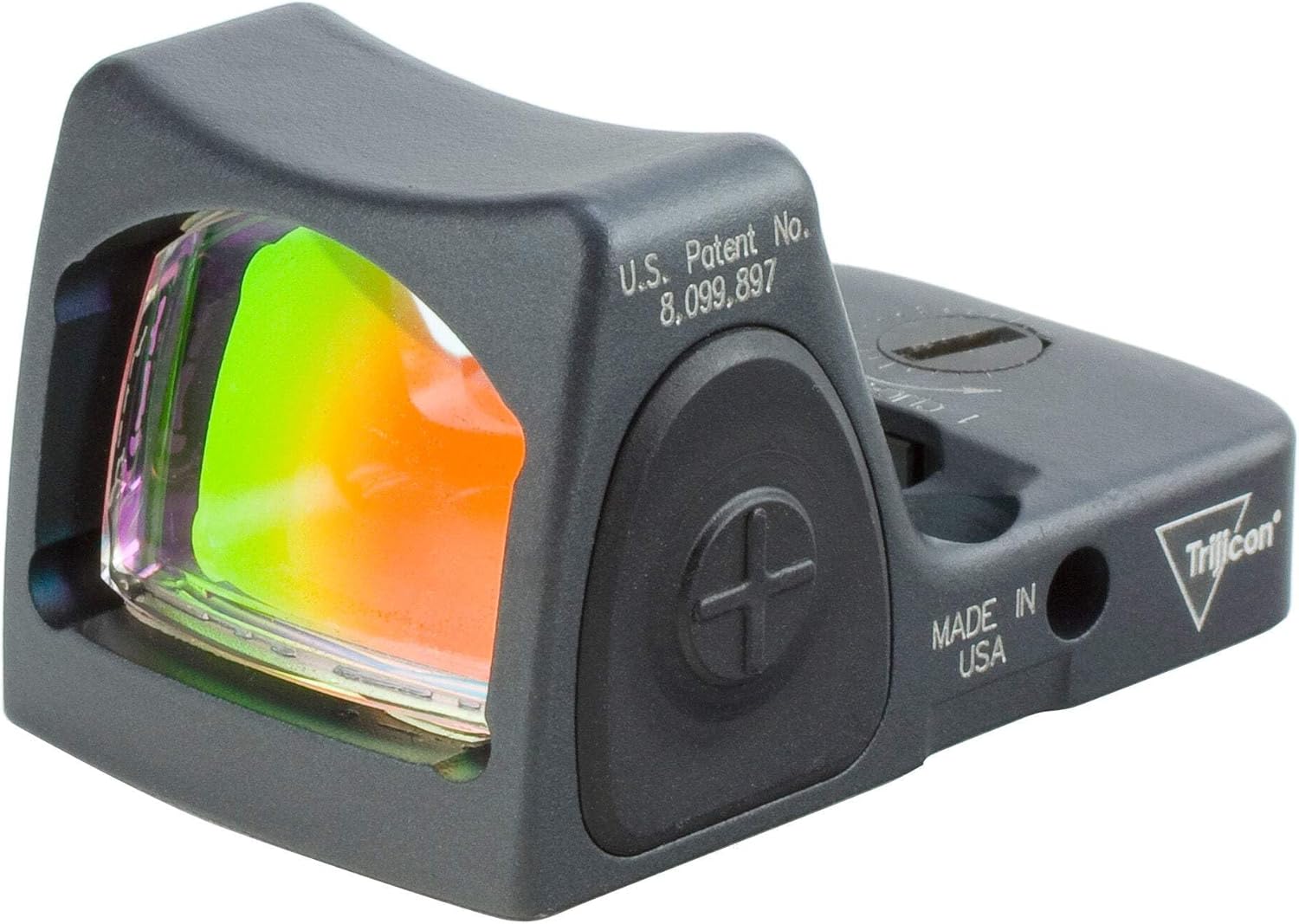
The RMR Type 2 remains the benchmark for duty-grade pistol optics because of its rugged housing, dependable electronics, and excellent recoil endurance on large-caliber handguns.
Specs
- Footprint: RMR
- Dot sizes: 1 MOA, 3.25 MOA, 6.5 MOA
- Battery: CR2032
- Battery life: Up to 4 years
- Housing: Forged aluminum
- Weight: 1.2 oz
Pros
- Exceptional durability
- Proven duty reliability
- Excellent sealing against moisture
- Crisp dot with minimal bloom
Cons
- Bottom battery tray
- Smaller window than newer designs
- Noticeable blue lens tint
In my testing, the RMR tracked exceptionally well during rapid .45 ACP recoil cycles. The optic body has enough mass to feel planted without becoming bulky. Its deck height also works well with suppressor-height irons, allowing a lower-third co-witness that stays uncluttered.
The buttons are small but tactile enough for gloved use. I noticed almost no flicker or intermittent brightness shifts even during aggressive slide manipulation drills. Parallax shift exists at extreme edge positions, but it remains minimal compared to most open-emitter optics.
The lens tint is noticeable indoors, especially under white LED lighting, though it improves contrast outdoors. Window distortion near the edges is low, and the emitter stays relatively clean unless exposed to heavy rain or carbon buildup from suppressed shooting.
Online discussions consistently praise the RMR for surviving hard duty use, slide racking against barricades, and long-term carry abuse. Law enforcement users still trust it heavily because of its recoil durability and long track record.
Mounting on a Glock 21 MOS requires an RMR-compatible plate. Direct-milled slides generally produce the best deck height and strongest screw engagement.
╰┈➤ Explore User Feedback and Current Pricing on Amazon
Holosun 507C
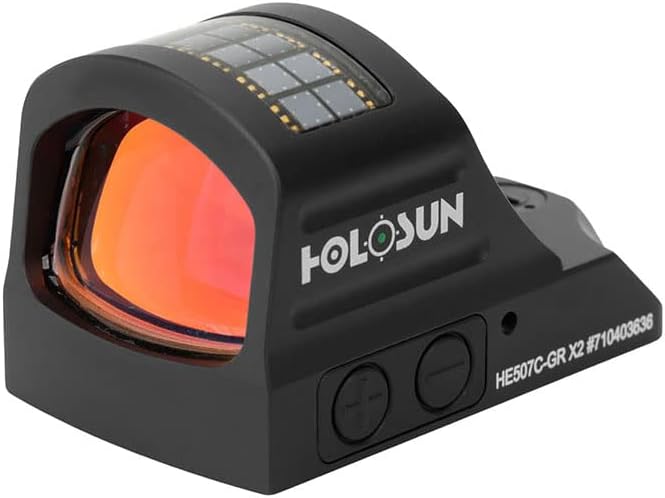
The 507C delivers one of the best value-to-performance ratios in the pistol optic market, especially for shooters who want multiple reticle options and practical carry durability.
Specs
- Footprint: RMR
- Reticle: 2 MOA dot / 32 MOA circle
- Solar backup system
- Side battery tray
- Housing: 7075 aluminum
- Shake-awake technology
Pros
- Large, easy-to-track reticle
- Side-loading battery
- Strong brightness range
- Excellent value
Cons
- Slightly more lens distortion
- Buttons can feel mushy
- Open emitter collects debris
The 507C performs extremely well on the Glock 21 because the larger pistol frame balances the optic naturally. During recoil tracking, I found the circle-dot reticle especially fast for reacquiring the window after rapid shots.
The side battery tray is a major advantage since I do not need to remove the optic to change batteries. That preserves zero and reduces maintenance frustration. The optic also handles recoil surprisingly well for its price category.
Lens tint is slightly greener than the RMR, and edge distortion becomes visible during rapid target transitions. Still, the optic remains very usable in bright sunlight and low-light indoor conditions. Brightness adjustments are easy even with gloves, although the buttons feel softer than premium duty optics.
Parallax performance is respectable. At realistic handgun distances, the shift is insignificant unless the dot is positioned near the extreme edge of the window. I also noticed good resistance to emitter washout under weapon-mounted lights.
Online feedback frequently highlights the 507C’s reliability and affordability. Many Glock shooters appreciate its battery efficiency and multi-reticle system for defensive shooting.
The 507C shares the RMR footprint, so Glock MOS owners can use standard RMR adapter plates. Direct milling remains the cleaner solution for maintaining lower optic height and stronger co-witness geometry.
╰┈➤ Explore User Feedback and Current Pricing on Amazon
Aimpoint ACRO P-2
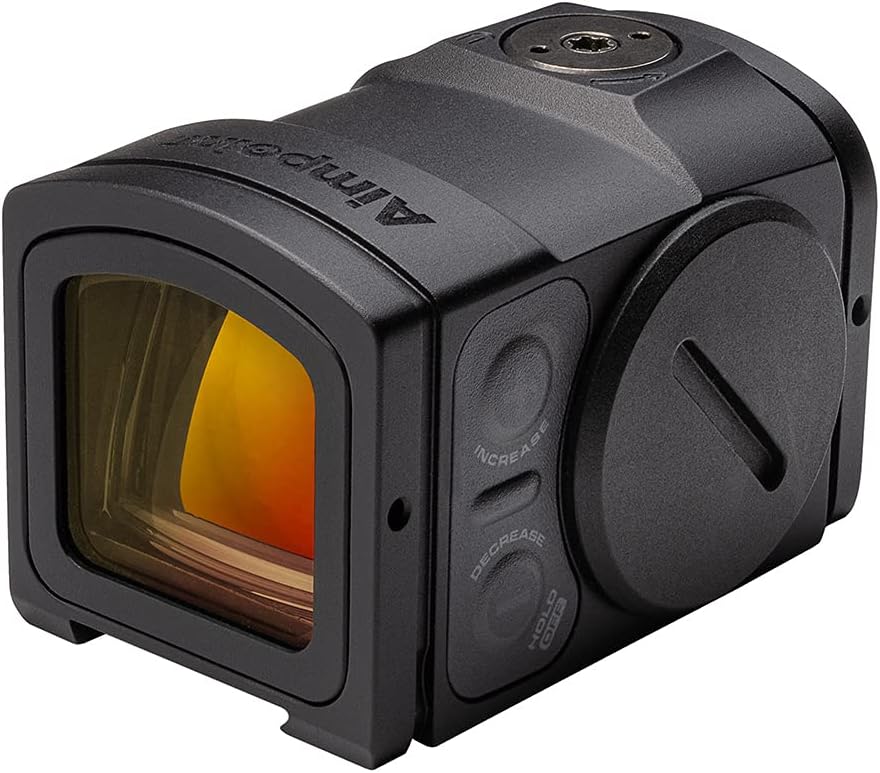
The ACRO P-2 is one of the toughest enclosed-emitter pistol optics currently available and pairs extremely well with a hard-use Glock 21.
Specs
- Enclosed emitter design
- 3.5 MOA dot
- Battery life: 50,000 hours
- Waterproof: 35 meters
- Weight: 2.1 oz
- Night vision compatible
Pros
- Outstanding weather sealing
- Extremely durable housing
- Clear emitter protection
- Excellent battery life
Cons
- Heavier than open optics
- Narrower window feel
- Higher mounting height
The enclosed emitter dramatically improves reliability during rain, dust exposure, and suppressed shooting. Carbon buildup never obscured the emitter during my testing, which is a common issue with open-emitter optics on pistols.
Recoil impulse tracking felt stable despite the added weight. The Glock 21 slide cycles more slowly than many compact pistols, which actually helps the ACRO remain visually controllable during fast strings.
The glass clarity is excellent with minimal tint. Edge distortion is lower than expected for an enclosed design, and brightness controls remain easy to access with gloves. The battery compartment is also much more user-friendly than bottom-loading systems.
Parallax performance is excellent inside realistic pistol engagement distances. I noticed very little reticle wandering even during awkward presentation angles. The optic also maintained zero after repeated slide-racking drills against barricades.
Online users consistently describe the ACRO P-2 as one of the most dependable enclosed pistol optics available. Many law enforcement shooters have transitioned from RMR platforms specifically for the enclosed design benefits.
Mounting requires an ACRO-specific plate or direct milling. The optic sits slightly higher than RMR-style optics, so suppressor-height sights become important if co-witness capability matters to you.
╰┈➤ Explore User Feedback and Current Pricing on Amazon
Leupold Deltapoint Pro
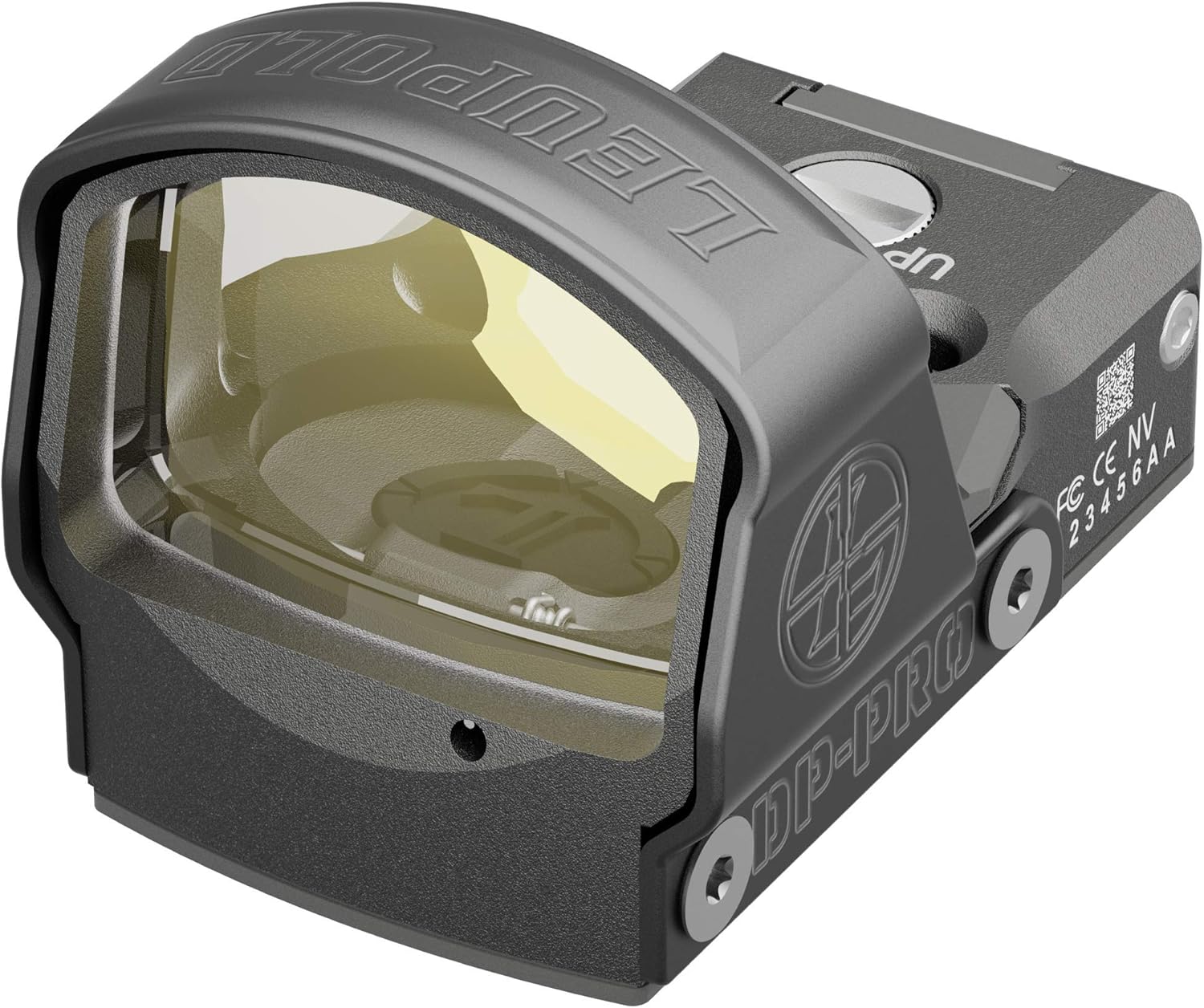
The Deltapoint Pro offers one of the largest viewing windows available on a pistol optic, making it especially attractive for competition and defensive shooters.
Specs
- Footprint: DeltaPoint Pro
- Dot sizes: 2.5 MOA or 6 MOA
- Motion sensor technology
- Top-loading battery
- Magnesium housing
- Large window profile
Pros
- Excellent field of view
- Easy battery access
- Bright daylight performance
- Fast target acquisition
Cons
- Larger optic footprint
- Slightly taller deck height
- Less impact-resistant than RMR
The oversized window makes the Glock 21 feel exceptionally fast during recoil recovery. I found dot reacquisition easier during rapid transitions and unconventional shooting positions compared to smaller optics.
The top-loading battery compartment is one of the cleanest designs in the market. I appreciate not needing to remove the optic during battery replacement, especially on a defensive pistol.
Brightness adjustments are simple and responsive, although the single-button interface takes some familiarization. Lens clarity is excellent with relatively low tint. The optic window also feels more natural during both-eyes-open shooting.
Parallax control is solid inside defensive distances, though slight reticle drift appears near the edges. Window distortion remains minimal. The optic does sit slightly higher than some competitors, which affects co-witness height.
Online discussion often centers around the huge viewing window and excellent usability. Competitive shooters especially like how forgiving the optic feels during fast movement.
The Deltapoint Pro uses its own footprint, so Glock MOS owners need a dedicated adapter plate. Direct milling offers better slide integration and lowers overall deck height substantially.
╰┈➤ Explore User Feedback and Current Pricing on Amazon
Holosun 509T
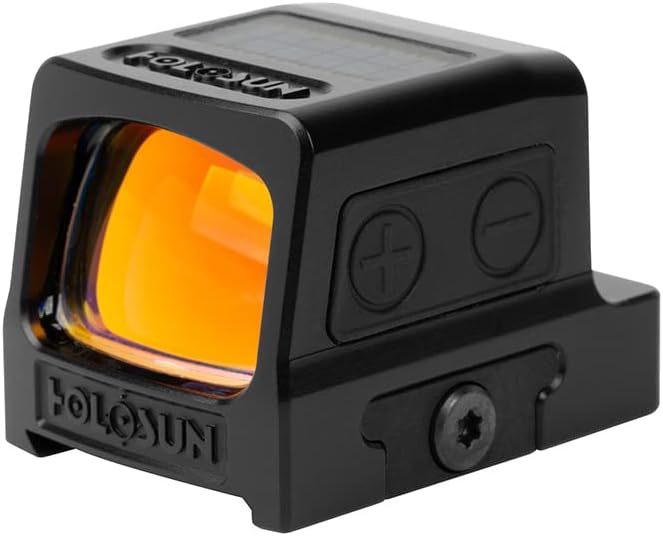
The 509T combines enclosed-emitter protection with titanium durability, creating one of the strongest optics available for hard-use Glock pistols.
Specs
- Enclosed emitter
- Titanium housing
- Multi-reticle system
- Solar backup
- Side battery tray
- RMR adapter included
Pros
- Excellent durability
- Fully enclosed emitter
- Strong battery system
- Titanium construction
Cons
- Slight tunnel effect
- Heavier than 507C
- Requires proprietary mounting plate
The titanium housing noticeably improves impact confidence during hard manipulations. I repeatedly used the optic for slide-racking drills against barricades without any shift in zero or visible housing stress.
The enclosed emitter keeps lint, moisture, and carbon away from the projection system. That becomes especially valuable on suppressed Glock 21 setups where debris can accumulate quickly.
The window is slightly smaller than open-emitter optics, creating a mild tunnel effect during first presentation. However, once I adjusted to the sight picture, tracking during recoil felt very predictable and stable.
Brightness controls remain responsive with gloves, and the side battery compartment simplifies maintenance. Lens tint is moderate but manageable outdoors. I also noticed strong resistance to blooming under high-output weapon lights.
Online shooters frequently compare the 509T directly against the ACRO P-2 because both target the enclosed-duty category. The 509T usually wins on value and reticle flexibility.
The optic ships with an RMR adapter plate, but dedicated mounting solutions provide better stability on Glock MOS systems. Direct milling can also reduce overall optic height and improve co-witness alignment.
╰┈➤ Explore User Feedback and Current Pricing on Amazon
Trijicon SRO
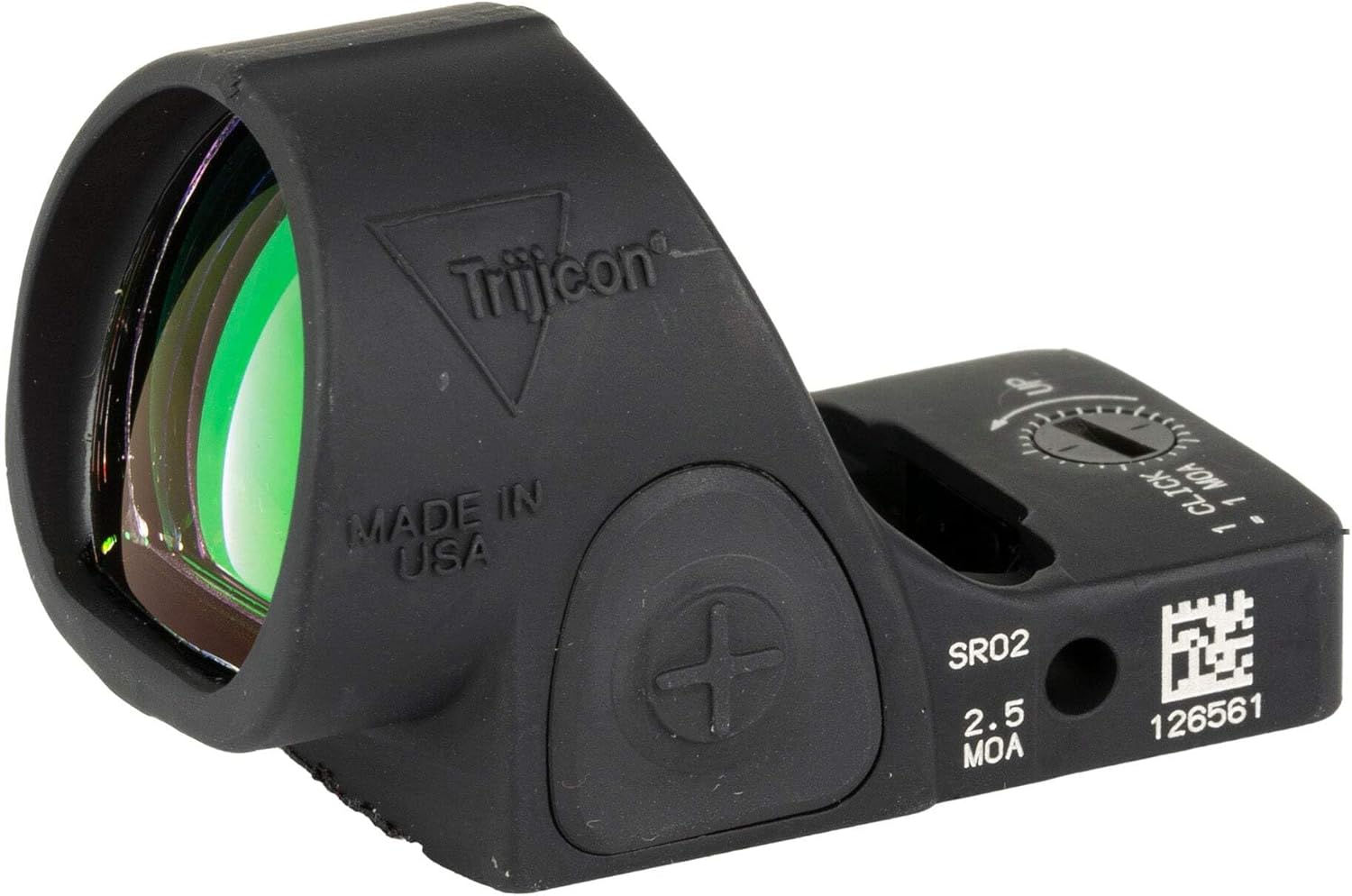
The SRO is optimized for speed, offering an enormous circular window that excels during competition and range-focused shooting with the Glock 21.
Specs
- Footprint: RMR
- Dot sizes: 1 MOA, 2.5 MOA, 5 MOA
- Top-loading battery
- Adjustable LED brightness
- Wide circular window
- Aluminum housing
Pros
- Massive viewing window
- Extremely fast sight tracking
- Crisp dot quality
- Easy battery replacement
Cons
- Less rugged than RMR
- More exposed housing
- Higher price point
The large window dramatically improves target transitions and recoil tracking. During rapid fire, I could maintain visual awareness of the dot much more easily than with smaller optics.
The SRO feels exceptionally natural on the Glock 21 because the pistol’s full-size frame balances the optic weight well. Dot tracking during recoil was among the best in this group, particularly during bill drills and lateral movement exercises.
Lens clarity is excellent with minimal tint. Window distortion remains low despite the oversized viewing area. The top-loading battery compartment is also one of the most convenient designs available.
Parallax shift is minimal inside realistic engagement distances. However, the optic’s exposed forward housing design makes it less ideal for heavy-duty abuse compared to the RMR or ACRO.
Online shooters consistently praise the SRO for competition performance and fast target acquisition. Many users report that it feels easier to learn than smaller-window optics.
Because it shares the RMR footprint, Glock MOS owners can use standard RMR plates. Suppressor-height irons pair well for lower-third co-witness setups.
╰┈➤ Explore User Feedback and Current Pricing on Amazon
How I Tested / Evaluation Criteria
Parallax Performance
I evaluated each optic by deliberately shifting head position during slow-fire accuracy testing at 10, 15, and 25 yards. Some optics maintained extremely consistent point-of-impact alignment, while others showed noticeable reticle drift near the window edges. The best performers minimized visible shift during imperfect presentations.
Co-Witness and Deck Height
The Glock 21 benefits from a lower optic position because the slide already sits relatively tall in the hand. I tested suppressor-height iron compatibility, lower-third sight picture usability, and how naturally each optic aligned during repeated presentations from the holster.
Durability
I ran aggressive recoil drills with full-power .45 ACP ammunition and included one-handed slide manipulations against barricades. Housing rigidity, lens retention, and zero stability mattered heavily. Enclosed optics also received additional testing for carbon resistance during suppressed firing.
Battery System
Battery access design affects long-term usability more than many shooters realize. Side-loading and top-loading systems simplified maintenance substantially. I also monitored brightness consistency and shake-awake responsiveness during extended sessions.
Brightness Range
I tested optics under direct sunlight, indoor fluorescent lighting, and weapon-light exposure. Some optics bloomed excessively at higher settings, while others maintained crisp reticle definition. Night-vision compatibility also mattered for advanced users.
Glass Quality
Glass clarity affects speed and eye fatigue during extended shooting sessions. I examined tint strength, edge distortion, reflective artifacts, and emitter glare. Larger windows generally improved recoil tracking, but optical distortion varied significantly between brands.
Controls Ergonomics
Small buttons become frustrating during stressful shooting conditions. I tested brightness controls while wearing gloves and during rapid manipulations. Tactile feedback and button placement strongly influenced practical usability.
Mounting Ecosystem
The Glock 21 MOS system supports multiple footprints, but adapter quality matters. I evaluated direct milling compatibility, plate stability, screw engagement depth, and overall optic height after installation.
How to Choose the Right Red Dot for This Gun
Choosing the right optic for a Glock 21 requires balancing durability, sight window size, mounting compatibility, and intended use. The Glock 21 is not a lightweight carry pistol. Its full-size frame and .45 ACP recoil impulse reward optics that can handle heavier slide movement without losing zero or degrading over time.
If your Glock 21 serves as a duty or home-defense handgun, durability should dominate your decision. Optics like the Aimpoint ACRO P-2, Trijicon RMR Type 2, and Holosun 509T excel because they withstand hard recoil, environmental exposure, and repeated slide manipulation. Enclosed emitters are particularly useful for defensive pistols because moisture, lint, and carbon cannot block the emitter.
Window size matters more than many shooters expect. Larger windows improve dot reacquisition during recoil and help newer shooters track the reticle more consistently. The Trijicon SRO and Deltapoint Pro feel exceptionally forgiving during rapid strings because the eye naturally recovers the dot faster.
Mounting footprint compatibility also matters heavily on Glock pistols. The Glock 21 MOS requires proper adapter plates unless the slide is direct milled. RMR footprint optics remain the easiest to support because mounting plates, suppressor-height sights, and aftermarket milling options are widely available.
Battery access design affects long-term convenience. Bottom-loading optics force re-zeroing during battery changes, while side-loading and top-loading systems simplify maintenance dramatically.
Reticle style also influences practical performance. Simple dots often appear cleaner and more precise, while circle-dot systems improve speed during close-range defensive shooting.
Finally, consider intended use honestly. Competitive shooters benefit from larger windows and faster tracking. Duty users should prioritize sealing and durability. Casual range shooters can often save money with mid-tier optics that still offer dependable performance on the Glock 21 platform.
FAQs
Is the Glock 21 good for red dot optics?
Yes. The Glock 21’s large frame and relatively soft recoil impulse for a .45 ACP pistol make it an excellent host for pistol optics. The extra slide mass often helps optics track smoothly during recoil.
What footprint does the Glock 21 MOS support?
The Glock 21 MOS uses adapter plates to support multiple footprints including RMR, DeltaPoint Pro, and ACRO-compatible systems depending on the plate installed.
Are enclosed emitters better for the Glock 21?
For defensive and duty use, I strongly prefer enclosed emitters because they resist moisture, carbon buildup, and debris contamination more effectively.
What iron sights work best with Glock 21 optics?
Suppressor-height sights generally provide the best lower-third co-witness with most pistol optics. Exact height depends on optic deck height and mounting plate thickness.
Is the Trijicon SRO durable enough for defensive use?
The SRO is reliable, but it prioritizes window size and speed over maximum impact resistance. I prefer the RMR or ACRO for harder-duty applications.
Conclusion
After extensive testing, I found that the Best Red Dot for Glock 21 ultimately depends on whether you prioritize durability, speed, enclosed protection, or overall value. The Trijicon RMR Type 2 remains the safest all-around duty choice, while the Holosun 507C delivers tremendous capability for the money. Shooters wanting maximum environmental protection should look closely at the ACRO P-2 or Holosun 509T, while competition-focused users will appreciate the oversized windows of the SRO and Deltapoint Pro.
For most Glock 21 owners, the ideal optic balances recoil durability, practical mounting height, and fast dot acquisition without adding unnecessary bulk. The right red dot transforms the Glock 21 into a dramatically faster and more capable handgun platform.
Sources: Trijicon product specifications, Aimpoint technical data, Holosun mounting references, user reports from pistol-forum discussions and Reddit optic durability threads.