Best Red Dot for Glock 22
Best Red Dot for Glock 22 setups have become increasingly popular among law enforcement shooters, home defenders, and range enthusiasts who want faster target acquisition and better accuracy from a .40 S&W platform. The Glock 22 has a snappier recoil impulse than a Glock 17, so optic durability matters more here than on softer-shooting pistols. I’ve spent a lot of time testing pistol optics on duty-sized handguns, and the Glock 22 exposes weaknesses quickly—especially with battery contacts, emitter sealing, and lens distortion.
The biggest challenge is balancing durability, window size, deck height, and mounting compatibility. Some optics excel for concealed carry but feel cramped on a duty pistol. Others offer huge windows but sit too high for comfortable co-witnessing. In this guide, I break down six optics that genuinely work well on the Glock 22 platform, including enclosed emitters, rugged duty optics, and competition-style options.
Top Product List: Best Red Dot for Glock 22
Trijicon RMR Type 2
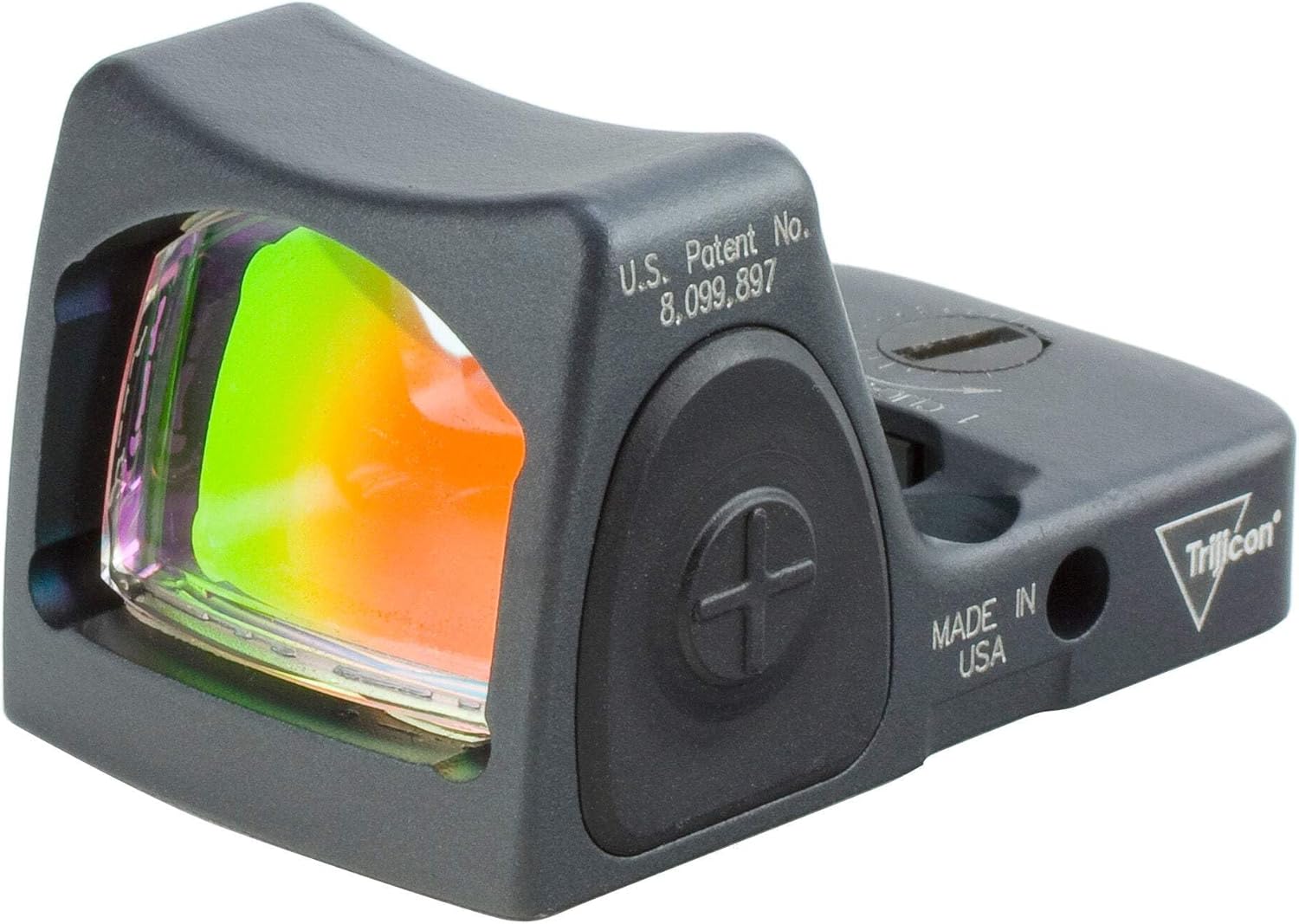
The Trijicon RMR Type 2 remains the benchmark for duty-grade pistol optics because it survives abuse better than almost anything else in the open-emitter category.
Specs
- 3.25 MOA and 6.5 MOA variants
- Forged aluminum housing
- RMR footprint
- Automatic and manual brightness modes
- Waterproof to 20 meters
- CR2032 battery
Pros
- Exceptional recoil durability
- Minimal parallax shift
- Strong sealing and lens protection
- Proven law enforcement track record
Cons
- Smaller viewing window
- Noticeable blue lens tint
- Bottom battery requires optic removal
The Glock 22’s recoil impulse can expose weak battery contacts quickly, but the RMR Type 2 handles .40 S&W recoil extremely well. I noticed virtually no flicker during rapid strings. The housing shape also helps deflect impacts instead of transmitting force directly into the lens.
The deck height is low enough for comfortable lower-third co-witness with suppressor-height irons. I prefer this setup because the irons don’t clutter the window while still giving an emergency backup sight picture.
Parallax control is excellent at defensive distances. Even when shooting from awkward barricade angles, the dot remained predictable. The slightly blue lens tint is noticeable indoors, but it improves emitter contrast under bright sunlight.
Online discussions consistently praise the RMR for surviving duty use, slide racking against barricades, and thousands of rounds without zero shift. Reddit users and duty instructors still treat it as the “safe choice” for serious defensive pistols.
Mounting is straightforward if your Glock 22 slide is cut for the RMR footprint. MOS users will need a quality adapter plate, and I strongly recommend steel over polymer plates due to the .40 recoil impulse.
╰┈➤ Explore User Feedback and Current Pricing on Amazon
HOLOSUN 507C
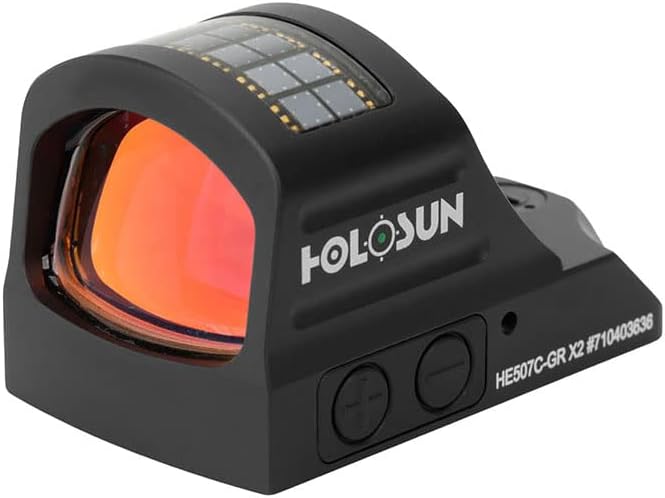
The HOLOSUN 507C offers one of the best value-to-performance ratios available for Glock duty pistols.
Specs
- Multi-reticle system
- Solar backup panel
- Side battery tray
- RMR footprint
- Shake Awake technology
- 7075 aluminum housing
Pros
- Excellent feature set
- Side-loading battery
- Crisp reticle options
- Competitive pricing
Cons
- Slight emitter glare in rain
- More lens distortion than premium optics
- Buttons are small with gloves
I’ve run the 507C extensively on Glock MOS platforms, and it handles the Glock 22 surprisingly well. The side battery tray is a major advantage because it lets me swap batteries without losing zero. That matters on a duty pistol where reliability checks should be fast and repeatable.
The 32 MOA ring combined with the center dot is particularly fast during recoil recovery. The .40 S&W snap tends to lift the muzzle harder than 9mm, but the larger ring helps the eye reacquire the reticle quickly.
The glass has a mild green tint, though it’s less distracting than older Holosun optics. I did notice minor edge distortion near the top corners of the window, but not enough to impact practical shooting.
Button tactility is decent, although thick gloves make brightness adjustments less intuitive. The optic body itself feels solid, and I saw no wandering zero after repeated recoil cycles.
Online shooters frequently recommend the 507C because it delivers near-duty-grade durability without premium pricing. Many Glock users specifically praise its battery life and reticle versatility.
For mounting, the RMR footprint simplifies compatibility. Glock 22 MOS models only need a quality plate adapter. Direct-milled slides sit lower and provide a cleaner co-witness setup.
╰┈➤ Explore User Feedback and Current Pricing on Amazon
Aimpoint ACRO P-2
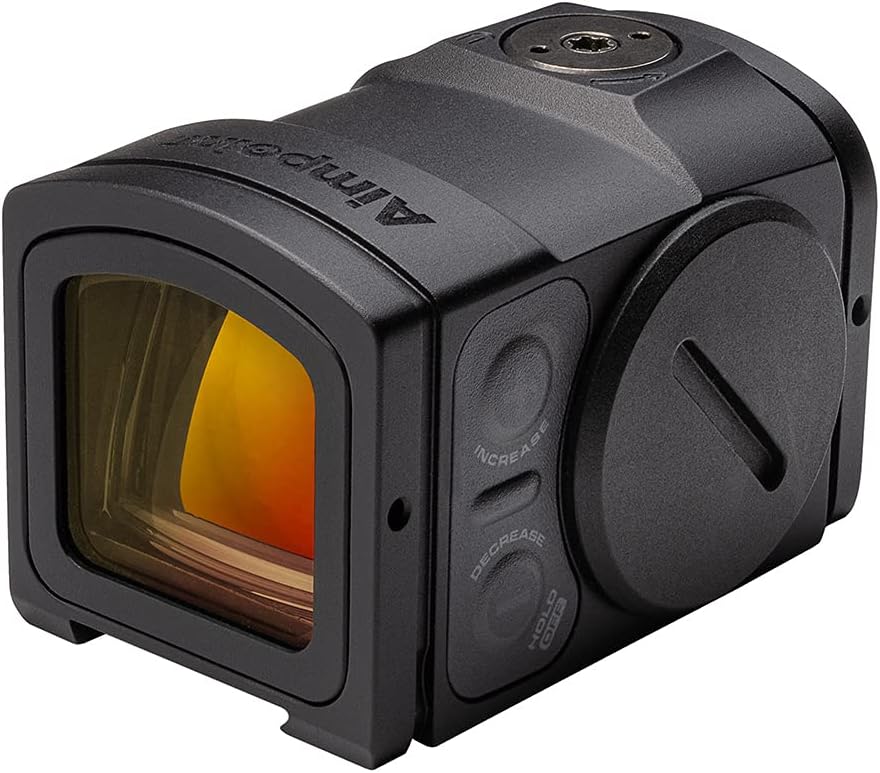
The Aimpoint ACRO P-2 is my favorite enclosed-emitter optic for harsh environmental conditions and duty carry.
Specs
- Fully enclosed emitter
- 3.5 MOA dot
- ACRO mounting footprint
- 50,000-hour battery life
- Submersible construction
- Night vision settings
Pros
- Outstanding environmental sealing
- Extremely durable housing
- Crisp emitter quality
- Excellent battery runtime
Cons
- Expensive
- Bulkier than open emitters
- Higher deck height
Enclosed emitters make a huge difference on defensive pistols. Rain, lint, snow, and carbon buildup cannot block the emitter the way they can on open optics. That alone makes the ACRO P-2 attractive for a Glock 22 duty configuration.
The optic feels noticeably heavier than an RMR or 507C, but the added mass also helps dampen some perceived recoil impulse. During rapid fire, the dot tracks consistently without flicker or intensity fluctuation.
The window is smaller than a Trijicon SRO, but the clean glass and minimal tint help offset that limitation. I also noticed very little optical distortion around the edges. The dot itself remains exceptionally crisp, even under maximum brightness settings.
The controls are easy to manipulate with gloves, and the recessed buttons reduce accidental brightness changes during holster work. Battery replacement is simple and does not require removing the optic.
Many law enforcement shooters online now prefer enclosed optics specifically because of weather resistance and emitter protection. The ACRO P-2 consistently gets praised for reliability during hard use classes and adverse conditions.
Mounting requires an ACRO-compatible cut or adapter plate. On Glock MOS pistols, using a robust steel plate is critical because the optic is heavier than most open-emitter alternatives.
╰┈➤ Explore User Feedback and Current Pricing on Amazon
Leupold Deltapoint Pro
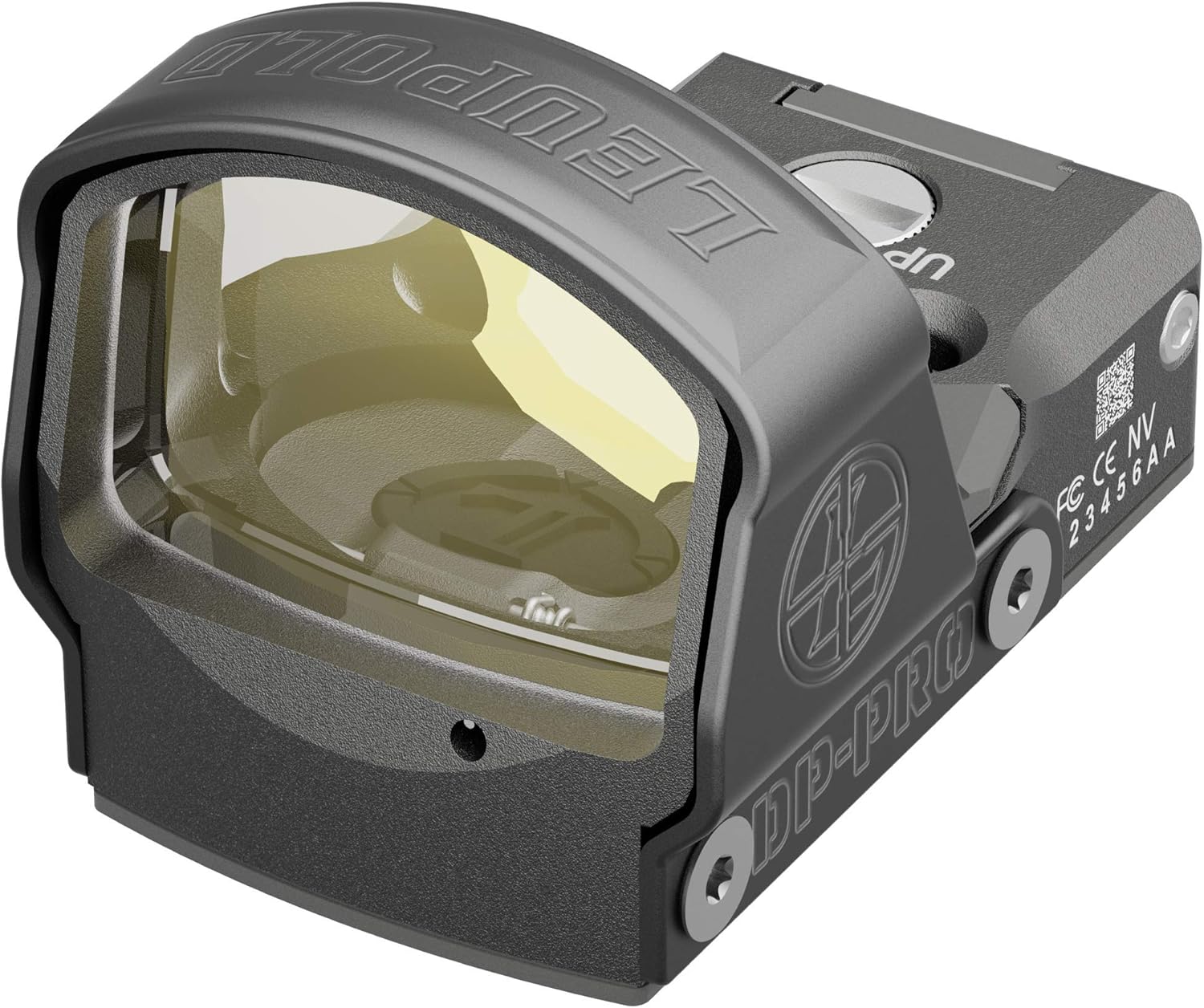
The Leupold Deltapoint Pro combines a large viewing window with excellent optical clarity, making it particularly appealing for fast shooting.
Specs
- Large aspherical lens
- 2.5 MOA or 6 MOA dot
- Motion sensor activation
- Aluminum housing
- Top-loading battery
- DeltaPoint footprint
Pros
- Huge field of view
- Excellent glass clarity
- Easy battery access
- Fast dot acquisition
Cons
- Taller deck height
- Less impact-resistant than RMR
- Rear iron compatibility can be tricky
The standout feature here is the window size. On a Glock 22, the larger sight picture makes transitions and recoil tracking noticeably easier. I found it especially forgiving during one-handed shooting drills where presentation consistency suffers slightly.
The glass quality is excellent with very little tint. Compared with many pistol optics, colors appear more natural and less filtered. Edge clarity is also strong, with minimal fish-eye distortion.
The top-loading battery compartment is one of my favorite design choices because it avoids unnecessary rezeroing. The brightness button is large enough for gloved use, though I still prefer dedicated up/down buttons.
Parallax performance is respectable, although I noticed slightly more perceived shift than the ACRO at extreme viewing angles. In realistic defensive use, it’s not a serious issue.
Many competition and range shooters love the Deltapoint Pro because the larger window speeds target acquisition considerably. Duty users are more divided, mainly because the optic body is less armored than the RMR.
Mounting requires the DeltaPoint footprint, so MOS users will need an adapter plate. The taller optic body may require higher suppressor sights for a clean co-witness picture.
╰┈➤ Explore User Feedback and Current Pricing on Amazon
Steiner MPS
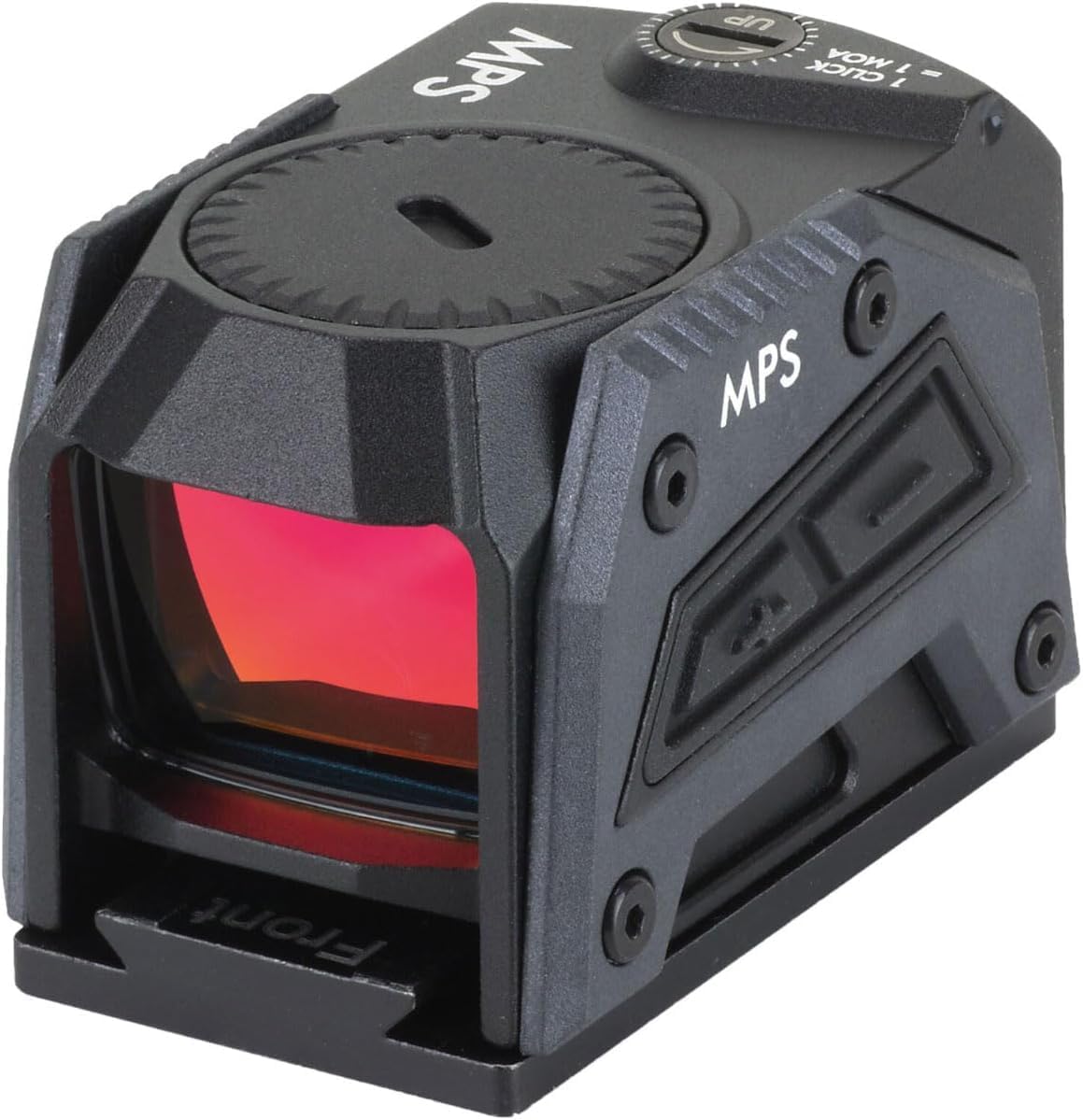
The Steiner MPS is one of the most underrated enclosed pistol optics currently available.
Specs
- Fully enclosed emitter
- 3.3 MOA dot
- ACRO-compatible footprint
- Side battery compartment
- Aluminum housing
- Submersible design
Pros
- Strong durability
- Clean window geometry
- Easy battery changes
- Excellent weather resistance
Cons
- Slightly heavy
- Limited aftermarket sight options
- Window feels narrow vertically
The Steiner MPS has become increasingly popular among shooters who want enclosed-emitter reliability without some of the ACRO’s premium pricing. On the Glock 22, it handles recoil very confidently.
The housing design feels extremely robust, and the enclosed system completely eliminates emitter occlusion from lint or moisture. During wet-weather testing, I appreciated not having to constantly inspect the emitter window.
The glass is impressively neutral with minimal tint. I also noticed less blue coloration than the RMR. The emitter itself produces a crisp dot with limited blooming at higher brightness levels.
Button placement works well even with gloves, though the controls feel slightly stiffer than Aimpoint’s. The side-loading battery compartment is another major advantage because it preserves zero during maintenance.
Online feedback around the MPS has been very positive among law enforcement and defensive shooters. Many users specifically mention confidence in the enclosed design and solid recoil handling.
The ACRO-compatible footprint simplifies mounting because many existing plates already support it. The optic sits somewhat high, so suppressor-height irons are generally necessary for proper co-witnessing.
Why the HOLOSUN 507C Still Dominates Mid-Range Glock Builds
The HOLOSUN 507C remains one of the most balanced optics for Glock shooters because it blends affordability, durability, and practical features better than most competitors. It’s especially appealing for Glock 22 owners who want dependable performance without stepping into premium-duty pricing.
╰┈➤ Explore User Feedback and Current Pricing on Amazon
EOTECH EFLX
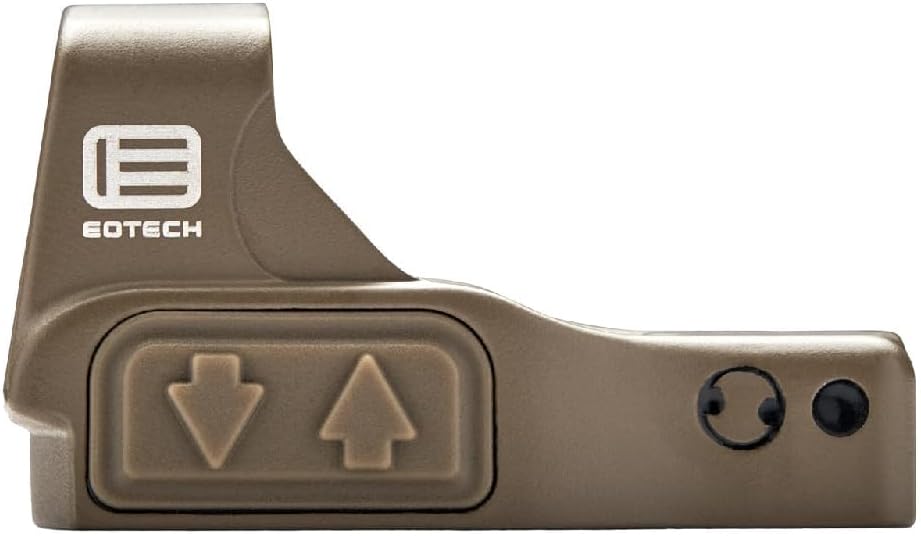
The EOTECH EFLX focuses heavily on speed and visibility, making it attractive for shooters who prioritize rapid target acquisition.
Specs
- Large rectangular window
- Top-loading battery
- DeltaPoint Pro footprint
- 3 or 6 MOA dot
- Aluminum housing
- Rear-facing controls
Pros
- Large, easy-to-track window
- Minimal blue tint
- Convenient battery access
- Good button ergonomics
Cons
- Open emitter design
- Not as rugged as ACRO
- Slight housing overhang on some slides
The EFLX feels optimized for fast presentation and recoil tracking. The large window helps the eye reacquire the dot quickly during rapid strings from the Glock 22’s snappier recoil cycle.
I particularly liked the rear-facing brightness controls because they’re easier to access than side-mounted buttons during administrative handling. Glove operation is also straightforward thanks to the larger button surfaces.
Glass clarity is one of the best aspects of this optic. The tint is minimal, and the viewing experience feels more open than many competing pistol sights. I observed little distortion near the edges of the window.
The emitter is fairly crisp, although heavy rain can still create partial occlusion because this remains an open-emitter design. Battery replacement is simple thanks to the top-loading compartment.
Online discussion around the EFLX is generally positive regarding optical clarity and speed. Some users remain cautious about long-term durability compared with established duty optics like the RMR or ACRO.
Mounting uses the DeltaPoint Pro footprint, which is widely supported through Glock MOS adapter plates. The optic sits moderately high but still allows usable co-witness with the correct suppressor-height irons.
╰┈➤ Explore User Feedback and Current Pricing on Amazon
How I Tested / Evaluation Criteria
Parallax
Parallax performance matters more on defensive pistols than many shooters realize. I evaluated each optic by intentionally shifting head position during close-range shooting and observing point-of-impact consistency. The best optics maintained reliable alignment even from imperfect presentation angles.
Co-Witness and Deck Height
Deck height influences presentation speed and iron sight integration. Lower-mounted optics generally feel more natural on Glock pistols because they reduce the amount of visual transition between irons and the dot. I also checked how easily each optic supported lower-third co-witness setups.
Durability
The Glock 22’s .40 S&W recoil exposes weak electronics and poor sealing quickly. I looked for battery flicker, zero shift, housing flex, and lens movement after repeated rapid-fire strings and slide manipulation drills.
Battery Performance
Battery access design matters significantly on carry and duty pistols. I strongly prefer side-loading or top-loading compartments because removing the optic for maintenance increases the risk of zero shift.
Brightness Range
Brightness flexibility affects both daylight visibility and low-light usability. I tested each optic under direct sunlight, indoor lighting, and transitional lighting conditions while also evaluating bloom control.
Glass Quality
Glass clarity impacts speed and visual fatigue. I compared tint, edge distortion, emitter reflection, and window geometry across all optics to identify which models felt the most natural during extended shooting sessions.
Controls and Ergonomics
Brightness controls should remain intuitive under stress and while wearing gloves. I evaluated button placement, tactile feedback, and accidental activation resistance during draw and reload drills.
Mounting Ecosystem
A strong optic becomes useless if mounting support is weak. I examined footprint compatibility, aftermarket plate availability, and direct-mill support for Glock 22 MOS and non-MOS configurations.
How to Choose the Right Red Dot for This Gun
Choosing the right optic for a Glock 22 depends heavily on how the pistol will actually be used. A duty gun, concealed carry pistol, home defense setup, and range-focused build all benefit from slightly different optic characteristics.
For defensive or law enforcement use, I strongly favor enclosed-emitter optics like the Aimpoint ACRO P-2 or Steiner MPS. The reason is simple: debris, lint, rain, or mud cannot obstruct the emitter. Open-emitter optics can become compromised if moisture blocks the emitter channel. While that issue is uncommon during casual range use, it matters on a working gun.
Window size is another important factor. Larger windows like those on the Deltapoint Pro and EOTECH EFLX make recoil tracking easier, especially with the sharper recoil pulse of .40 S&W ammunition. Shooters transitioning from iron sights often adapt faster to larger windows because they forgive inconsistent presentation.
Mounting compatibility should also influence your decision. Glock MOS pistols offer flexibility, but adapter plate quality matters tremendously. Cheap polymer plates often loosen under .40 recoil. I recommend steel or titanium plates whenever possible.
Battery design is frequently overlooked. Bottom-mounted batteries, like the RMR’s, require optic removal during replacement. Side-loading and top-loading systems are simply more convenient and reduce the chance of losing zero.
You should also think carefully about deck height. Taller optics may require suppressor-height sights for effective co-witnessing. Lower-mounted optics usually provide a more natural presentation angle.
Finally, durability should outweigh flashy features for defensive pistols. Large windows and fancy reticles are helpful, but reliable electronics and strong sealing matter far more once the Glock 22 starts seeing serious round counts.
FAQs
Is the Glock 22 good for red dot optics?
Yes. The Glock 22 works very well with pistol optics, especially in MOS or custom-milled configurations. The added recoil compared with 9mm simply means optic durability becomes more important.
What footprint does the Glock 22 MOS use?
The Glock MOS system uses adapter plates. Popular footprints include RMR, DeltaPoint Pro, and ACRO depending on the plate installed.
Are enclosed emitters better for duty use?
In most cases, yes. Enclosed emitters protect the LED from debris and moisture, improving reliability during adverse conditions.
Do I need suppressor-height sights?
Usually yes. Most pistol optics sit high enough that standard-height Glock sights will not provide a usable co-witness.
Which optic handles .40 S&W recoil best?
The Trijicon RMR Type 2 and Aimpoint ACRO P-2 are among the strongest performers for long-term durability on .40 caliber pistols.
Conclusion
Finding the Best Red Dot for Glock 22 ultimately comes down to balancing durability, window size, mounting height, and intended use. For pure duty reliability, I still trust the Trijicon RMR Type 2 and Aimpoint ACRO P-2 the most. Shooters who want more value-oriented performance should seriously consider the HOLOSUN 507C, while larger-window optics like the Deltapoint Pro and EFLX excel for fast target acquisition.
The Glock 22 remains a demanding platform because of its recoil characteristics, but the right optic transforms the pistol into a significantly faster and more precise shooting system.