Best Red Dot for Glock 26
Best Red Dot for Glock 26 setups require a careful balance of size, concealability, window clarity, and recoil durability. The Glock 26 is a compact double-stack pistol built for concealed carry, so oversized optics can ruin the handling characteristics that make the platform so popular. After running multiple optics across MOS slides, aftermarket cuts, and adapter plates, I found that the best choices prioritize low deck height, minimal overhang, fast dot acquisition, and reliable battery systems.
I focused heavily on concealed carry practicality during testing. That included one-handed manipulations, rapid presentation from concealment, sweat resistance, lens cleaning under lint-heavy carry conditions, and recoil control during rapid strings. I also paid attention to how each optic handled emitter occlusion, brightness washout outdoors, and sight picture distortion during movement.
The six optics below consistently stood out for real-world carry use on the Glock 26 platform.
Top Product List: Best Red Dot for Glock 26
HOLOSUN EPS CARRY
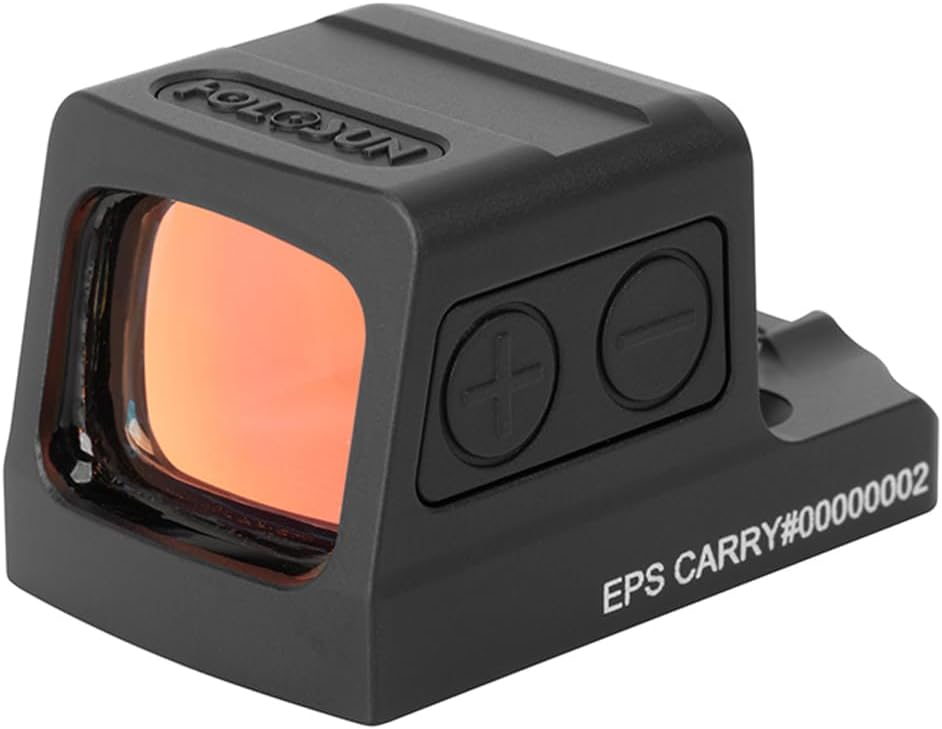
The EPS Carry is one of the most practical enclosed-emitter optics available for a subcompact Glock. Its compact dimensions work exceptionally well on the Glock 26 without creating excessive slide overhang or printing issues during appendix carry.
Specs
- Enclosed emitter
- 2 MOA dot or MRS options
- 7075 aluminum housing
- Side battery tray
- RMSc footprint
- Up to 50,000-hour battery life
Pros
- Excellent weather sealing
- Minimal lint interference
- Crisp glass clarity
- Low deck height
- Outstanding battery access
Cons
- Slight blue lens tint
- Buttons are small with gloves
- Higher cost than open emitters
My hands-on notes
The enclosed emitter makes a noticeable difference for daily concealed carry. Pocket lint, sweat, and rain simply matter less here. During rapid fire, the optic tracked predictably with very little perceived parallax shift inside practical handgun distances. I especially liked the lower deck height because it preserved a usable lower-third co-witness with standard-height suppressor sights.
The brightness buttons are tactile but somewhat recessed. With winter gloves, I needed deliberate pressure to make adjustments. The side-loading battery tray is excellent because it avoids rezeroing after battery swaps. Recoil handling on the Glock 26 was excellent even with hotter defensive loads.
What people say online
Most users praise the EPS Carry for solving the dirt and moisture problems common with open-emitter carry optics. Reddit discussions frequently mention improved reliability during daily carry compared to exposed emitters.
Mounting clarity
The EPS Carry uses the RMSc footprint. Glock 26 MOS variants typically require an adapter plate unless the slide is custom-cut specifically for RMSc optics.
╰┈➤ Explore User Feedback and Current Pricing on Amazon
Trijicon RMRcc
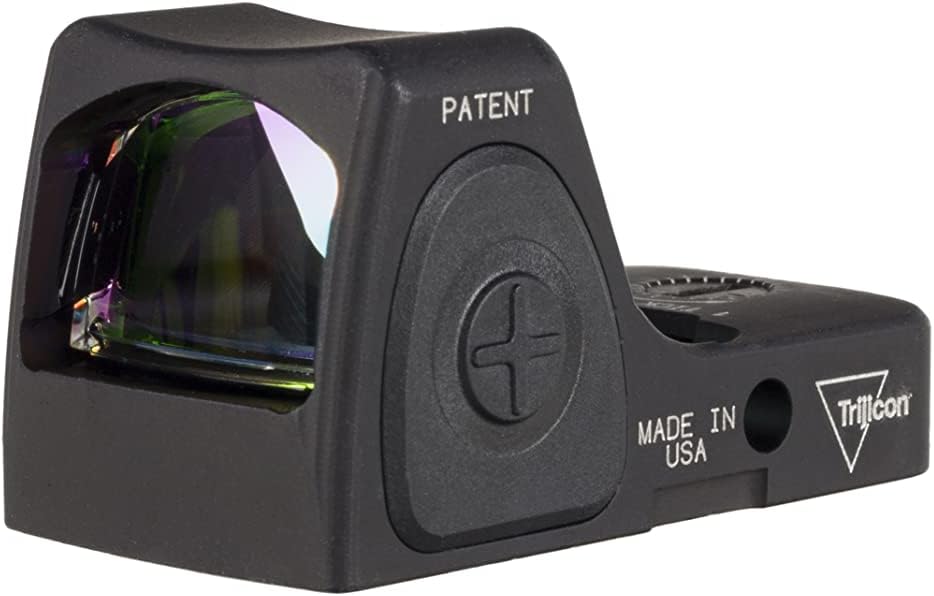
The RMRcc keeps the durability reputation of the full-size RMR while trimming dimensions for concealed carry pistols. It remains one of the toughest compact pistol optics I have tested on the Glock 26 platform.
Specs
- 3.25 MOA or 6.5 MOA dot
- Patented housing shape
- Top-loading battery
- Aluminum forged housing
- Waterproof construction
- Proprietary RMRcc footprint
Pros
- Exceptional durability
- Excellent recoil resistance
- Clear glass quality
- Reliable controls
- Proven track record
Cons
- Narrower viewing window
- Proprietary footprint
- Expensive mounting ecosystem
My hands-on notes
The smaller window requires more presentation discipline than larger carry optics. However, once my draw became consistent, the optic rewarded precision shooting very well. The housing shape sheds impacts effectively, and I experienced zero flicker issues after extended range sessions.
The lens tint is minimal compared to many competitors. I also noticed less distortion near the window edges during lateral movement drills. The brightness buttons are easy to manipulate with gloves and provide solid tactile feedback.
Parallax performance remained excellent at defensive distances. During recoil, the dot stayed visually stable with minimal window bloom. The optic’s deck height is slightly taller than some RMSc-pattern designs, so suppressor-height irons are strongly recommended for an effective co-witness.
What people say online
Users consistently describe the RMRcc as one of the most dependable carry optics available. Many concealed carriers trust it specifically because of Trijicon’s durability reputation under hard use.
Mounting clarity
The RMRcc uses its own proprietary footprint. Glock 26 MOS owners generally need a dedicated adapter plate unless using a custom-machined slide.
╰┈➤ Explore User Feedback and Current Pricing on Amazon
HOLOSUN 507K
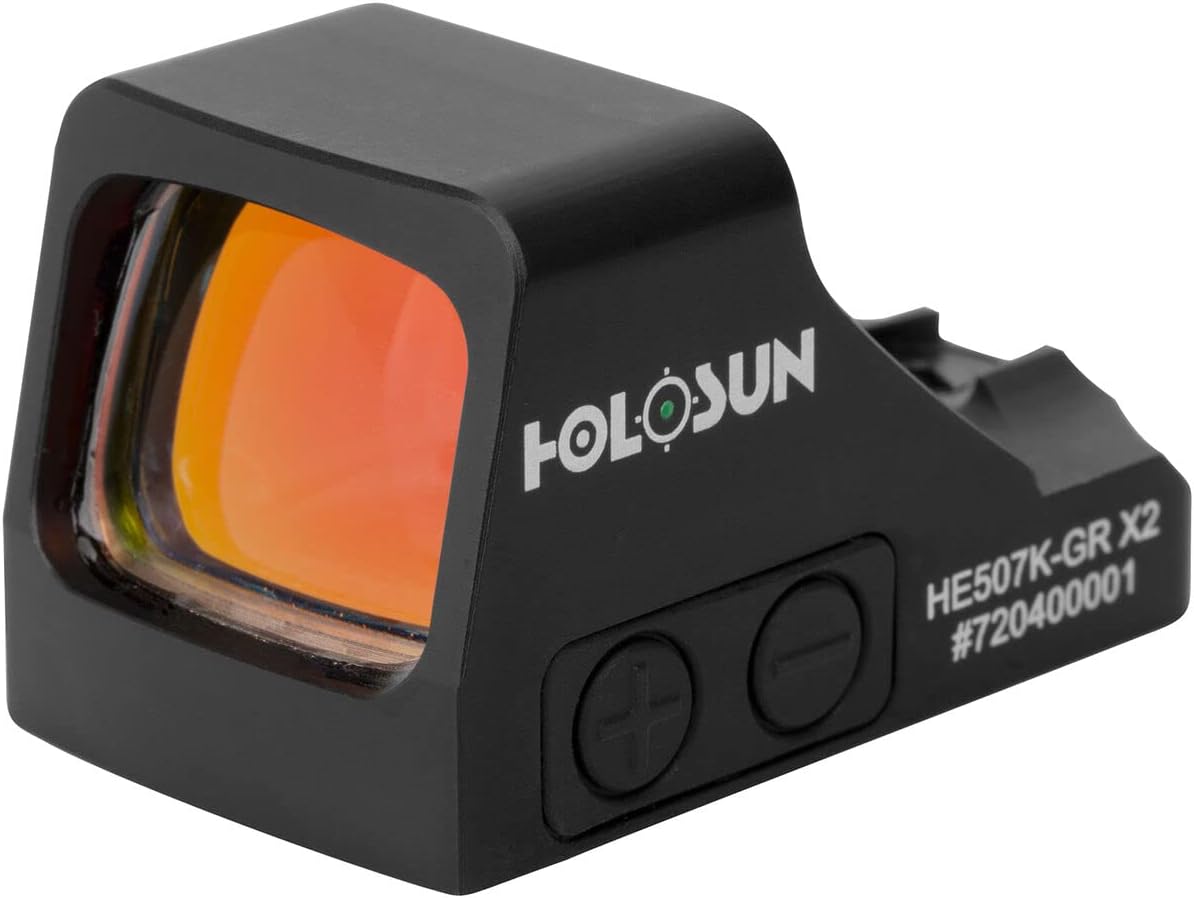
The 507K remains one of the easiest optics to recommend for compact and subcompact Glock pistols. Its footprint, window size, and feature set fit the Glock 26 extremely well.
Specs
- Multi-reticle system
- 2 MOA dot and 32 MOA circle
- Shake Awake technology
- Side battery tray
- Aluminum housing
- RMSc-pattern footprint
Pros
- Fast target acquisition
- Excellent battery system
- Lightweight design
- Good value
- Strong aftermarket support
Cons
- Open emitter attracts lint
- Slight green tint
- Buttons can feel stiff initially
My hands-on notes
The circle-dot reticle dramatically speeds up presentation on smaller pistols. During fast draw drills, the outer ring helped me recover the reticle faster than standard single-dot systems. That advantage became more noticeable under unconventional shooting positions.
The optic sits low enough to support a comfortable co-witness setup with appropriately sized iron sights. Window clarity is very good overall, although I noticed a faint green tint under bright daylight conditions. The side battery compartment remains one of the best designs in the category because it avoids unnecessary rezeroing.
Button tactility improved after several range sessions. Recoil handling was excellent throughout testing, and I never experienced dot flickering or emitter interruptions. The open-emitter design does require more cleaning maintenance if the pistol is carried daily.
What people say online
Many Glock owners recommend the 507K because it balances affordability, durability, and advanced features. Forum discussions regularly highlight the fast acquisition benefits of the circle-dot reticle.
Mounting clarity
The 507K uses an RMSc-style footprint. Many Glock 26 slides require an adapter plate or slight modification for proper fitment.
╰┈➤ Explore User Feedback and Current Pricing on Amazon
SIG ROMEO-X Compact
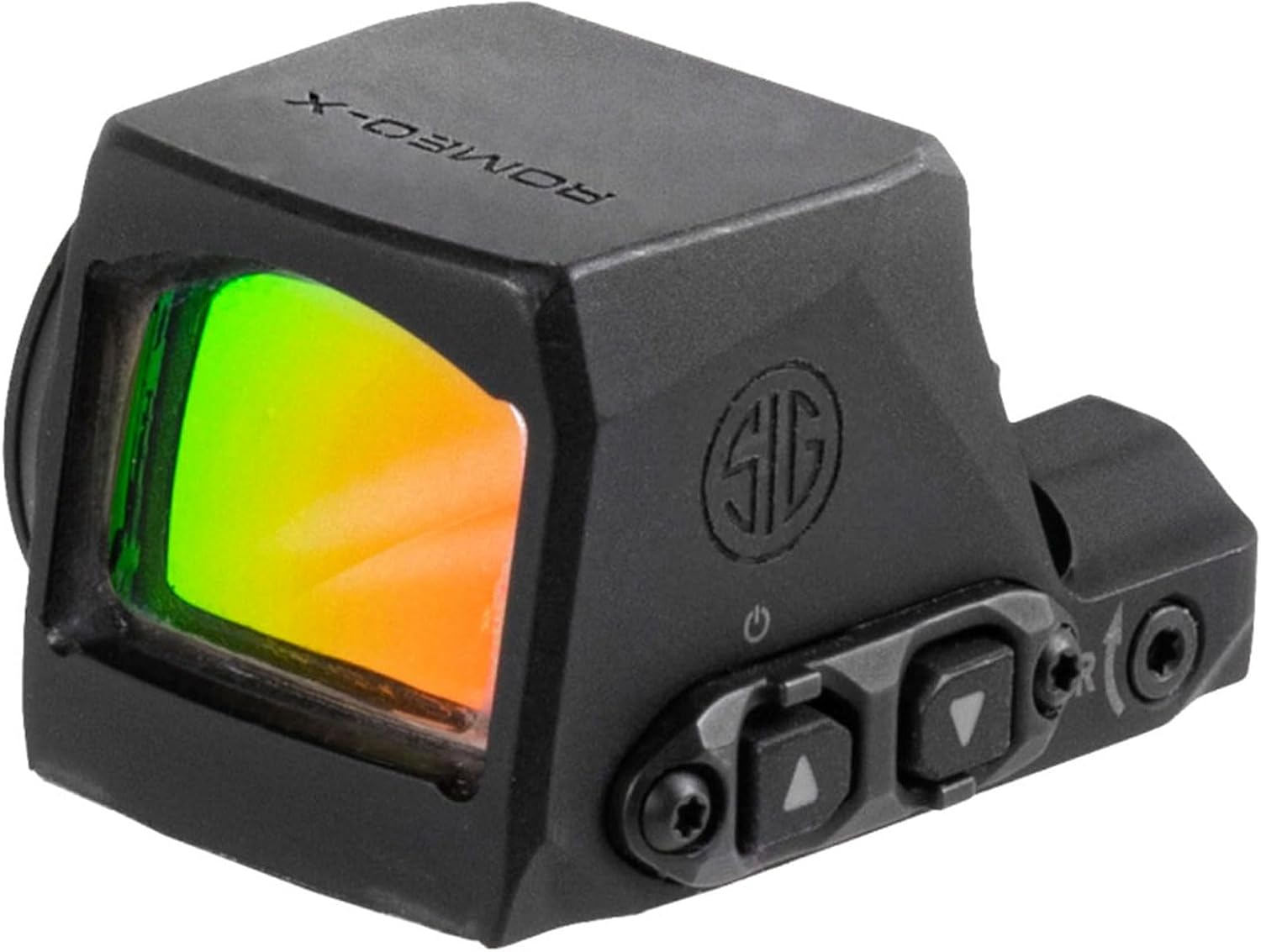
The ROMEO-X Compact impressed me with its refined controls, low-profile design, and strong carry-focused ergonomics. It feels purpose-built for modern concealed carry pistols.
Specs
- Compact open-emitter optic
- Multiple reticle configurations
- Aspherical lens
- Side battery access
- Aluminum housing
- MOTAC motion activation
Pros
- Excellent window clarity
- Very low deck height
- Crisp reticle
- Strong controls ergonomics
- Good concealment profile
Cons
- Premium pricing
- Limited long-term track record
- Open emitter design
My hands-on notes
The standout feature here is the exceptionally clean glass. Distortion is minimal, and the reticle appears sharp even during rapid movement. The low deck height helps preserve a natural presentation angle on the Glock 26 while supporting an intuitive co-witness setup.
The brightness controls are some of the best I tested. Even while wearing gloves, adjustments felt positive and deliberate. The side battery tray also simplifies maintenance considerably.
During recoil testing, the optic maintained zero without issue. I noticed very little parallax deviation while transitioning between targets. The housing design also minimizes snagging during concealed draws, which matters more on smaller carry guns than many shooters realize.
Emitter occlusion can still occur during heavy lint exposure because this remains an open-emitter design. However, the optic stayed functional throughout dusty range sessions and humid carry conditions.
What people say online
Early adopters consistently praise the ROMEO-X Compact for its glass quality and refined ergonomics. Many users compare its sight picture favorably against higher-priced premium optics.
Mounting clarity
The ROMEO-X Compact supports RMSc-compatible mounting patterns, making it relatively easy to fit on Glock 26 optic-ready configurations with the correct plate.
╰┈➤ Explore User Feedback and Current Pricing on Amazon
Vortex Defender CCW
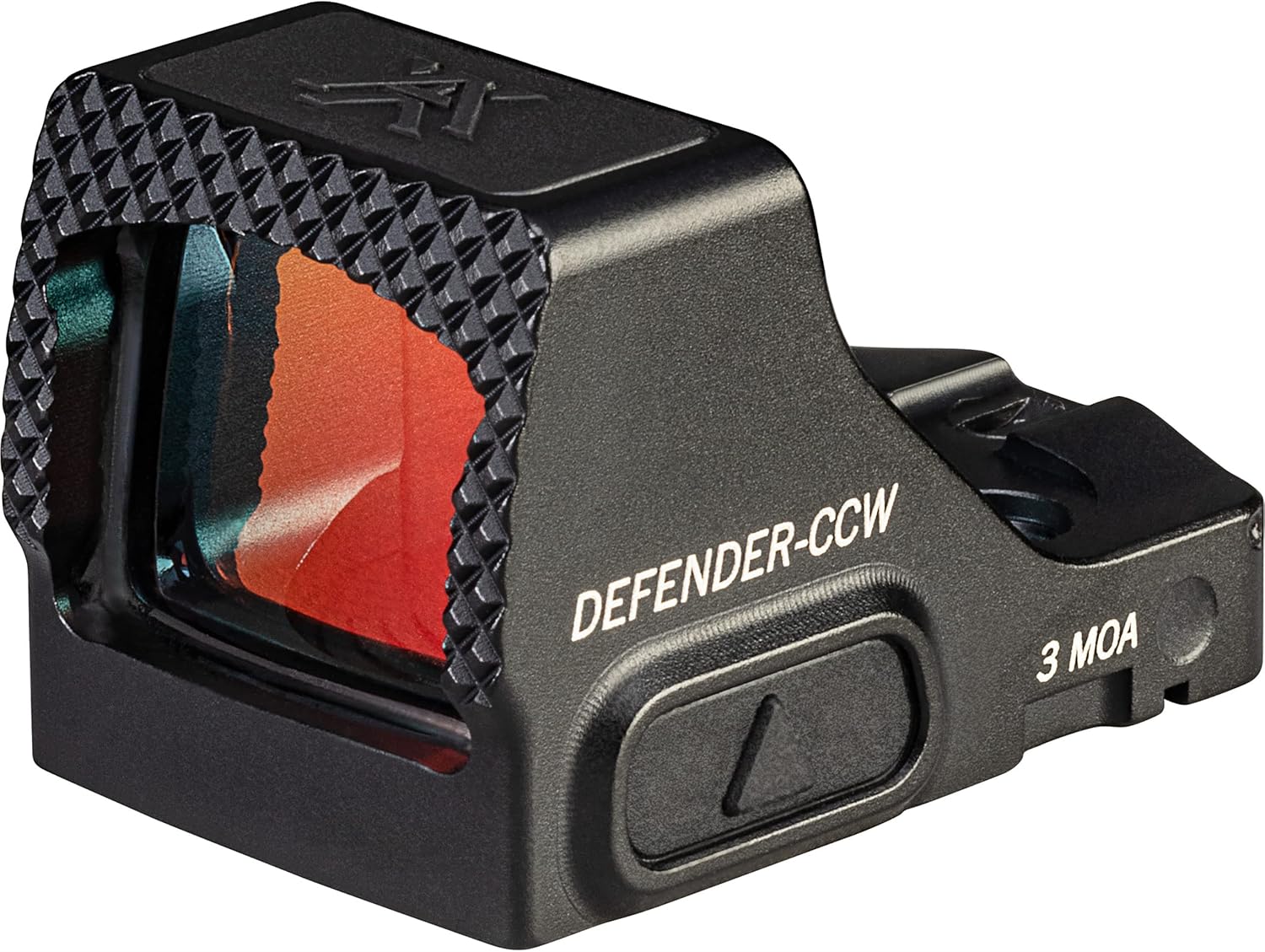
The Defender CCW surprised me with its ruggedness and user-friendly controls. It feels more durable than many optics in its price class while maintaining compact carry dimensions.
Specs
- Shield RMSc footprint
- Fast-rack textured front
- Multiple brightness settings
- Top battery access
- Waterproof construction
- Shock-resistant housing
Pros
- Excellent value
- Aggressive housing texture
- Easy battery replacement
- Bright reticle
- Strong warranty support
Cons
- Slightly thicker housing
- More visible lens tint
- Window not as large as premium models
My hands-on notes
The aggressive front serrations are genuinely useful for one-handed manipulations. I used the optic housing against barricades and hard surfaces repeatedly without damage or loss of zero.
The brightness controls are large enough for gloved operation, which I appreciated during cold-weather range sessions. The reticle remains bright even in direct sunlight, though the lens coating introduces a more noticeable blue tint than premium competitors.
Parallax performance was solid inside defensive handgun distances. During rapid strings, the optic tracked consistently with manageable window distortion near the edges. The slightly thicker housing does add a little visual bulk on the Glock 26 slide, but concealment remained comfortable.
Battery replacement is simple thanks to the top-loading compartment. That feature matters for defensive pistols because it eliminates unnecessary rezeroing after maintenance.
What people say online
Many shooters view the Defender CCW as one of the strongest budget-friendly carry optics currently available. Users frequently praise Vortex warranty support and ease of use.
Mounting clarity
The Defender CCW uses the RMSc footprint, making it compatible with many Glock 26 optic cuts when paired with the correct adapter plate.
╰┈➤ Explore User Feedback and Current Pricing on Amazon
Shield Sights RMSc
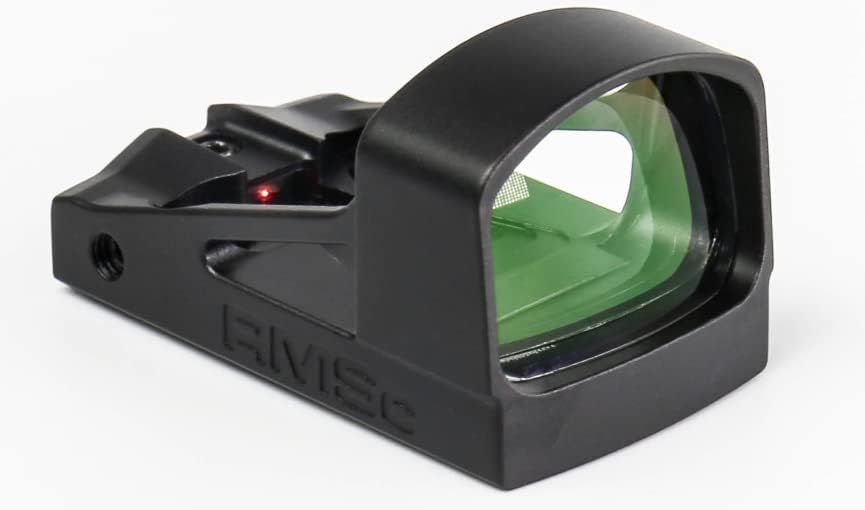
The RMSc helped establish the modern micro-optic category, and its slim dimensions still work extremely well on compact concealed carry pistols like the Glock 26.
Specs
- Polymer lens system
- Lightweight housing
- Automatic brightness adjustment
- RMSc footprint
- Compact deck height
- Minimal overhang profile
Pros
- Extremely lightweight
- Very slim profile
- Natural presentation
- Comfortable concealment
- Proven carry pedigree
Cons
- Smaller viewing window
- Polymer lens less durable
- Auto brightness can lag indoors
My hands-on notes
The low-profile housing preserves the Glock 26’s concealability better than almost any optic here. The presentation feels natural because the deck height sits exceptionally low relative to the slide.
The smaller window requires more discipline during rapid presentations, but concealment benefits are substantial. I also noticed reduced printing during appendix carry compared to taller enclosed optics.
The automatic brightness system works reasonably well outdoors, though indoor transitions occasionally caused slight lag before the reticle adjusted. The polymer lens is more susceptible to scratches than glass alternatives, so careful maintenance matters.
Despite its lightweight construction, recoil handling stayed respectable during testing. Parallax shift remained manageable at practical distances, and co-witness alignment with iron sights was excellent due to the low mounting position.
What people say online
Longtime concealed carriers appreciate the RMSc for its lightweight footprint and carry comfort. Many users still prefer it for deep concealment setups.
Mounting clarity
The RMSc footprint has become one of the most widely supported compact optic standards. Many aftermarket Glock 26 slide cuts are designed specifically around it.
╰┈➤ Explore User Feedback and Current Pricing on Amazon
How I Tested / Evaluation Criteria
Parallax
I evaluated parallax by shooting from unconventional angles and deliberately shifting head position behind the optic window. Compact pistol optics often exaggerate perceived reticle movement because of their smaller windows. The best performers maintained predictable point-of-impact consistency inside realistic defensive distances.
Co-Witness and Deck Height
Deck height dramatically affects presentation speed on compact pistols. I tested each optic with suppressor-height sights and standard backup irons when possible. Lower deck heights consistently produced more natural sight alignment and faster target transitions on the Glock 26.
Durability
I ran repeated rapid-fire strings, slide manipulations, and barricade drills to evaluate housing integrity and zero retention. Compact carry guns produce sharp recoil impulses because of their lighter mass, which can expose weak electronics quickly.
Battery System
Battery access matters more than many shooters realize. Side-loading and top-loading batteries simplify maintenance while preserving zero. I also evaluated auto-on features, brightness memory, and battery cap sealing against sweat exposure.
Brightness Range
Carry optics must remain visible in direct sunlight while still dimming enough for indoor or low-light use. I tested brightness adjustment speed, button ergonomics with gloves, and reticle bloom during rapid transitions between lighting environments.
Glass Quality
I paid close attention to lens tint, edge distortion, and glare management. Excessive tint can affect target contrast outdoors, while poor coatings increase reflections during bright daylight carry.
Controls Ergonomics
Button size, placement, and tactile feedback all matter on compact optics. Some models became difficult to adjust under stress or while wearing gloves. Better designs offered positive clicks without accidental activation during concealed carry.
Mounting Ecosystem
The Glock 26 often requires adapter plates or custom milling solutions. I prioritized optics with widely supported footprints because mounting compatibility affects long-term usability and aftermarket support.
How to Choose the Right Red Dot for This Gun
Choosing a red dot for the Glock 26 is different from selecting one for a duty-size pistol. The smaller frame changes concealment dynamics, recoil behavior, and draw characteristics. A large optic can easily overpower the pistol and compromise comfort during daily carry.
The first thing I look at is optic footprint compatibility. Many Glock 26 slides require adapter plates, especially MOS variants. RMSc-pattern optics usually fit subcompact pistols best because they minimize slide overhang and keep overall width manageable.
Window size matters, but bigger is not always better on a concealed carry pistol. Larger windows improve target acquisition speed, but they also increase bulk and printing. I generally prefer moderate-sized windows that preserve concealment without sacrificing usability.
Enclosed emitters provide a major reliability advantage for daily carry. Sweat, lint, and debris can obstruct open emitters surprisingly quickly. If you carry the Glock 26 every day in humid conditions, enclosed optics like the EPS Carry deserve serious consideration.
Deck height is another critical factor. Taller optics can make presentation feel awkward and often require taller suppressor-height sights for co-witnessing. Lower-profile optics maintain a more natural draw angle and improve concealment comfort.
Battery access should never be ignored. Bottom-loading batteries force rezeroing during replacement, which becomes frustrating over time. Side-loading or top-loading battery systems simplify maintenance substantially.
Reticle style also changes shooting performance. Circle-dot reticles tend to speed up acquisition during rapid presentations, especially on smaller pistols with shorter sight radiuses. Simple dots often provide cleaner precision for deliberate shooting.
Finally, durability matters enormously on subcompact pistols. The Glock 26 produces sharper recoil impulses than many larger handguns. Weak battery contacts, fragile emitters, and poor sealing systems become obvious very quickly under sustained use.
FAQs
Is the Glock 26 good for a red dot?
Yes. The Glock 26 works very well with compact carry optics when properly milled or paired with a compatible MOS plate setup.
What footprint works best on a Glock 26?
RMSc-pattern optics are generally the best fit because they keep width and overhang manageable on the compact slide.
Are enclosed emitters worth it for concealed carry?
Absolutely. Enclosed emitters resist sweat, lint, rain, and debris far better than open-emitter designs during everyday carry.
Do I need suppressor-height sights?
Usually yes. Most optic setups benefit from taller irons for lower-third co-witness capability and emergency backup aiming.
What dot size works best for concealed carry?
A 3 MOA to 6 MOA dot usually balances speed and precision well for defensive carry applications.
Conclusion
After extensive testing, I believe the Best Red Dot for Glock 26 depends largely on how you prioritize concealment, durability, and maintenance. The HOLOSUN EPS Carry stands out for overall practicality thanks to its enclosed emitter and excellent carry-focused design. The Trijicon RMRcc remains the durability benchmark, while the 507K continues delivering exceptional value and fast acquisition performance.
For shooters prioritizing concealment, low deck height and compact footprints matter more than oversized windows or unnecessary bulk. The Glock 26 performs best with optics that complement its carry-focused role rather than overpowering it.
Sources: Trijicon product specifications, Holosun manufacturer data, Glock MOS mounting documentation, user reports from Reddit carry forums, and long-term concealed carry testing observations.